
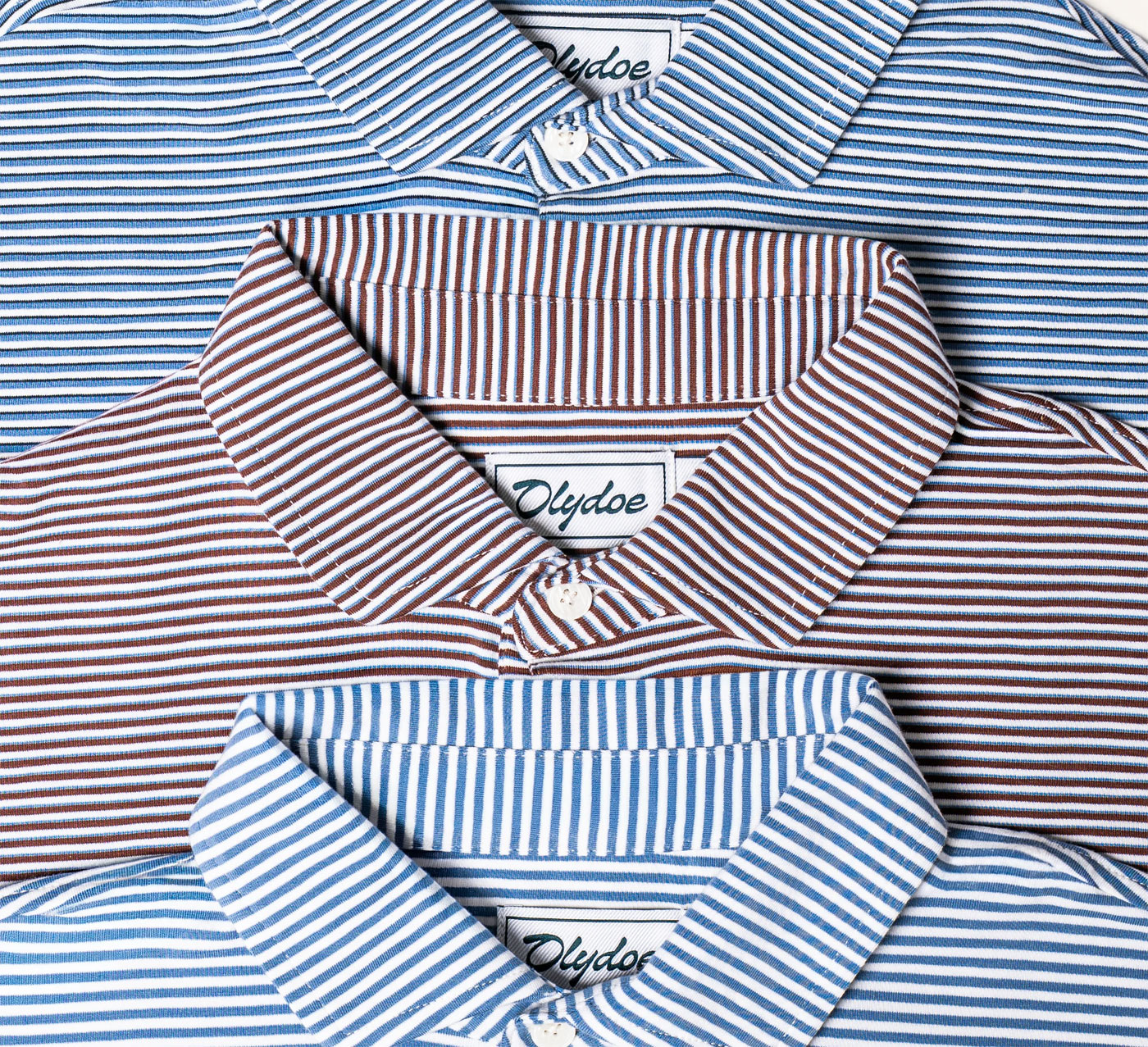
Golf apparel has undergone a dramatic transformation over the past two decades. Walk into almost any golf shop today and polyester performance shirts dominate the racks, promising moisture management, stretch and lightweight comfort.
Olydoe is taking golf apparel in almost the opposite direction and one that I appreciate. The emerging golf brand has built its identity around natural fibers, understated styling and a connection to the traditions of the game.
Rather than trying to develop another polyester performance polo, Olydoe is betting that premium cotton can deliver the comfort and performance golfers want while offering a decidedly different look and feel. After testing a pair of their polos, I’ve become a big fan of the comfort and quality of their fabrics.
Two shirts illustrate that philosophy particularly well: the Oxford Piqué Polo and OG Supima Hollow Polo. Both retail for $110, putting them squarely into the premium golf apparel category, but they approach the traditional cotton golf shirt in different ways.
Oxford Piqué Polo
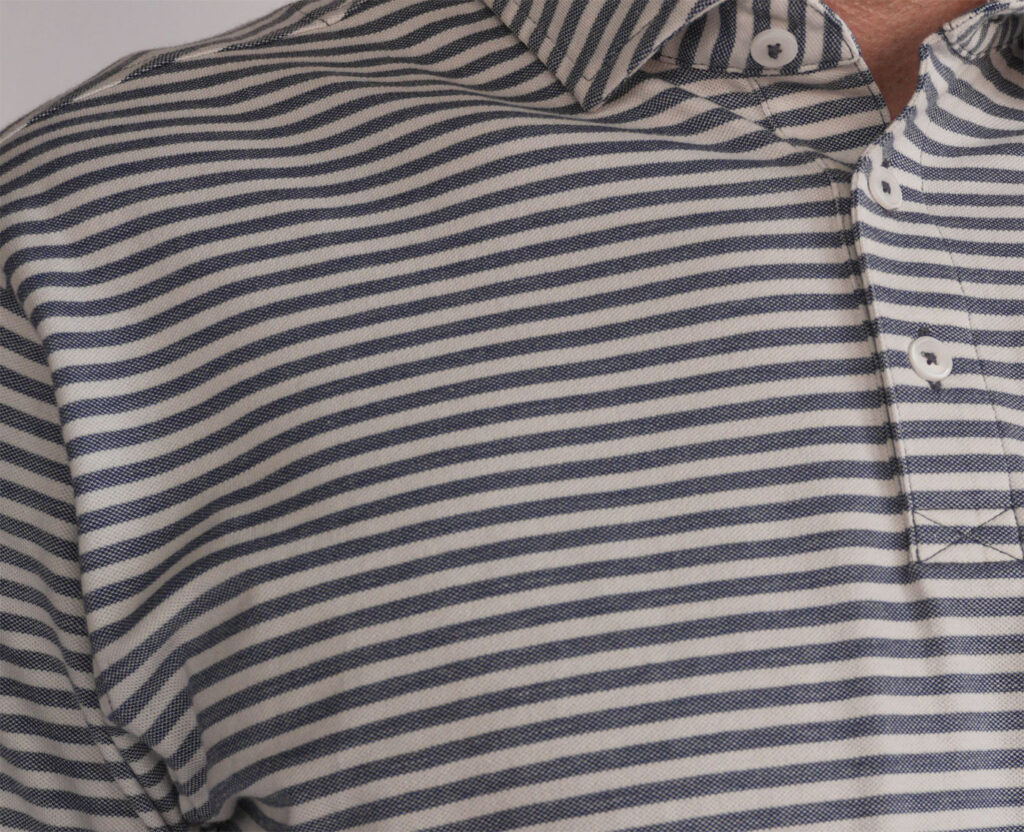
Olydoe Oxford Piqué Polo
The Oxford Piqué Polo is probably the more traditional-looking of the two.
It’s made from 95% Peruvian Pima cotton and 5% elastane in a 170gsm piqué fabric. That small amount of elastane is important for a golf shirt because it provides some of the stretch needed during the swing without changing the fundamental character of the cotton fabric.
The distinguishing visual feature is a subtle yarn-dyed Oxford stripe. From a distance, the pattern largely blends into the shirt; get closer and the weave becomes more apparent. That’s consistent with Olydoe’s overall aesthetic. These aren’t golf shirts designed around oversized logos or attention-grabbing prints.
Other details reinforce the premium approach, including three mother-of-pearl buttons, a structured self-fabric collar and rounded tennis tail. The shirt screams comfort, much more so than most premium performance polos.
The piqué construction also addresses one of the biggest questions golfers might have about returning to cotton: breathability. Olydoe says the open weave is designed to increase airflow and improve moisture management. Peruvian Pima cotton’s extra-long fibers also contribute to the soft feel and durability expected from a premium polo.
OG Supima Hollow Polo
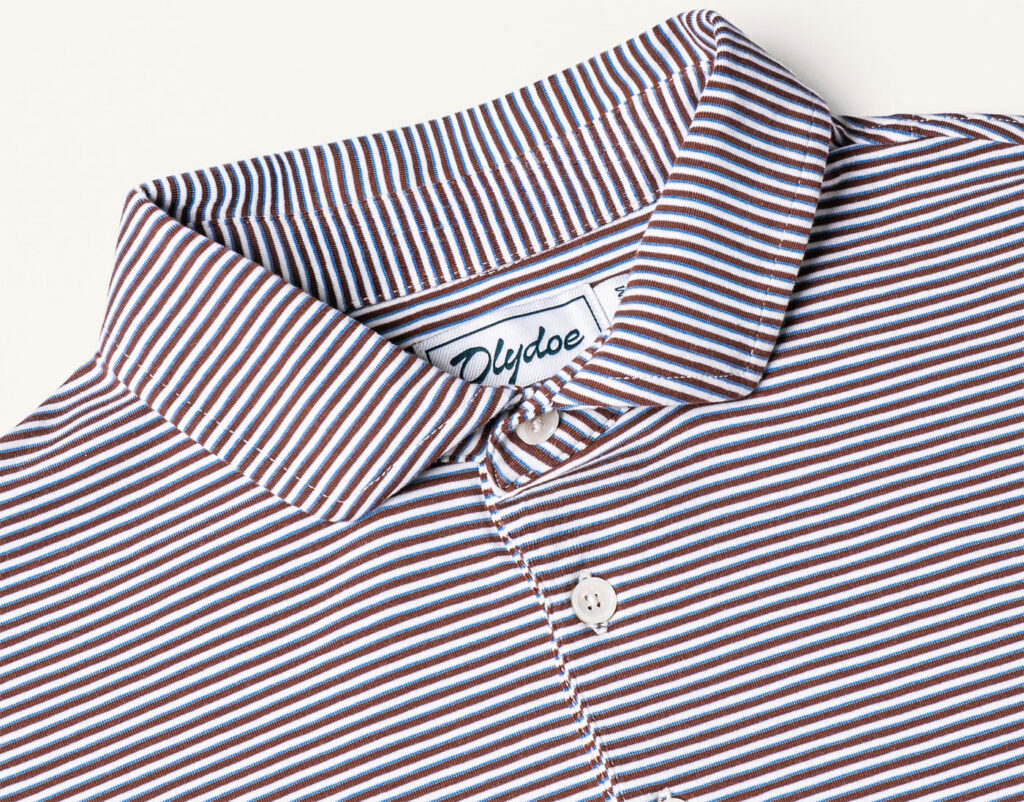
OG Supima Hollow Polo
The OG Supima Hollow Polo is arguably the more interesting shirt from a technology standpoint.
It uses American-grown Supima cotton combined with what Olydoe calls “hollow cotton technology.” The concept is intriguing: the center of the cotton yarn is removed, creating a tube-like structure designed to help move moisture away from the skin and through the fabric where it can evaporate.
The fabric is 92% Supima cotton and 8% elastane, again at 170gsm. Compared with the Oxford Piqué, the higher elastane content should provide additional stretch while retaining the softness and drape associated with cotton.
Styling remains decidedly traditional. The polo incorporates yarn-dyed stripes, a three-button mother-of-pearl placket and hidden collar buttons. The latter is an especially useful golf detail because it helps keep the collar in place without introducing visible buttons.
Both polos feature what Olydoe describes as a classic fit through the chest with a more tailored fit around the shoulders and arms. Golfers wanting a slimmer silhouette are advised to size down.
Cotton vs. Polyester
The real question isn’t necessarily which of these two Olydoe shirts is better. It’s whether golfers are ready to reconsider cotton.
Modern synthetic golf shirts became ubiquitous for good reasons. They’re light, stretchy and generally excellent at moving perspiration during hot weather. But they’ve also created a certain sameness across golf apparel.
Olydoe believes natural fibers can provide another option.
The company specifically emphasizes Supima cotton, Peruvian Pima cotton, merino wool and TENCEL Lyocell rather than plastic-based fabrics. Olydoe says its garments are produced in small batches and emphasizes craftsmanship over mass production.
That philosophy extends to the company’s roots. According to Olydoe, its founder developed his love of golf on a nine-hole course in rural Illinois before experiences in Chicago, Dallas and elsewhere helped shape the brand. Even the Olydoe logo combines influences from the Chicago and Texas flags.
The Verdict
At $110 apiece, neither Olydoe polo is an impulse purchase. Golfers can certainly find less expensive performance shirts, so the value proposition depends heavily on how much you appreciate premium materials, construction and understated design.
The Oxford Piqué Polo is the choice for the golfer drawn to a classic textured golf shirt with a subtle pattern. The Supima Hollow Polo is more intriguing for someone who likes traditional cotton but wants some of the moisture-management characteristics associated with modern performance apparel.
More broadly, Olydoe represents an interesting counterargument to where golf apparel has been heading.
Instead of asking how much more technology can be added to a synthetic golf shirt, Olydoe is asking whether better natural materials and thoughtful construction can accomplish much of the same thing.
For golfers tired of closets filled with nearly interchangeable polyester polos, that’s a compelling proposition.









 Find a Golf Course
 Find a Driving Range
 Find a Topgolf
 Find a Golf Instructor