
We all put things off. But according to one of the world’s leading procrastination researchers, there’s a significant difference between occasionally delaying a task and being a chronic procrastinator.
Every golfer knows the feeling.
You promise yourself that this will be the season you finally take those lessons, practice your short game, improve your fitness, or address the swing flaw that’s been costing you strokes for years.
You know what needs to be done. You understand why it matters. You genuinely want to improve.
And yet, another week passes. Then another season.
Why do we continually postpone things that we know are important to us?
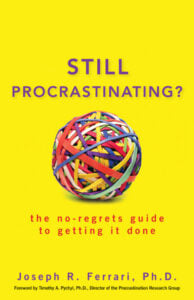
That question is at the center of decades of research by Dr. Joseph Ferrari, Professor of Psychology and Saint Vincent de Paul Distinguished Professor at DePaul University in Chicago.
He is the author of Still Procrastinating? The No Regrets Guide to Getting It Done.
Ferrari joined Off Course with Walter Lis, the podcast from Chicago Golf Report, to explore the psychology of procrastination, why people avoid important decisions, and what research reveals about our tendency to put things off.
The conversation began with golf but quickly expanded into something much more universal: the complicated relationship between our intentions, emotions, and actions.
Procrastination Isn’t Simply Poor Time Management
One of the biggest misconceptions about procrastination is that it’s primarily a problem of time management.
We assume that people who procrastinate need better calendars, more detailed to-do lists, or greater discipline.
Ferrari challenges that assumption.
His research distinguishes between ordinary delays and chronic procrastination, which involves repeatedly and unnecessarily postponing important tasks despite anticipating negative consequences.
Not every delay qualifies as procrastination.
Waiting for additional information before making a decision may be perfectly reasonable. Prioritizing an urgent responsibility over a less important task isn’t necessarily procrastination either.
The distinction is important because it changes how we understand the behavior.
Consider a golfer who decides to postpone a lesson because of an injury or a demanding work schedule. That’s a reasonable decision.
But what about the golfer who repeatedly avoids scheduling a lesson because they’re uncomfortable confronting their weaknesses?
The behavior may look similar from the outside, but the psychological motivations can be very different.
Everyone Procrastinates, But Not Everyone Is a Procrastinator
Ferrari estimates that approximately 20% of adults are chronic procrastinators.
That doesn’t mean the remaining 80% never postpone important responsibilities. Nearly everyone occasionally delays something they’d rather not do.
The distinction involves the consistency and consequences of the behavior.
Chronic procrastination isn’t limited to an occasional unfinished project or missed deadline. It can become a recurring pattern that affects professional responsibilities, financial decisions, relationships, and personal well-being.
A person might delay paying bills, scheduling medical appointments, completing work assignments, or addressing difficult conversations.
Over time, the consequences can accumulate.
Ferrari’s research suggests that chronic procrastination is better understood as a persistent behavioral pattern than as an occasional failure to manage one’s schedule.
And that distinction matters when considering how to address it.
Do We Really Work Better Under Pressure?
One of the most familiar defenses of procrastination is the belief that pressure improves performance.
How often have you heard someone say, “I work better when there’s a deadline”?
Perhaps you’ve said it yourself.
Ferrari challenges this assumption through research examining how procrastinators perform under time pressure.
In research he discussed during the interview, procrastinators working under pressure made more errors, even though they believed they had performed well.
That disconnect between perceived performance and actual performance raises an interesting question.
Are people genuinely performing better under pressure, or have they simply become accustomed to working that way?
Golf offers an interesting parallel.
A golfer who consistently rushes to the first tee may believe the last-minute arrival doesn’t affect performance. But arriving without adequate preparation may create unnecessary physical and mental challenges.
Similarly, a golfer who waits until the final days before an important tournament to begin practicing may feel motivated by the approaching deadline.
That feeling of urgency, however, doesn’t necessarily mean the preparation is more effective.
The larger lesson is that feeling productive under pressure isn’t the same as performing well under pressure.
Why Do We Avoid Things That Matter?
If procrastination isn’t simply laziness or poor organization, what causes it?
Ferrari’s work examines the psychological factors that contribute to chronic procrastination, including avoidance, indecision, and concerns about responsibility or failure.
Sometimes delaying a task provides immediate emotional relief.
A difficult assignment disappears from our immediate attention. An uncomfortable conversation can wait. A decision with uncertain consequences doesn’t have to be made today.
Unfortunately, the relief is often temporary.
The underlying responsibility remains, and postponing it may create additional stress.
This is particularly interesting in activities involving performance and evaluation.
Golfers routinely encounter situations where their abilities are exposed to judgment—both from others and themselves.
Practicing a difficult shot can be frustrating. Taking a lesson may reveal fundamental weaknesses. Entering a competition introduces the possibility of failure.
Avoiding those situations may protect someone from immediate discomfort, but it can also prevent improvement.
Of course, not every golfer who avoids practicing is procrastinating. Sometimes people simply prefer playing to practicing.
The important question is whether someone is repeatedly avoiding an action they genuinely intend to take, despite recognizing the consequences.
The Hidden Consequences of Chronic Procrastination
Procrastination is frequently treated as a harmless personality quirk.
We joke about unfinished projects, last-minute preparations, and people who never seem to get started.
But Ferrari argues that chronic procrastination can have meaningful consequences.
Repeated delays can affect professional performance, create tension in relationships, complicate financial responsibilities, and interfere with important health decisions.
The consequences may also extend beyond the person who procrastinates.
When someone repeatedly postpones a responsibility, coworkers, family members, or friends may be forced to compensate.
That makes chronic procrastination more than an individual productivity issue.
It can become a problem involving trust, reliability, and accountability.
And while procrastination may initially reduce discomfort by allowing someone to avoid a difficult responsibility, the eventual consequences can create even greater stress.
Can Chronic Procrastination Be Changed?
Perhaps the most important question is whether people who have procrastinated for years can change their behavior.
Ferrari’s research offers reasons to distinguish between managing the symptoms of procrastination and understanding the psychological patterns that sustain it.
A better calendar might help someone remember an appointment.
A reminder might encourage someone to begin a project.
But organizational tools alone may not resolve a recurring pattern of avoiding difficult responsibilities.
That requires understanding why the avoidance occurs in the first place.
During the interview, Ferrari also discussed the practical value of breaking overwhelming projects into smaller, more manageable actions.
A large goal can feel intimidating when viewed as a single responsibility.
Smaller actions can make it easier to begin.
For golfers, that might mean replacing the vague ambition of “completely rebuilding my golf swing” with a specific commitment to practice one movement for a short period.
For someone facing an intimidating professional project, it might mean identifying the first concrete action rather than focusing entirely on the finished result.
These approaches aren’t magical cures, and Ferrari is careful about oversimplifying a behavior he’s spent decades studying.
But they reinforce an important principle: meaningful change requires more than simply telling ourselves to stop procrastinating.
What Procrastination Reveals About Human Behavior
Ferrari began studying procrastination during his doctoral research in the late 1980s.
Nearly four decades later, the subject remains remarkably relevant.
Modern life offers endless opportunities to postpone difficult tasks while occupying ourselves with activities that feel productive.
We can research a decision indefinitely without making it. We can organize our responsibilities without addressing them. We can spend hours preparing to begin something without actually beginning.
Golf provides a particularly revealing example because improvement requires repeatedly confronting uncertainty, frustration, and the possibility of failure.
But the same psychological dynamics appear throughout our lives.
The central question isn’t simply why people put things off.
It’s why we sometimes avoid taking action on the very goals we claim matter most.
And understanding that distinction may be the first step toward changing the pattern.
About Dr. Joseph Ferrari
Dr. Joseph R. Ferrari is a Professor of Psychology and Saint Vincent de Paul Distinguished Professor at DePaul University in Chicago. He has studied chronic procrastination since the late 1980s and is the author of Still Procrastinating? The No Regrets Guide to Getting It Done.
About Off Course
Off Course with Walter Lis is a podcast produced by Chicago Golf Report that explores the ideas behind performance, psychology, learning, decision-making, and human behavior.
Through conversations with researchers, authors, coaches, and thought leaders, Off Course uses golf as a starting point for discovering ideas that extend far beyond the game.
Podcast: Play in new window | Download
Subscribe: RSS







 Find a Golf Course
 Find a Driving Range
 Find a Topgolf
 Find a Golf Instructor