
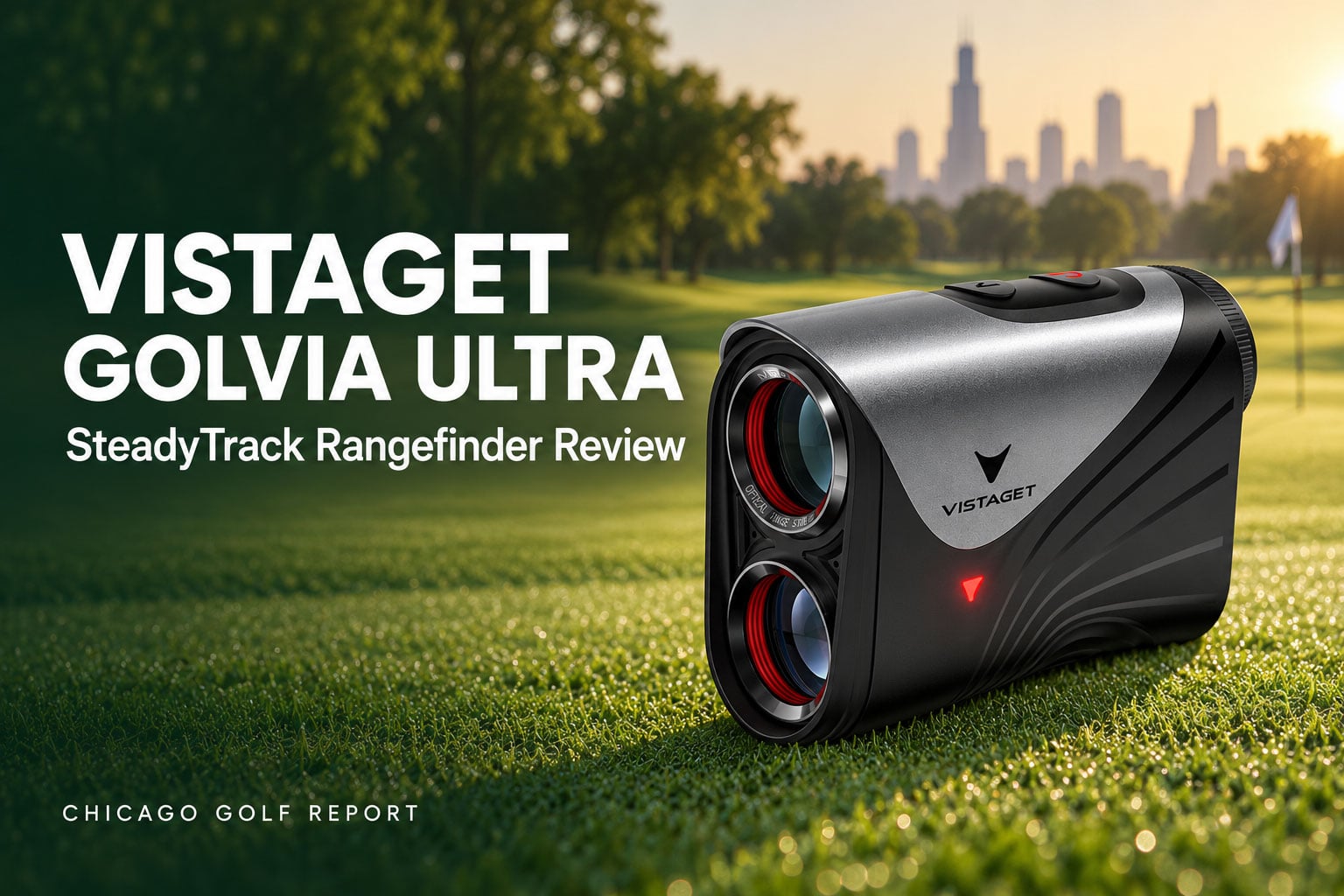
A golf rangefinder should make the next shot easier to understand. Getting the distance to the flag is the starting point. Holding that flag steady in the viewfinder and accounting for playing conditions can make the information more useful.
The Vistaget Golvia Ultra SteadyTrack brings those capabilities together at a listed price of $299.99. Its combination of image stabilization, environmentally adjusted yardages and point-to-point measurement gives golfers several reasons to look beyond the established rangefinder brands.
For Chicago golfers, the appeal is easy to understand. A chilly morning round, an exposed approach and a cart-path-only afternoon each create situations where these features could earn their place in the bag.
SteadyTrack Addresses a Familiar Frustration
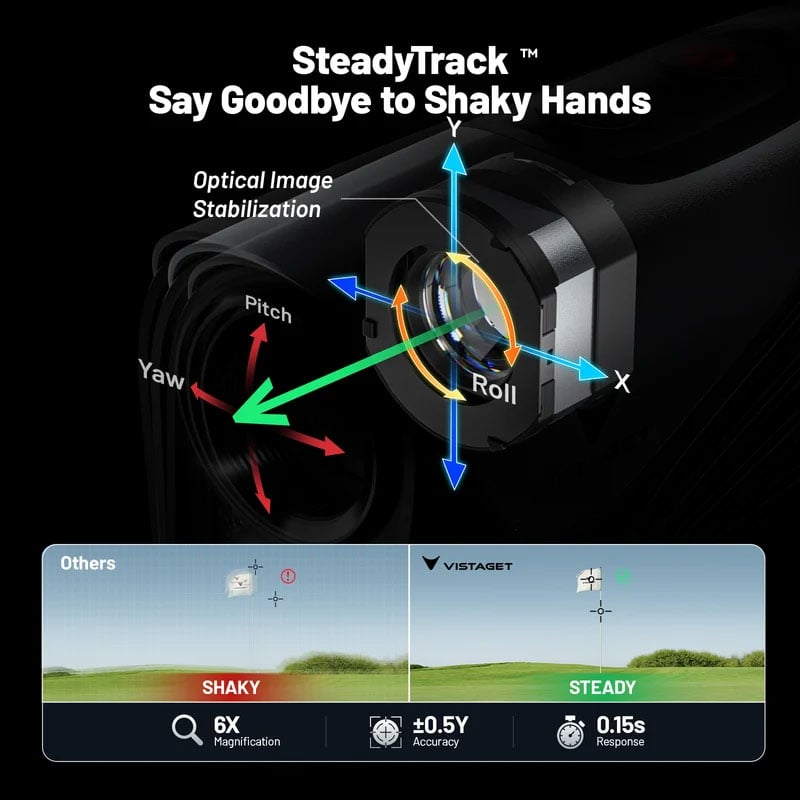
Anyone who has struggled to hold a rangefinder on a distant flag knows that measuring distance and finding the correct target are two different challenges. When I’m in the golf cart, I typically wait for my playing partner to exit before I shoot the pin, otherwise I’m battling a shaky view.
A shaky view makes it harder to distinguish the flagstick from the trees behind the green. That uncertainty can lead to repeated measurements—and a lingering question about whether the number belongs to the pin or the background.
Vistaget’s SteadyTrack stabilization is designed to reduce the effect of hand movement and make target acquisition easier. For golfers who find conventional rangefinders difficult to hold steady, this could be the Ultra’s most meaningful feature.
The benefit would be practical: less time trying to settle the view and more confidence in the target being measured. How effectively it performs at longer approach distances remains a question for hands-on testing.
TrueSlope Adds Context to the Yardage
A measured distance tells golfers how far away a target is. Choosing a club requires another judgment: how that distance will play.
According to the supplied product information, Vistaget’s TrueSlope system considers temperature, humidity and barometric pressure when calculating compensated yardages.
That has particular relevance in the Chicago area, where golfers might play the same hole in very different conditions across the season. A familiar approach can demand a different decision on a cold fall morning than during a warm summer afternoon.

For example, the par three 11th hole at The Glen Club plays 202 from the blue tees. But the hole is completely exposed to the elements and the tee box is slightly above the putting surface with water on the left. That’s a lot of variables to compute!
Environmental compensation offers another reference point for that decision. It should still be considered alongside wind, lie, trajectory and the consequences of a miss. A calculated playing distance cannot capture every variable facing the golfer.
One specification deserves clarification: Vistaget’s website describes its environmental inputs as temperature, humidity and altitude, while the supplied promotional materials identify barometric pressure. Buyers interested specifically in this capability should confirm how the system obtains and uses those inputs.
TriMeasure Could Be Especially Useful on Cart-Path-Only Days
Some rangefinder features sound impressive until golfers try to identify when they would use them. TriMeasure point-to-point yardage has an obvious application.
When carts must remain on the path, golfers often need to select clubs before reaching their ball. Measuring only from the cart to the flag does not answer the question they actually face.
I found the A-to-B capability quite helpful because I’m often outside the fairway, and at times, outside the property. It’s intended to help estimate distances between locations away from the golfer’s position. That helped with club selection from the path or evaluating a layup.
It still requires suitable sightlines to the relevant targets. It cannot reveal a landing area hidden behind a hill, but it could reduce some of the guesswork involved in planning a shot.
Club Suggestions Provide a Second Opinion
The Golvia Ultra also offers built-in club recommendations without requiring a separate launch monitor or paired device.
The value of that feature depends on how closely its recommendations reflect the golfer’s actual distances. Golfers should understand its setup and establish whether the suggestions match their normal carry yardages before relying on them.
For an experienced player, it may serve as a useful comparison with an initial club choice. Developing players may appreciate another prompt to think about distance gaps throughout the bag.
Practical Features Round Out the Package
The supplied specifications include a cart magnet, USB-C charging and a claimed 2,500 measurements per charge. Those are everyday conveniences that could matter as much as the headline technology.
Rechargeability eliminates the need to keep replacement CR2 batteries available, although golfers still need to establish a charging routine.
Vistaget also lists an IP65 protection rating, 6x magnification and 18mm eye relief. Those specifications suggest attention to outdoor use and viewing comfort, but golfers who wear glasses should ideally check the view for themselves.
Understand the Tournament Settings
Vistaget advertises a tournament mode that disables compensation and assistance features. Golfers should confirm that those functions are off before competition.
Under the Rules of Golf, distance measurement is generally permitted unless prohibited by the committee. Measuring elevation changes and using device-generated club recommendations are restricted. An external indicator does not replace the player’s responsibility to use the device correctly.
The CGR Verdict
The Vistaget Golvia Ultra SteadyTrack offers a compelling feature package on paper, particularly for golfers like me who struggle with a shaky view or want more context than a straight distance reading.
Stabilization is the strongest reason to consider it. Environmental compensation and TriMeasure broaden its usefulness, while the magnet and rechargeable battery address routine convenience.
The remaining questions concern execution: reliable flag acquisition, repeatable measurements, readable optics and straightforward controls. At roughly $300, the Golvia Ultra deserves consideration from golfers seeking those capabilities.









 Find a Golf Course
 Find a Driving Range
 Find a Topgolf
 Find a Golf Instructor
