
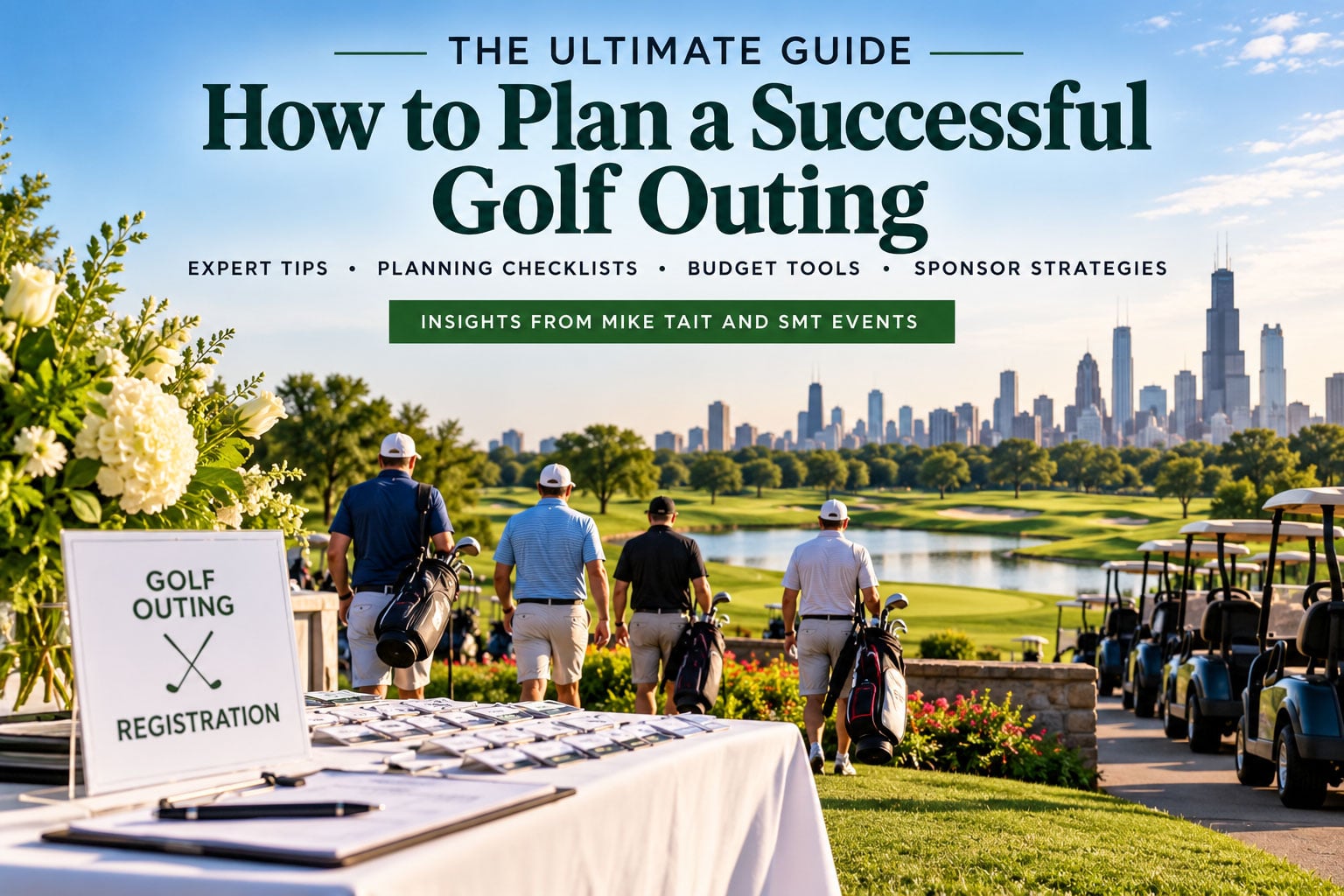
Organizing a successful golf outing involves much more than reserving a golf course and inviting a few dozen friends. Whether you’re planning a charity fundraiser, corporate golf tournament, alumni event, or community outing, the challenges are often surprisingly similar: finding participants, attracting sponsors, managing expenses, coordinating volunteers, and creating an experience golfers will remember.
For many organizations, the person responsible for the outing has little or no previous event-planning experience. That’s where the expertise of Mike Tait, a longtime golf industry professional and founder of SMT Events, becomes especially valuable. In an interview with Chicago Golf Report, Tait shared insights developed through decades in the golf industry and years helping charitable organizations run golf outings.
He’s helped raise just over $32 million for charities and corporations since launching his fundraising business in 2009. His experience offers a practical roadmap for organizers across the United States, whether they are coordinating a nonprofit fundraiser, corporate tournament, school outing, or community event.
The Popularity of Golf Outings: A Major Part of America’s Golf Economy
Golf outings bring together businesses, charities, schools, and community organizations for fundraising, networking, entertainment, and relationship-building. Unlike competitive tournaments, many outings emphasize participation and shared experiences as much as scores.
How Popular Are Golf Outings in the United States?
The charitable impact of golf is substantial. According to the National Golf Foundation, golf-related charitable giving reached an estimated $4.6 billion in 2022. The organization reported that approximately 80% of U.S. golf facilities—more than 11,000 locations—hosted charitable events, and that more than 90% of golf’s charitable giving originated through local golf facilities and events rather than professional tournaments.
A separate 2026 analysis by OutingRFP identified 17,198 charitable golf outings itemized in a year of IRS Form 990 filings, with approximately $1.45 billion in gross receipts. That is a documented subset, not a comprehensive national count: smaller nonprofit events, unreported outings, and many corporate events are not included.
How many golf outings take place nationwide each year? No sufficiently reliable, comprehensive annual count is available to cite here. The figures above demonstrate the scale of charitable golf activity without treating a partial dataset as a total.
What Do Regional Golf Outing Figures Tell Us?
Golf outings are organized in communities across the country, but event counts are difficult to compare because charitable filings capture only a portion of the market. For example, OutingRFP’s October 2026 analysis identified 790 itemized charitable golf outings associated with Illinois organizations and approximately $69.5 million in gross receipts. This is a partial statewide figure based on filing organizations’ addresses, not a count of all outings physically held in Illinois or Chicago. The same limitation applies when interpreting figures for other states.
For organizers, the practical takeaway is national: golf outings are a well-established fundraising and relationship-building format, but results depend on local course pricing, sponsor interest, participant demand, weather, and careful execution.
What Types of Groups Organize Golf Outings?
- Charities and nonprofit organizations: Hospitals, medical foundations, food banks, youth programs, and other nonprofits raise funds for their missions.
- Businesses and corporations: Companies entertain clients, recognize employees, and develop relationships with customers and partners.
- Schools and universities: Alumni associations, athletic boosters, scholarship foundations, and educational institutions support programs and reconnect graduates.
- Chambers of commerce and professional associations: Local business networks combine sponsorship, fundraising, and networking.
- Religious and civic organizations: Churches, service clubs, veterans’ organizations, and community groups support local initiatives.
- Sports organizations: Youth teams, athletic departments, and sports foundations fund travel, equipment, and scholarships.
- Families and memorial foundations: Organizers honor loved ones while supporting research, scholarships, and meaningful causes.
Why Do Golf Outings Remain Popular?
Golf provides several hours for conversation and relationship-building, offers multiple potential fundraising streams, and accommodates a wide range of abilities when organizers choose accessible formats. Successful annual outings can also develop loyal participants and returning sponsors.
But popularity alone doesn’t guarantee a successful event. As Tait’s experience illustrates, the difference often comes down to preparation, organization, and understanding what motivates participants.
1. Start Planning Your Golf Outing Earlier Than You Think
One common mistake is waiting too long to begin preparations. Organizers hosting an August outing may assume starting in April leaves ample time, but Tait warns that sponsorship budgets are often committed much earlier. Many businesses establish charitable giving plans during the preceding fall.
For a summer outing, consider beginning sponsorship conversations the previous autumn. Early preparation also improves your choice of courses, availability of volunteers, and time to promote registration.
Suggested Golf Outing Planning Timeline
| Time Before Event | Primary Activities |
|---|---|
| 9–12 months | Set goals, identify venues, begin sponsor outreach |
| 6–9 months | Reserve the course, build the budget, recruit a committee |
| 4–6 months | Open registration, confirm sponsors, organize contests |
| 2–3 months | Promote the outing, secure prizes, finalize logistics |
| 1 month | Confirm participants, volunteers, signage, and catering |
| Event week | Review assignments, schedules, and weather contingencies |
| After the event | Thank supporters, report results, begin next year’s planning |
These are suggested windows, not fixed requirements; larger events may need more lead time.
2. Recruit 36 Foursomes Instead of 144 Individual Golfers
A traditional full-field golf outing accommodates 144 players in 36 foursomes. Finding 144 individual golfers can feel overwhelming to a volunteer committee.
Tait recommends reframing the problem: recruit 36 foursome captains, each of whom brings three friends, colleagues, or family members. The total is still 144, but the task becomes much more manageable.
Practical Recruitment Strategies
- Ask committee members to identify potential foursome captains.
- Invite corporate sponsors to register employee or client teams.
- Encourage previous participants to return with friends.
- Contact local businesses, alumni networks, and professional associations.
- Offer early registration incentives where appropriate.
The key is to distribute recruitment responsibilities rather than relying on one or two organizers to fill an entire field.
3. Select a Golf Course That Fits Your Event
Across the United States, public, municipal, resort, daily-fee, and private courses may host charitable and corporate outings, but the right venue depends on the event’s audience, budget, and objectives. A high-end facility may suit a client appreciation outing, while an accessible public course may be better for a community fundraiser.
Questions to Ask Before Booking
- How many golfers can the facility accommodate?
- Is a shotgun start available?
- What is included in the package?
- What food and beverage options are offered?
- Does the course provide registration or scoring support?
- Are outside contests and vendors permitted?
- What is the weather cancellation or rescheduling policy?
- Are there additional charges for carts, staffing, or event services?
Request a written proposal with a clear breakdown of costs and responsibilities. If you are organizing an outing in the Chicago region, Chicago Golf Report also offers local course coverage; organizers elsewhere can use regional golf associations and local course directories.
Compare Golf Course Proposals with OutingRFP
OutingRFP
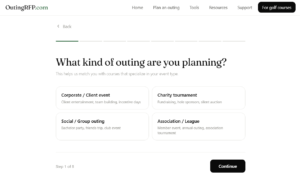
One way to make the venue-selection process more efficient is OutingRFP, a platform founded by Scott Pollock, owner of Tanglewood Golf Club in Ohio. Rather than contacting courses individually and attempting to compare differently structured packages, organizers can submit a single request for proposal specifying their preferred location, date, number of golfers, format, budget, and food and beverage requirements. Participating courses can respond with proposals that organizers compare side by side. The service describes itself as free for outing planners and is currently in early access; the availability and speed of responses will depend on participating courses in the area.
Whether using OutingRFP or contacting facilities directly, request at least three comparable quotes when practical. Ask each venue to separate green fees, carts, food, beverages, minimum golfer counts, shotgun-start charges, service fees, and rain policies. Choose the best overall fit—not automatically the lowest price. A slightly more expensive venue with strong outing coordination, suitable facilities, and a better weather plan may offer greater value.
4. Make Your Golf Outing Enjoyable for Everyone
Some outing participants play only once or twice a year; others may be borrowing clubs. Tait believes a successful event should minimize pressure on less-experienced golfers.
Why the Scramble Format Works
In a scramble, each member of a team hits a shot, the group selects the preferred result, and everyone plays the next shot from that location. This continues until the ball is holed. The format allows beginners to contribute while keeping the round social and collaborative.
Tait generally favors scrambles over more complicated formats that can slow play or intimidate occasional golfers. The objective is to create an enjoyable outing, not merely identify the strongest players.
5. Create Games That Don’t Require Golfing Skill
Longest-drive and closest-to-the-pin contests often favor experienced golfers. Tait takes a different approach: during the our interview, he described approximately 30 games designed to give people opportunities to win without exceptional golf skills.
One example is his golf ball launcher, which sends a ball hundreds of yards toward a target. Other activities use creative targets, prizes, and elements of chance to encourage participation.
Don’t Offer Too Many Games
Every activity takes time. Tait suggests that approximately three well-designed on-course games can provide a good balance—roughly one every six holes on an 18-hole course. Too many contests can make the round excessively long and frustrate participants.
Increase Golf Outing Revenue with Fundraising Scratch Cards
One creative way to generate additional revenue at a charity golf outing is through fundraising scratch cards. SMT Events offers several variations, including an 18-hole golf scorecard game and Texas Hold’em poker cards. Participants purchase a card, scratch off the concealed results, and compete for prizes based on their scores or poker hands. Unlike traditional golf competitions, scratch cards don’t require any golfing ability, making them an entertaining fundraising activity for golfers, dinner guests, volunteers, and other supporters. Organizers can sell cards during registration, throughout the outing, or at the post-round reception, creating another revenue opportunity beyond entry fees and traditional sponsorships.
Scratch cards can also create additional sponsorship opportunities. SMT Events offers customized cards featuring sponsor logos or business names on the reverse side, allowing organizers to generate revenue while providing participating businesses with additional visibility. For example, selling 144 cards at $20 each would generate $2,880 in gross revenue, before card costs, prizes, shipping, and other expenses. Depending on the game selected, organizers may also offer vacation packages or other prizes to encourage participation. Before selecting a program, organizers should confirm current pricing, prize arrangements, and applicable state or local rules governing chance-based fundraising activities.
6. Build a Sponsorship Strategy Before the Event
Sponsorships are among the most important sources of golf outing revenue. Tait encourages organizers to start outreach early and think beyond the traditional single tee sign per hole.
Potential opportunities include presenting sponsorships, registration areas, golf carts, beverage stations, on-course contests, hospitality, raffles, and awards. Different levels can make it possible for supporters with varying budgets to participate, subject to the course’s signage and vendor policies.
Research Potential Sponsors with Sponsor Seek
Sponsor Seek
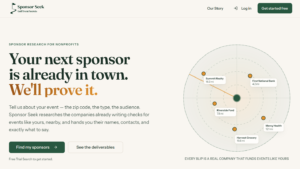
Mike Tait has also launched Sponsor Seek, a new resource focused on sponsor research for nonprofit organizations. For golf outing committees, the central challenge is not merely creating a sponsorship menu; it is identifying businesses and other potential supporters whose interests align with the event’s cause, audience, and community. A dedicated research resource can provide a starting point for building that prospect list. Because Sponsor Seek is newly launched, organizers should confirm its current features, coverage, pricing, and access requirements directly on the site.
Turn research into a disciplined outreach plan: build a shortlist of local employers, past donors, vendors, alumni-owned businesses, and companies with relevant community-giving priorities. For each prospect, identify a specific reason the event may appeal to them, propose an appropriate sponsorship level, and explain the recognition or engagement they will receive. Track the contact person, outreach date, response, commitment, artwork deadline, and post-event thank-you. A personalized invitation tied to a clear cause is more compelling than sending the same generic sponsorship letter to dozens of businesses.
Give Sponsors a Reason to Return
Offer a concise sponsor prospectus with the audience profile, expected attendance, mission, benefits, deadlines, and sponsorship tiers. Be specific about what is included—signage, speaking recognition, newsletter acknowledgement, social mentions, or a foursome—and obtain course approval for on-site activations. After the event, send each sponsor a thank-you and a short impact report showing participation, funds raised, and how the proceeds will be used. Avoid promising marketing impressions or leads that you cannot substantiate.
For a detailed discussion of sponsorships, entry fees, raffles, auctions, and games, read Chicago Golf Report’s companion article: How to Avoid Disaster at Your Golf Outing.
7. Establish a Realistic Budget and Registration Price
Tait recalled one event paying approximately $180 per golfer in course-related costs while charging participants just $178. The organizers expected to make up the shortfall through raffles and games, but that was a risky assumption: not every attendee buys raffle tickets, bids on auction items, or enters contests.
Common Golf Outing Expenses
- Golf course fees and carts
- Food and beverages
- Golfer gifts and contest prizes
- Signage and promotional materials
- Registration technology
- Insurance and administrative expenses
- Staffing and entertainment
Set registration prices based on the event’s actual costs, intended audience, and fundraising goals. Sponsorships and optional activities should strengthen the financial result, not conceal an unsustainable base price.
8. Make Life Easier for Your Volunteers
Outing committees are often made up of committed volunteers without event-management experience. Managing registrations, sponsors, prizes, auctions, contests, and participant communications can quickly become overwhelming.
Tait’s approach is to handle many operational details so committees can focus on recruiting golfers and sponsors. Even without outside help, organizers can apply the same principle by assigning clear ownership.
Assign Specific Responsibilities
- Golf course coordination
- Sponsorship outreach
- Golfer registration
- Volunteer recruitment
- Prizes, raffles, and auctions
- Event-day operations
- Participant communications and follow-up
Every task should have an owner and a deadline. A small, organized committee can accomplish more than a larger group without clear roles.
9. Focus on the Entire Participant Experience
Golfers may attend to support a charity, entertain clients, network, or spend time with friends. Whatever their motivation, they should leave feeling the outing was worthwhile.
Tait encourages organizers to reconsider generic gift bags. Rather than defaulting to a sleeve of balls, tees, and a small towel, choose items participants will genuinely value.
Details That Make a Difference
- Simple registration and clear arrival instructions
- An on-time start and manageable pace of play
- Welcoming activities for inexperienced golfers
- Convenient food and beverage service
- Efficient awards and presentations
- Clear communication of the event’s charitable purpose
A memorable experience helps encourage returning participants and sponsors, both of which can strengthen future events.
10. Never Lose Sight of the Event’s Purpose
For Mike Tait, golf outing fundraising is personal. He launched his business in 2009 after losing his mother to lung cancer.
During the our Chicago Golf Report interview, he recalled helping an organization supporting children with disabilities. The organizers were initially apprehensive about new fundraising activities, but after the outing they were moved by the amount collected for their cause.
One of the organizers told Tait that his mother would be proud of him. The moment stayed with him.
Although he has worked with enormous outings—including a 600-participant event at Cog Hill—he identified this smaller charitable experience as one of his most meaningful memories.
A successful golf outing isn’t measured only by participation or revenue. It’s also measured by the difference it makes for the people and organizations it supports.
Build a Budget That Shows Net Proceeds, Not Just Revenue
For a charity outing, gross receipts are not the same as money available for the cause. Build a spreadsheet with separate rows for player registrations, sponsorships, donations, raffle and auction receipts, and games. Subtract venue costs, food and beverages, prizes, signage, payment processing, insurance, and any third-party fees. Keep in-kind contributions separate from cash revenue so the financial picture remains clear.
For example, an outing with 100 golfers paying $200 each, $12,000 in sponsorships, and $4,000 from games and auctions would generate $36,000 in gross receipts. If all cash expenses totaled $21,000, the event would produce $15,000 in net proceeds before any additional obligations. This is an illustrative scenario, not an industry average. Test lower-attendance and bad-weather scenarios before committing to nonrefundable costs.
Create an Event-Day Run of Show
A written schedule helps volunteers, the golf professional, caterer, and sponsors stay coordinated. For a hypothetical 9:00 a.m. shotgun start, an organizer might open registration at 7:30 a.m., hold a brief welcome and rules announcement at 8:40 a.m., start play at 9:00 a.m., and schedule lunch, awards, and fundraising activities around the course’s estimated finish time. Confirm actual timing with the host facility; a full outing can take considerably longer than a standard round.
Assign one person to make final decisions on weather, delays, and changes. Prepare a printed contact sheet, golfer roster, foursome assignments, sponsor placements, prize inventory, volunteer shifts, emergency procedures, and a backup plan for rain or lightning. Verify any raffle, contest, and charitable solicitation requirements with the appropriate organizers and authorities before selling tickets or accepting donations.
Measure Success and Make Next Year’s Outing Better
Within a week, reconcile income and expenses, thank sponsors and volunteers, and share the outcome with participants. Review net proceeds, cost per golfer, registration conversion, sponsor renewal interest, pace of play, and participant feedback. If the outing supports a charitable cause, communicate how funds will be used without confusing gross receipts with the actual charitable contribution.
Ask one simple question of golfers, sponsors, and volunteers: What should we keep, change, or eliminate next year? Document the answers while memories are fresh. Annual improvement—not adding more games or increasing prices automatically—is how a one-time event becomes a lasting community tradition.
Free Golf Outing Planning Toolkit: Checklist, Budget Calculator, and FAQ
Put these recommendations into practice with Chicago Golf Report’s free Golf Outing Planning Toolkit. The downloadable resources include a printable planning worksheet to assign tasks and deadlines, an editable budget calculator to estimate net proceeds and break-even attendance, and a frequently asked questions guide covering common event-planning decisions. They are useful for organizers in any U.S. market.
Get the free Golf Outing Planning Toolkit ?
Golf Outing Planning Checklist
Planning and Logistics
- Set fundraising and participation goals.
- Choose a date and reserve a course.
- Confirm the format and event schedule.
- Develop a realistic budget.
- Recruit committee members and volunteers.
Fundraising and Promotion
- Identify and approach sponsors.
- Establish registration pricing.
- Recruit foursome captains.
- Prepare promotional materials.
- Plan raffles, auctions, and contests.
Participant Experience
- Choose appropriate games and prizes.
- Confirm food and beverage plans.
- Prepare registration materials and gifts.
- Assign event-day responsibilities.
- Send final instructions to golfers.
After the Outing
- Thank sponsors, golfers, and volunteers.
- Calculate the event’s financial results.
- Share the impact with supporters.
- Collect feedback.
- Begin planning next year’s event.
Building a Better Golf Outing
From small-town charity fundraisers to major corporate tournaments, successful golf outings share many of the same fundamentals. Selecting the right golf course is only the beginning.
As Mike Tait’s experience demonstrates, successful events depend on early planning, effective recruitment, appropriate pricing, inclusive activities, and an understanding of what participants value.
The best outings combine an enjoyable day on the course with a clear purpose and a well-organized fundraising strategy—creating an event that golfers and sponsors want to support again.
Learn More About Mike Tait and Golf Outing Fundraising
Mike Tait is a longtime golf industry professional and founder of SMT Events. His experience helping organizations plan fundraising activities offers valuable guidance for volunteer committees seeking to simplify their outings and raise more money.
This article draws on Chicago Golf Report’s 2024 interview with Mike Tait. Fundraising totals and descriptions of services reflect information shared at that time. National statistics refer to the cited reporting periods; a complete annual count of U.S. golf outings is not available here.
Planning your next golf outing? Download the free Golf Outing Planning Toolkit for a printable planning worksheet, editable budget calculator, and answers to common planning questions. The toolkit is designed for outing organizers nationwide.









 Find a Golf Course
 Find a Driving Range
 Find a Topgolf
 Find a Golf Instructor
