
Golf courses are often evaluated by the quality of their greens, the interest of their layouts and the overall experience they provide golfers. The Forest Preserve District of DuPage County considers those factors—but also asks what else its golf properties can do for the surrounding community.
Under the leadership of Ed Stevenson, the district’s director of golf and executive adviser, its three golf facilities have become examples of how public golf, environmental conservation and community infrastructure can work together.
Stevenson joined the Chicago Golf Report Podcast to discuss the transformation of The Preserve at Oak Meadows, the ongoing renovation of Maple Meadows and the evolving role of Green Meadows. He also explained why demand for golf and other forms of outdoor recreation has remained strong since the COVID-19 pandemic.
Reinventing The Preserve at Oak Meadows
The Preserve at Oak Meadows provides the clearest example of the district’s approach.
Originally established as Elmhurst Country Club and later known as Oak Meadows, the property sits along Salt Creek. As development increased upstream, the golf course became increasingly susceptible to flooding. Tees, greens and fairways were frequently inundated, threatening both course conditions and the long-term viability of the facility.
Instead of continuing to treat Salt Creek as an obstacle, the Forest Preserve District incorporated the creek into a comprehensive environmental and golf course renovation.
The project, which began in 2015, included moving approximately 700,000 cubic yards of earth. Important playing areas were elevated, including portions of the seventh and 16th fairways, which were raised by approximately six feet.
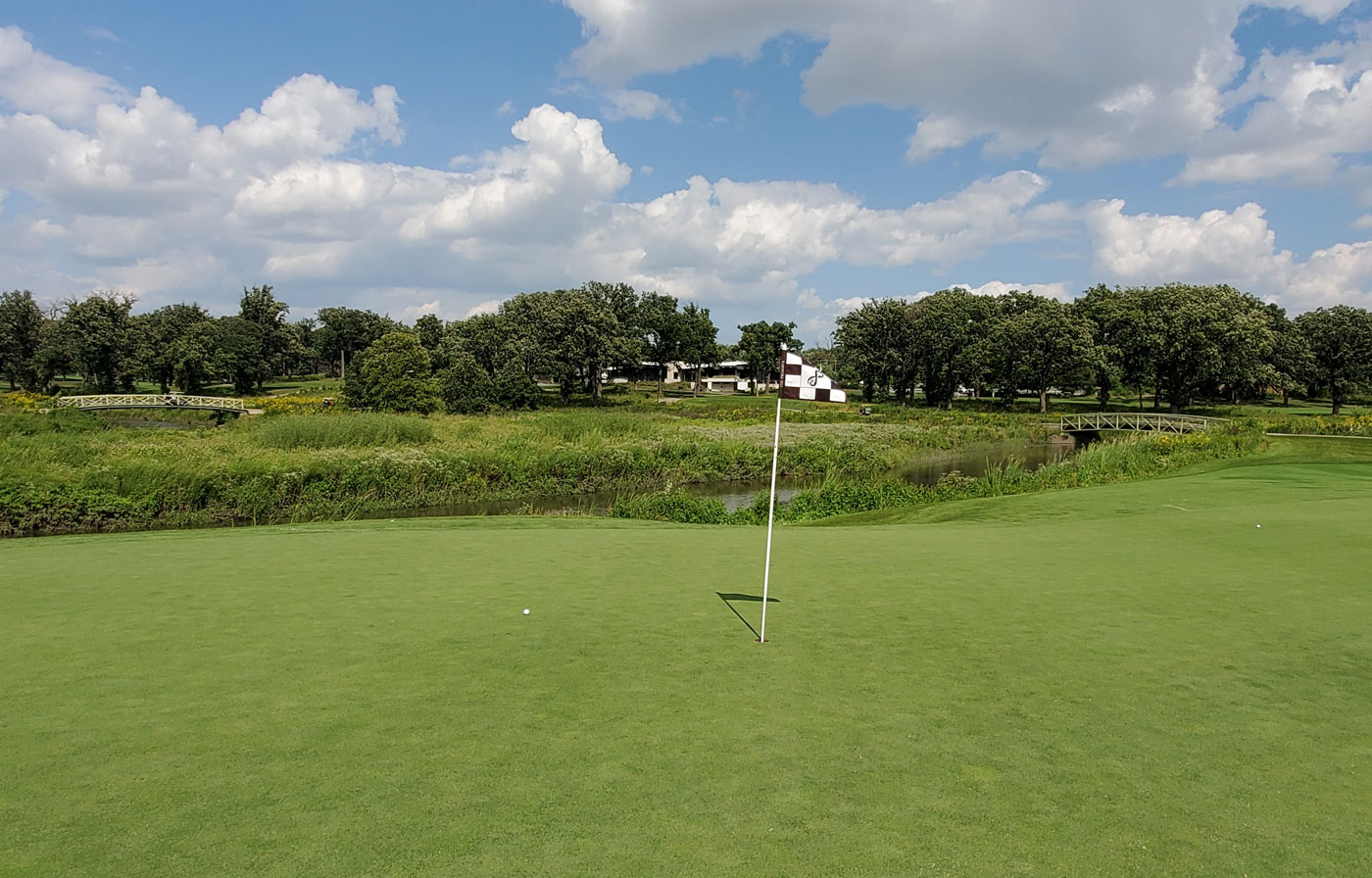
The Preserve at Oak Meadows
The renovated property was also designed to temporarily hold more stormwater within designated wetlands and floodplain areas. This helps reduce the amount of water moving downstream toward homes and businesses while allowing the golf course to recover more quickly after significant rain events.
The result is a property that serves two important purposes: providing a high-quality public golf experience and supporting regional stormwater management.
Restoring the Natural Landscape
The Oak Meadows renovation also created an opportunity to improve the property’s ecological health.
Invasive and low-quality trees were removed from areas along the river corridor. This improved airflow and sunlight for the golf course turf while reopening views of Salt Creek and making room for native prairie habitats.
The project demonstrated that golf course improvements and ecological restoration do not have to compete with each other. In many cases, the same decisions can benefit both.
Better airflow contributes to healthier turf. Native areas require less intensive maintenance than traditional rough. Expanded wetlands provide wildlife habitat while helping manage floodwater. Golfers also receive a more scenic and distinctive experience.
That combination earned the project recognition from multiple industries. Golf Inc. magazine named it Renovation of the Year, while Chicago Wilderness presented the property with its Force of Nature Award.
A Centralized Approach to Three Different Courses
The Forest Preserve District operates three golf facilities, each serving a different role within the DuPage County golf community.
- The Preserve at Oak Meadows integrates high-quality public golf with conservation and stormwater management.
- Maple Meadows Golf Course is a traditional 18-hole facility being modernized for the coming decades.
- Green Meadows Golf Club provides an accessible, shorter alternative for juniors, seniors, beginners and experienced golfers seeking an efficient practice round.
Although the facilities are different, the district manages them as a connected portfolio.
Maintenance operations are led across all three properties by Luke Shryiny. This centralized approach allows the courses to share equipment, expertise, purchasing power and maintenance practices.
For a smaller facility such as Green Meadows, that structure is particularly valuable. The course can benefit from the same knowledge and conditioning standards used at the district’s larger properties.
Green Meadows Offers a Different Kind of Golf Experience
Green Meadows measures less than 2,000 yards and consists of three par 4s and six par 3s. It has traditionally been viewed as an entry point for junior and senior golfers, but Stevenson believes the course can serve a much wider audience.
An experienced golfer can complete a round in approximately 75 to 80 minutes while using nearly every part of the game.
Instead of spending that time hitting balls on a driving range, a golfer can practice approach shots, wedges, bunker play, chipping and putting under actual playing conditions. The shorter format also makes the course attractive to golfers who do not have four or five hours available for a traditional round.
Green Meadows illustrates how shorter courses can complement full-length facilities rather than compete with them.

Green Meadows Golf Course – Hole 1
Preparing Maple Meadows for the Next 30 Years
Maple Meadows is undergoing a major renovation intended to position the facility for the next several decades.
Like many established golf properties, some of its most important infrastructure had reached the end of its expected life. Irrigation components, cart paths and building systems such as gutters and furnaces were approximately 25 to 30 years old.
The project gives the district an opportunity to address those issues while also improving the golf experience.
Routing changes will eliminate an unusual section of the previous layout that required golfers to cross a private residential drive three times during an 18-hole round. The redesigned routing is expected to create a more intuitive experience and contribute to a better pace of play.
The renovation will also improve non-playing areas of the property, creating better habitat for birds and other wildlife. As at The Preserve at Oak Meadows, the goal is to improve the golf course and its environmental value at the same time.
Golf’s Post-Pandemic Momentum
The demand for golf and outdoor recreation increased dramatically during the COVID-19 pandemic, but the Forest Preserve District has not seen that interest disappear.
Annual visitation across the district’s approximately 60 properties increased from fewer than four million visits to around six million. Stevenson believes that represents a lasting change in how people value outdoor spaces.
Changes in work schedules have also contributed to golf’s continued strength. Remote and hybrid work have given some golfers greater flexibility to play during weekdays rather than limiting their rounds to weekends.
Indoor golf has further expanded the game’s reach. With more than 100 simulator locations in the Chicago area, golfers can now remain engaged throughout the winter. That year-round participation helps sustain interest when outdoor courses reopen in the spring.
Why Junior Golf Is Growing
Junior golf has also experienced renewed momentum.
Parents increasingly recognize golf as a lifelong activity that children can continue playing well into adulthood. Concerns about injuries associated with contact sports may also lead some families to consider golf as an alternative.
The game’s image among young people has changed as well. Golf apparel, social media, entertainment venues and simulator facilities have helped make the sport feel more social and culturally relevant.
That shift can be seen in the growing participation in junior programs, high school golf teams and regional golf associations.
The Golf Course as a Community Asset
The DuPage County model suggests that the future of public golf may depend on demonstrating value beyond the number of rounds played.
A golf course can provide recreation while managing stormwater, restoring native habitats, supporting wildlife and giving residents access to nature. It can introduce children to a lifelong sport, provide older adults with an active social outlet and offer experienced golfers an efficient place to practice.
The transformation of The Preserve at Oak Meadows and the continued investment in Maple Meadows and Green Meadows show what can happen when recreation and conservation are treated as complementary goals.
For Stevenson and the Forest Preserve District of DuPage County, the objective is not simply to operate three golf courses. It is to manage three public properties that solve problems, serve different types of golfers and create lasting value for the surrounding community.
Watch the complete Chicago Golf Report Podcast interview with Ed Stevenson to learn more about the Forest Preserve District of DuPage County’s approach to golf course management, renovation and environmental stewardship.
Podcast: Play in new window | Download
Subscribe: RSS








 Find a Golf Course
 Find a Driving Range
 Find a Topgolf
 Find a Golf Instructor