
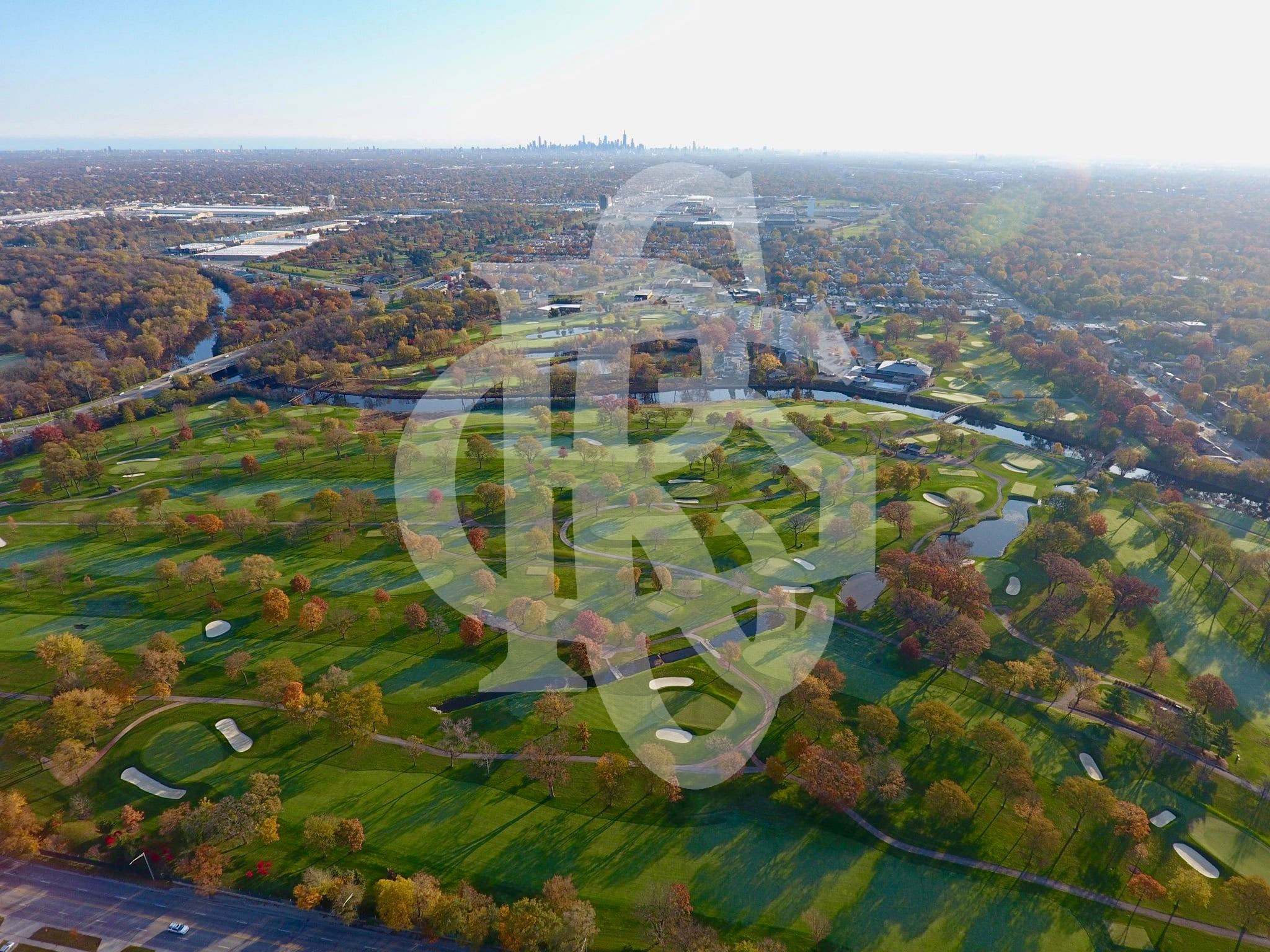
Few golf courses in the Chicago area carry a story as rich, layered, and evolution-driven as Riverside Golf Club. Founded on July 3, 1893, Riverside is not only one of the oldest golf clubs in the region—it is a living timeline of American golf itself, spanning the sport’s earliest days through its Golden Age and into modern restoration.
What makes Riverside especially compelling is this: the club dates to 1893—but the course you play today is the result of multiple architectural eras, and unexpected setbacks, anchored by a transformative design from William B. Langford.
1893: One of Chicago’s Earliest Golf Clubs
Riverside Golf Club was founded by William A. Havemeyer and a group of 22 partners at a time when golf in America was still emerging.
The original course was humble:
- 1893: 3 holes
- Expanded quickly to 5 holes
- By 1894, a full 9-hole course was established
This early layout stretched roughly 3,200 yards and played to a bogey of 43—set against the scenic ravines and riverbanks of the Des Plaines River .
At the time, this was cutting-edge. Chicago was becoming a national golf hub, and Riverside was part of that first wave—alongside clubs that would shape the future of the game.
A Landscape Designed for Golf
The setting of Riverside is no accident. The Village of Riverside was designed in 1869 by Frederick Law Olmsted, the visionary behind Central Park.
Olmsted’s philosophy—curving roads, preserved green corridors, and harmony with nature—created a perfect canvas for golf decades later. The Des Plaines River, ravines, and rolling terrain would become defining elements of the course.
1917–1919: Langford’s Defining Transformation
The most important moment in Riverside’s architectural history came between 1917 and 1919, when William B. Langford was hired to design a new 18-hole championship course.
Langford, a Yale- and Columbia-trained engineer, would go on to become one of the most influential architects of the Golden Age. Riverside is widely believed to be one of his earliest solo projects, before partnering with Theodore J. Moreau .
Langford’s Design Philosophy
Langford believed golf should be:
- Fun
- Strategic
- Varied
- Bold in scale
His approach emphasized:
- Plateau greens with dramatic contours
- Deep, visually striking bunkers
- Natural-looking hazards shaped by hand
- Strategic placement where hazards could be avoided with smart play
He famously stated that hazards should challenge players without punishing them unfairly, rewarding those who “gauge their ability correctly.”
Riverside’s Golden Age Layout
At Riverside, Langford delivered a course that:
- Routed seamlessly through river corridors and ravines
- Featured sweeping fairways and elevated green complexes
- Measured approximately 6,800 yards, par 72
The result was immediate:
Riverside became one of the top courses in the Chicago area, a reputation it would carry for decades.
Expansion and Change: The 1980s Evolution
By the 1980s, Riverside adapted again—this time to modern expectations.
Dick Nugent’s Expansion
The club acquired 25 acres east of the river and hired Dick Nugent to design four new holes .
Nugent, an Illinois Golf Hall of Famer, brought:
- More risk-reward strategy
- Varied routing directions
- Creative use of terrain
Bob Lohmann’s Additions
Following Nugent’s work, Bob Lohmann:
- Built a modern practice facility
- Designed a new par-5 finishing hole
- Removed three older holes to rebalance the routing
These updates modernized the course while preserving its strategic backbone.
A History of Resilience
Throughout its long history, Riverside Golf Club has shown remarkable resilience, particularly in the face of three significant clubhouse fires. The first occurred in 1899, destroying the club’s early structure during its formative years. A second fire in 1918 struck just as the club was undergoing its major transformation into a championship facility, forcing yet another rebuild.
Decades later, in 1984, a third fire again damaged the clubhouse, leading to modern reconstruction efforts. Each time, Riverside responded not with retreat, but renewal—rebuilding and continuing to evolve—further reinforcing its identity as one of Chicagoland’s most enduring golf institutions.
2015 Restoration: Returning to Langford’s Vision
In 2015, Riverside took a significant step toward reclaiming its Golden Age identity with a restoration led by David Esler.
Esler’s work focused on restoration, not reinvention:
- All bunkers rebuilt with classic grass-faced edges
- Trees removed to restore original sightlines
- Greens expanded and refined
- Tee positions repositioned
The goal was clear: bring Riverside back to Langford’s intent while meeting modern playing standards.
A Proven Championship Venue
Riverside’s design has consistently stood up to competitive golf for over a century.
Notable Events Hosted
- U.S. Open Qualifiers (1928, 2007)
- U.S. Amateur Qualifier (1950)
- Illinois Open (1968)
- Illinois PGA Championship (1975)
- Western Junior Championship (2015) — one of the premier junior events in the country
- Illinois Senior Amateur (2018)
Riverside has also hosted numerous USGA qualifiers across decades, reinforcing its reputation as a fair but demanding test of golf.
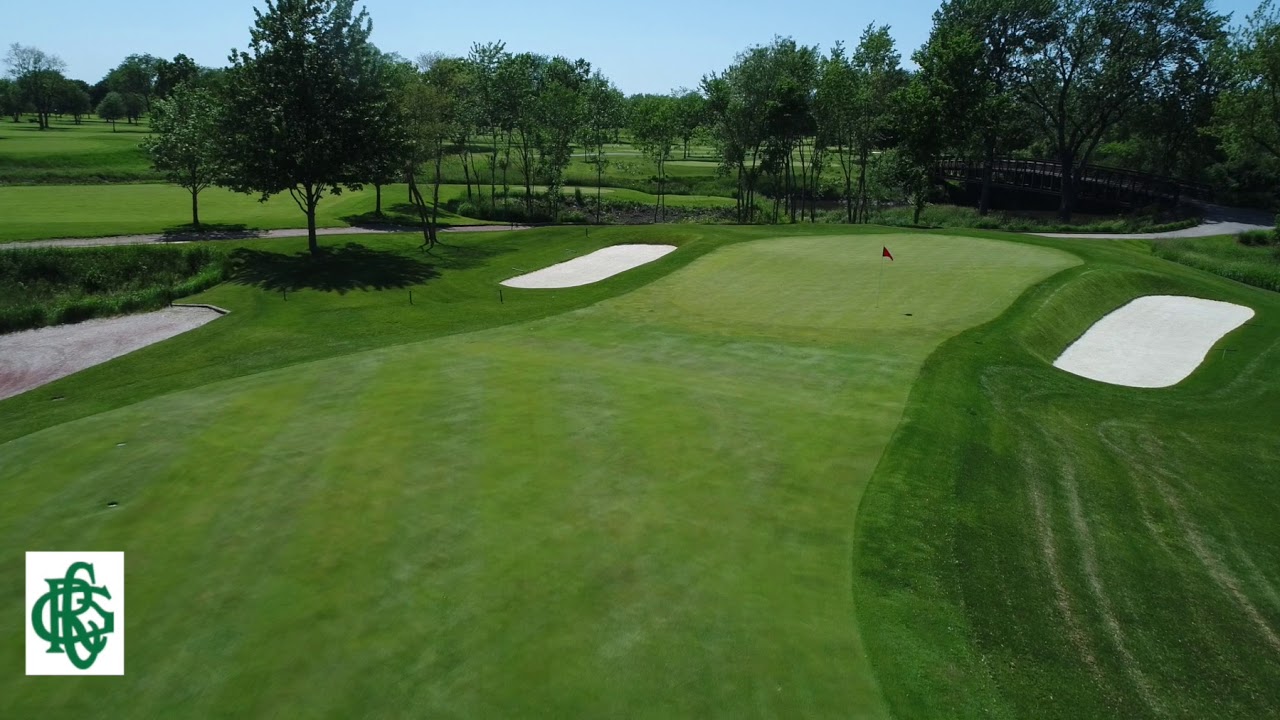
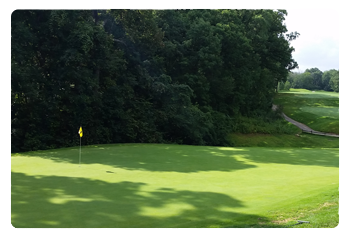
Riverside Golf Club- 6th Hole
The Course Today: Strategy Over Power
Riverside Golf Club today is not about overpowering length or modern championship difficulty. Instead, it offers something increasingly rare: strategic, enjoyable golf that rewards smart play.
Key Characteristics
Tree-Lined Precision
Accuracy matters. Many holes are framed by mature trees, placing a premium on positioning.
River Influence
The Des Plaines River weaves through the property, coming into play on select holes and adding both beauty and tension.
Subtle Greens
Langford’s fingerprints are most visible on the greens—where contour, angle, and approach strategy define scoring opportunities.
Walkable Routing
The course flows naturally, making it an enjoyable walk and reinforcing its Golden Age DNA.
At around 7,000 yards in its modern form, Riverside offers enough length for today’s game while preserving its strategic DNA. For the everyday golfer, Riverside is approachable. For the architecture enthusiast, it’s quietly sophisticated.
Why Riverside Matters in Chicago Golf
Chicago is one of the great golf cities in the world—but Riverside stands apart for a unique reason:
It represents continuity.
- A club born in the 1890s
- A course shaped in the Golden Age
- Adaptations through the modern era
- Restoration that reconnects it to its roots
And perhaps most importantly: It remains accessible.
In a region dominated by private clubs, Riverside continues to serve as a golf anchor, welcoming players of all skill levels.
Final Thoughts: A Course That Tells the Story of Golf
Riverside Golf Club is not just a place to play—it is a place to understand the evolution of the game.
From its beginnings as a 3-hole experiment in 1893…
to Langford’s bold championship vision in 1919…
to three devastating club house fires…
to modern refinements that respect its heritage…
Riverside stands as one of the most authentic golf experiences in Chicagoland.







 Find a Golf Course
 Find a Driving Range
 Find a Topgolf
 Find a Golf Instructor