
Tucked into Chicago’s historic South Side, Beverly Country Club stands as one of the most important—and often underappreciated—golf courses in the United States. With roots dating back to 1908, a design lineage that includes Donald Ross, and a championship résumé that rivals nearly any club in the Midwest, Beverly is far more than a local gem—it’s a foundational piece of American golf history.
What makes Beverly especially compelling is not just its longevity, but the way it has evolved. This is not a course frozen in time. Instead, it’s a living, breathing example of how great golf architecture can be refined, restored, and reinterpreted without losing its soul.
Origins: From Auburn Park to Beverly
Beverly Country Club traces its beginnings to a group of golfers from Auburn Park Golf Club, which dated back to 1901 and featured a nine-hole layout designed by T.R. Brocklesby that stretched 2,337 yards across 80 leased acres in Chicago’s West Auburn Park neighborhood. The course was fairly simple, with just one sand bunker and wide drainage ditches serving as the primary hazards.
Ultimately, members were dissatisfied with the layout, and when the lease expired in 1908, they relocated and renamed the club Beverly. They purchased a 160-acre tract known as the Sherman Farm—rolling, sandy terrain that would prove ideal for golf.
The original course is credited to George O’Neil, the club’s first professional. While some accounts suggest that Tom Bendelow may have contributed, the earliest layout was fundamentally O’Neil’s work—a long and demanding course for its time, stretching over 6,000 yards when equipment was far less advanced.
Even in its earliest form, Beverly stood out. The property featured a distinctive ridge and natural dune-like formations—remnants of ancient shoreline geography—that gave the course an uncommon topographical character in an otherwise flat Chicago landscape.
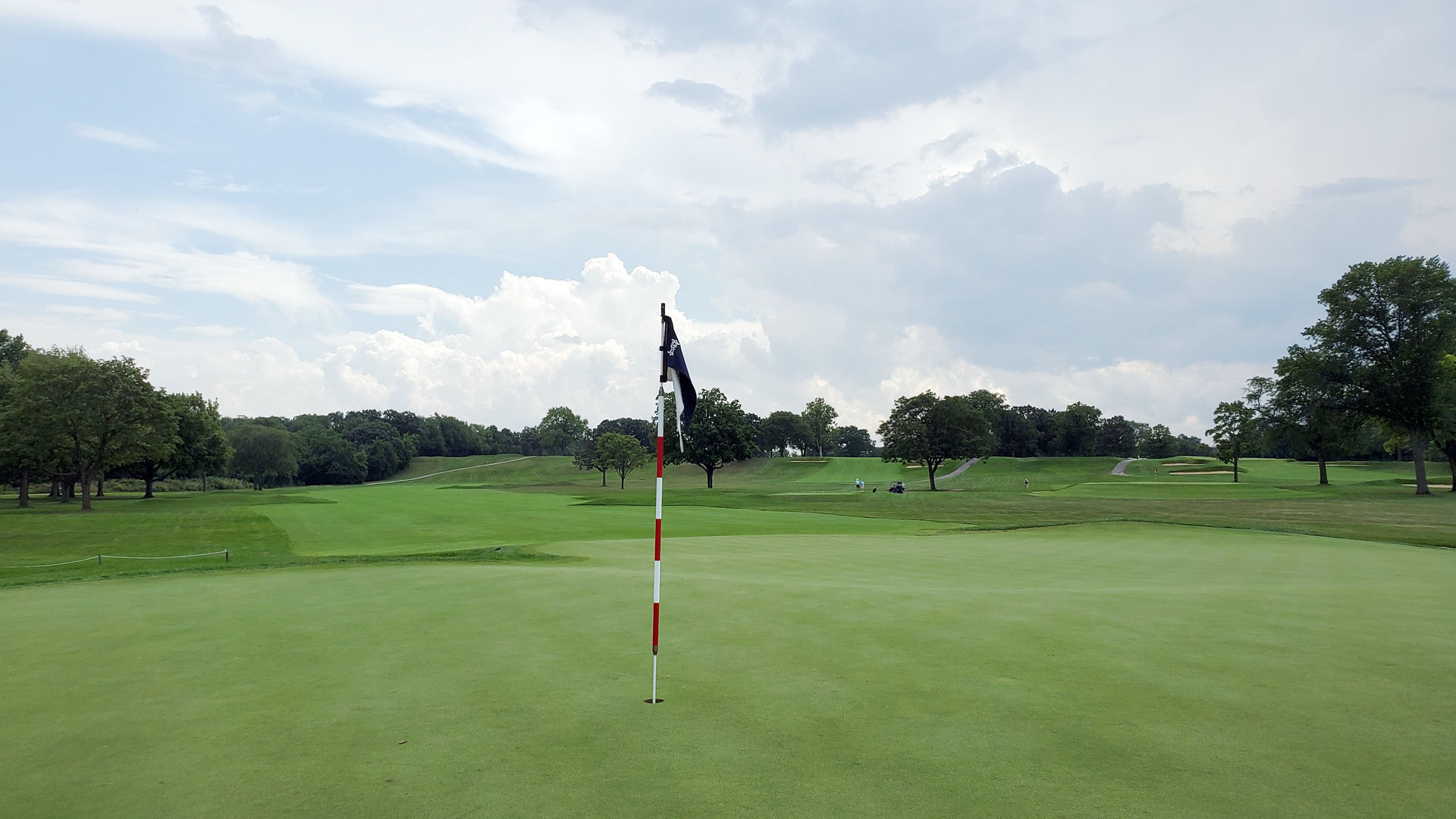
Beverly Country Club – 2
From the Ashes – The Ross Transformation
In 1917, the original Beverly Country Club clubhouse experienced a significant fire. But the defining moment in Beverly’s architectural history came shortly thereafter with the involvement of Donald Ross. While early records are somewhat fragmented, the strongest evidence places Ross on-site around 1918, with continued implementation of his master plan into the early 1920s.
Ross didn’t simply tweak the course—he reimagined it. His design introduced strategic routing within a rectangular property, no consecutive holes running in the same direction, thoughtful use of elevation and natural landforms, and a dramatic closing stretch that has tested generations of great players.
The front nine saw the most dramatic changes, with holes rerouted, combined, or entirely reimagined. Meanwhile, the back nine retained more of O’Neil’s structure but was sharpened strategically—especially the finishing holes.
The result is a course that feels far larger, more varied, and more dynamic than its urban footprint suggests.
Signature Features and Strategic Identity
Several holes at Beverly reflect Ross’s genius and continue to define the playing experience today. The 2nd hole is a sweeping three-shot par 5 descending from the ridge into a valley, demanding both placement and patience. The 7th hole, known as “Heartbreak Hill,” is a long, uphill par 5 that tests endurance and precision. The 12th is a classic Ross par 3—subtle, strategic, and shaped by green contours. The closing stretch, especially the 17th and 18th holes, remains one of the most demanding finishes in Chicago golf.
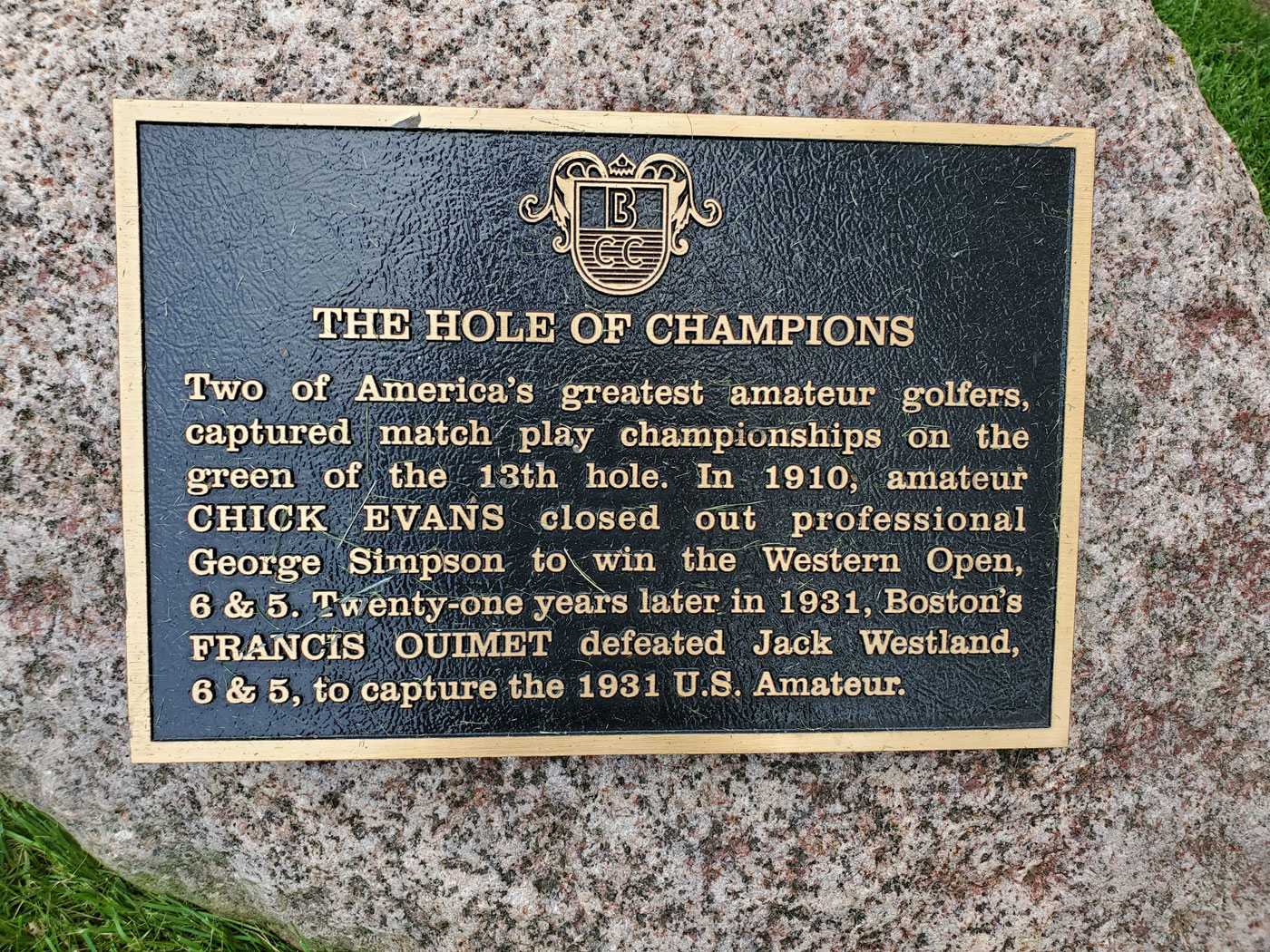
Beverly Country Club – Hole of Champions
What makes Beverly unique is how these holes connect. The course doesn’t rely on one or two standout moments—it builds tension and variety throughout the round.
Championship Pedigree
Few clubs in America can match Beverly’s tournament history.
Over the decades, Beverly has hosted the Western Open, U.S. Amateur, Western Amateur, Women’s Western Open, U.S. Senior Amateur, Western Junior, and Chicago Open. The list of champions includes Chick Evans, Francis Ouimet, Arnold Palmer, Jack Nicklaus, Luke Donald, Sam Byrd, Vinny Giles, Connor Black, and Beau Hossler.
One of the club’s earliest defining moments came in 1910, when Chick Evans won the Western Open at Beverly, becoming the first American amateur to win a major professional event. In 1931, Beverly hosted the U.S. Amateur, won by Francis Ouimet in what many considered the beginning of a new era in amateur golf following the retirement of Bobby Jones.
Later, in 1963, Arnold Palmer defeated Jack Nicklaus and Julius Boros in a playoff at the Western Open—one of the strongest leaderboards of that era. Four years later, Nicklaus returned to Beverly and won the 1967 Western Open.
Simply put, Beverly hasn’t just hosted championships—it has shaped them.
Decline and Rediscovery
Like many classic courses, Beverly faced a period of decline in the mid-to-late 20th century—not in reputation, but in architectural integrity.
Tree planting campaigns, particularly after Dutch elm disease, gradually narrowed fairways and obscured sightlines. The course became overly tight, leading to what members jokingly called the “Beverly Punch”—a low recovery shot needed just to escape the trees.
The strategic brilliance of Ross’s design was still there. It simply needed to be uncovered.
The Restoration Era
That rediscovery began in earnest in the late 1990s under architect Ron Prichard. The first phase of restoration, which continued into the early 2000s, focused on tree removal, fairway widening, bunker restoration, and the recovery of green surfaces. This work restored much of the course’s original scale, though not every proposed change was implemented at the time.
Beginning around 2013, the club re-engaged Prichard, along with Tyler Rae, to continue the restoration effort. This phase included additional tree removal, expanded green surfaces, improved agronomics, and further recovery of the strategic width that had been lost over time.
The most transformative phase came in 2019 and 2020. Fairways were widened dramatically, bunkers were expanded and repositioned, greens were rebuilt and regrassed, and signature holes such as the 7th and 12th were restored with greater fidelity to their historic intent.
The goal wasn’t modernization for its own sake—it was restoration of intent. And by all accounts, the result is one of the finest Ross restorations in the country.
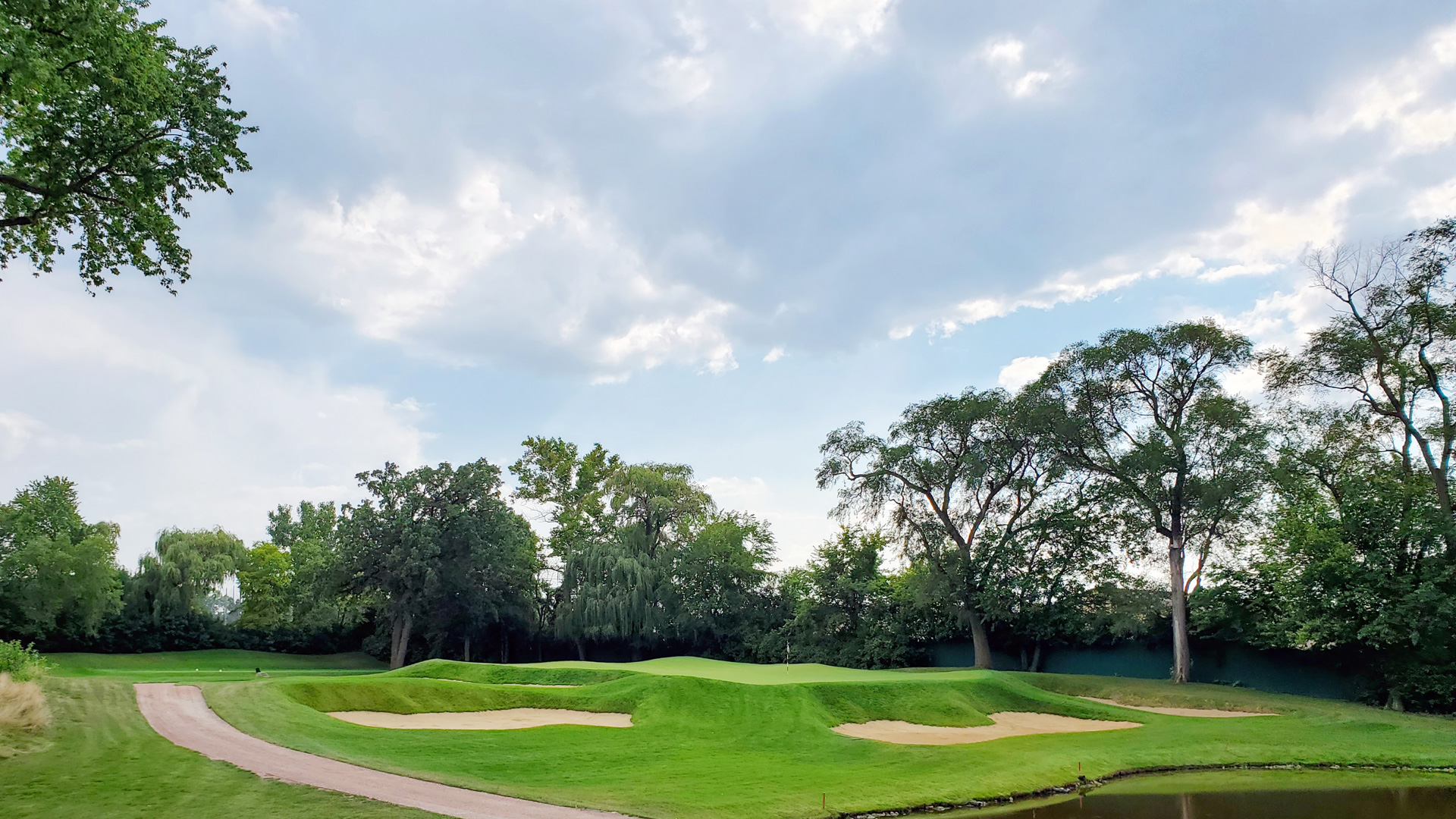
Beverly Country Club – 13
Recent Enhancements: Practice Facilities and Clubhouse Renovation
In recent years, Beverly Country Club has continued to invest in its future while honoring its past. One of the most exciting developments came during the 2022 season, when the club introduced a comprehensive enhancement to its practice facilities. This project included the addition of a short Par 3 course, a Himalayan-style putting green, and significant upgrades to both the short game area and long-range practice facilities.
Designed to complement the club’s championship-caliber course, these additions created a more complete training environment for players of all skill levels. By the start of the 2023 season, the new facilities were fully operational, offering members a dynamic space to develop every aspect of their game—from wedge play and putting to distance control and creativity around the greens.
The evolution of Beverly didn’t stop on the course. In 2025, the club completed a thoughtfully executed clubhouse renovation, further elevating the overall member experience.
While staying true to the club’s historic character, the renovated clubhouse introduced modern amenities, refreshed dining and gathering spaces, and improved functionality for both everyday use and special events. Together, these recent investments reflect Beverly’s commitment to blending tradition with forward-thinking improvements—ensuring that one of Chicago’s most storied clubs remains vibrant, relevant, and exceptional for generations to come.
Beyond the Course: Legacy and Impact
Beverly’s influence extends beyond architecture and tournaments. The club has deep ties to the Western Golf Association and the Evans Scholars Foundation, producing more Evans Scholars than any club in the country at one point.
It has also developed champions of its own, including Virginia Van Wie, who went on to win multiple U.S. Women’s Amateur titles.
These contributions reinforce Beverly’s role not just as a venue, but as a steward of the game.
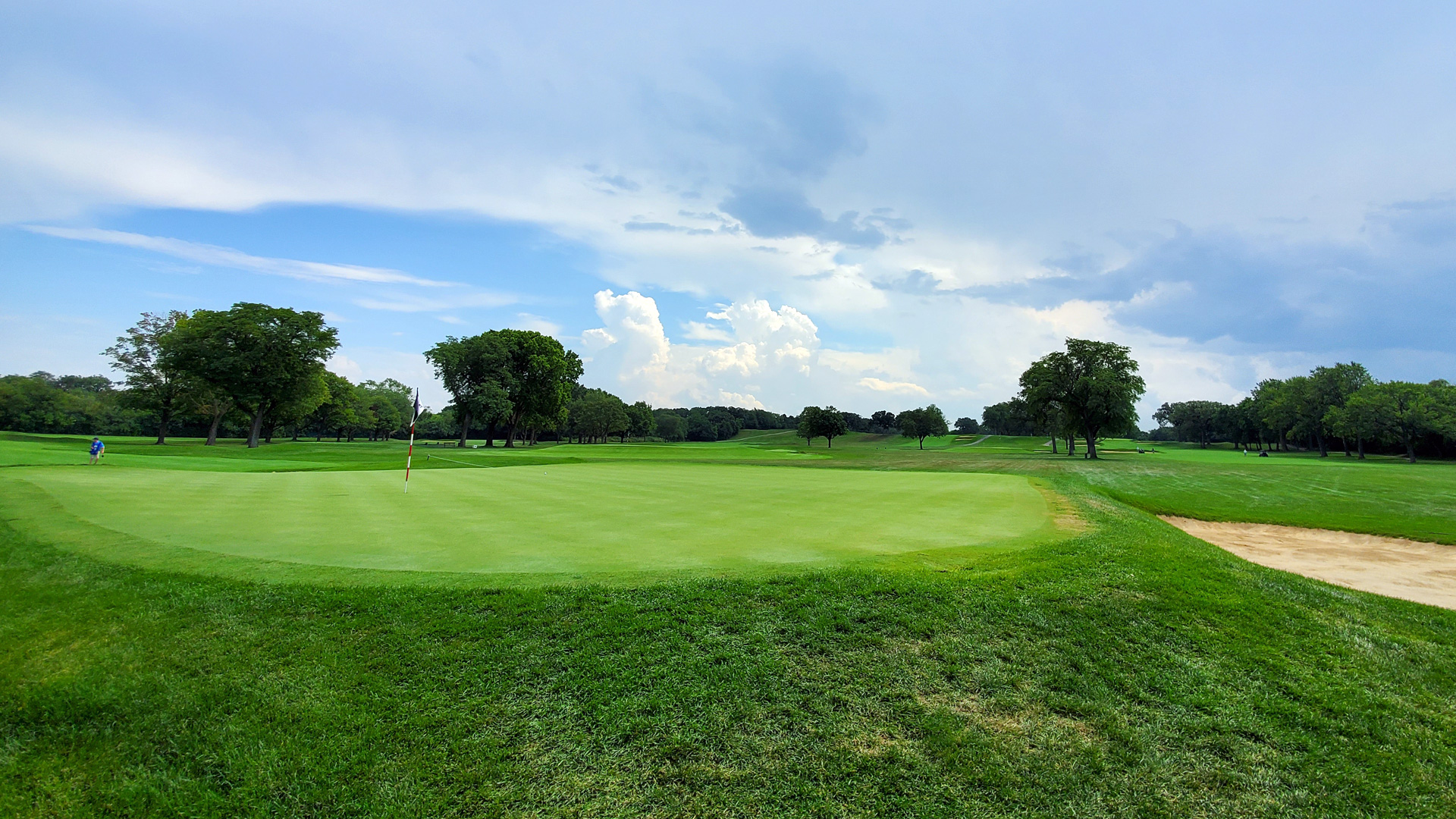
Beverly Country Club – 4
Why Beverly Still Matters
In a city rich with golf history, Beverly Country Club occupies a unique position.
It’s not as widely known as some of Chicago’s private clubs. It doesn’t rely on flash or modern redesigns. Instead, it offers something rarer: authenticity, architectural integrity, historical depth, and a course that reveals itself over time.
What makes Beverly special is the alignment between land and design. Ross saw something in this property—a rhythm, a flow, a natural movement—and built a course that still feels relevant more than a century later.
Thanks to thoughtful restoration and continued investment in the member experience, today’s golfers experience something remarkably close to that original vision while enjoying modern practice and clubhouse amenities.
Final Thoughts
Beverly Country Club is not just a great Chicago course—it’s a great American course.
It tells the story of early 20th-century golf expansion, the genius of Donald Ross, the evolution of championship golf, and the modern movement toward architectural restoration.
For those who appreciate golf history, strategy, and design, Beverly is essential.
And for Chicago golfers, it’s a reminder that some of the game’s greatest treasures aren’t hidden—they’re just waiting to be rediscovered.
no images were found








 Find a Golf Course
 Find a Driving Range
 Find a Topgolf
 Find a Golf Instructor