
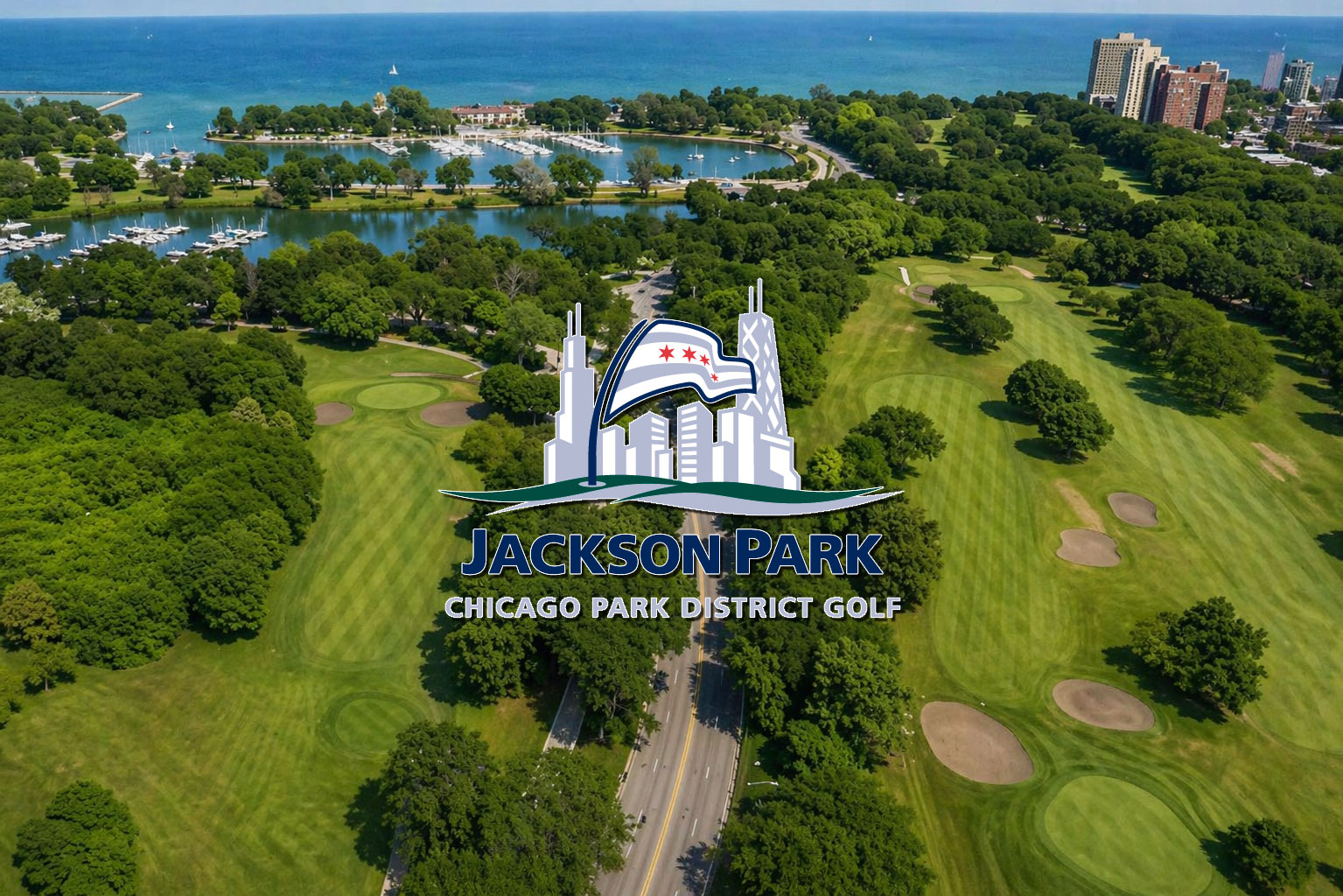
Few golf courses in America carry the historical weight, cultural significance, and enduring community impact of Jackson Park Golf Course. Located on the South Side of Chicago within the historic grounds of Jackson Park, this course is not just a place to play—it is where public golf in Chicago truly began.
Opened in 1899, Jackson Park is widely recognized as the first municipal golf course west of the Allegheny Mountains. From its origins as a free, nine-hole experiment to its role today as a cornerstone of Chicago’s golf culture, the course tells a story that mirrors the growth of the game itself.
From World’s Fair Grounds to Fairways
The land that would become Jackson Park Golf Course was already historic before the first golf ball was struck.
Jackson Park served as the centerpiece of the 1893 World’s Columbian Exposition, a transformative moment in Chicago’s history. The park itself was designed by legendary landscape architect Frederick Law Olmsted alongside Daniel Burnham, featuring lagoons, open meadows, and a naturalistic layout that would later prove ideal for golf.
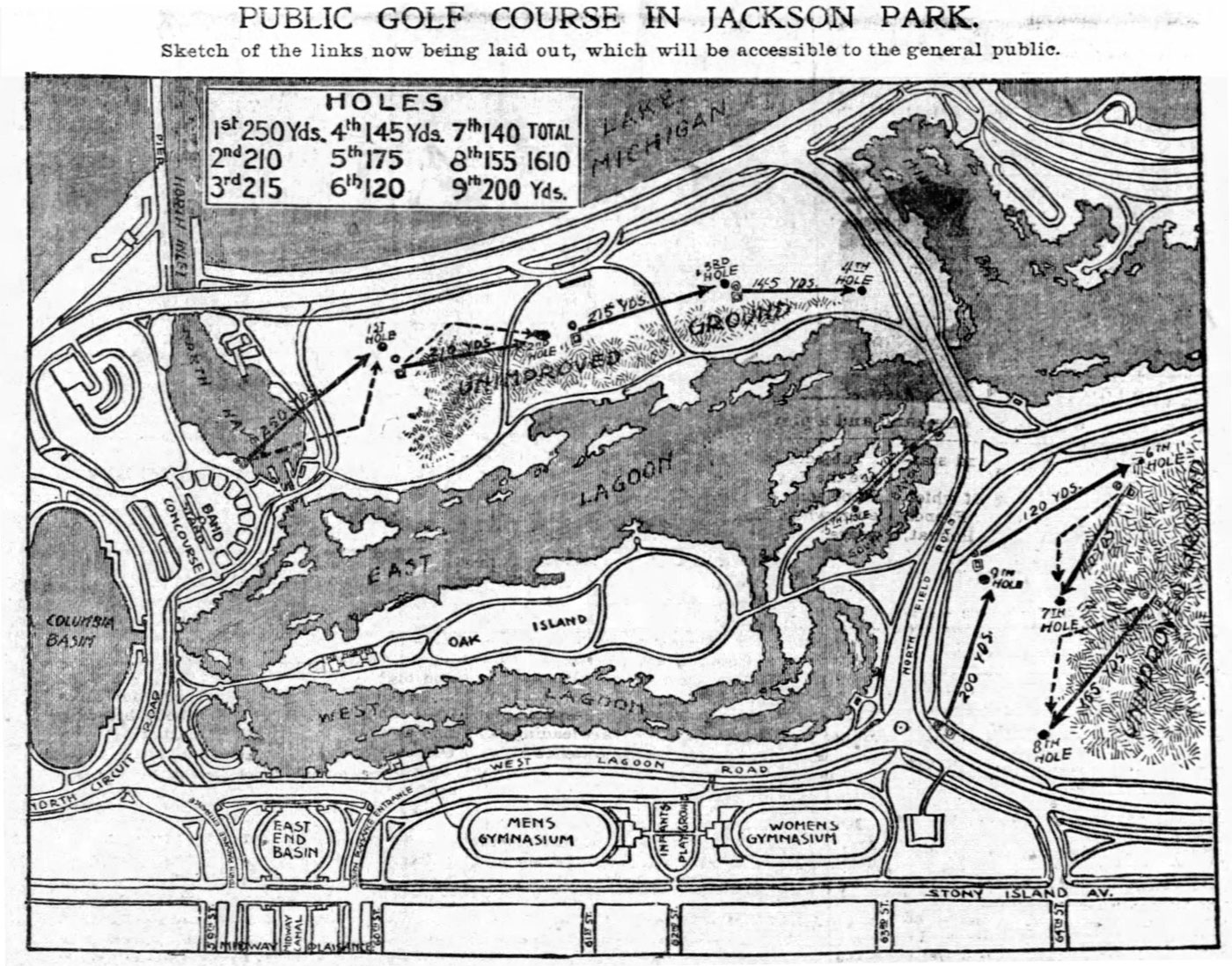
Original Jackson Park Layout
By the late 1890s, golf was booming across the United States. Chicago, already emerging as a national hub for the sport, made a groundbreaking decision: to create a free public golf course accessible to everyone.
On May 11, 1899, Jackson Park opened as a nine-hole course, drawing crowds of curious Chicagoans eager to learn the game. Contemporary accounts describe hundreds of players lining up to try golf for the first time—a powerful moment in the democratization of the sport.
The Original Design: Bendelow, Olmsted, and a Lasting Debate
The architectural origins of Jackson Park Golf Course reflect a fascinating—and somewhat unresolved—piece of golf history.
Most official records credit Tom Bendelow, often called the “Johnny Appleseed of American Golf,” as the course’s original designer. Bendelow was instrumental in spreading the game across the country, designing accessible layouts that welcomed beginners while still offering strategic value.
However, historical accounts also suggest that the expansion from nine to eighteen holes in 1900 was guided by the Olmsted Brothers landscape architecture firm. This dual attribution highlights the unique nature of Jackson Park.
- Bendelow’s influence: playability, accessibility, and golf-specific design
- Olmsted’s influence: integration with the natural landscape and park system
The result is a course that feels less like a constructed golf facility and more like a natural extension of the park itself—a hallmark of early American golf design.
Growth, Popularity, and the World’s Busiest Course
Jackson Park’s early success was immediate—and overwhelming.
Originally free to play, the course quickly became one of the most popular golf destinations in the country. By 1900, it had expanded to a full 18-hole layout, and by the 1920s, it was reportedly the busiest golf course in the world.
This popularity was no accident. Jackson Park represented a revolutionary idea: that golf could be a public game, not just a private privilege.
In 1920, the city introduced a nominal green fee, ending its completely free era but maintaining its accessibility. Even with the fee, it remained a vital recreational outlet for Chicago residents.
A Course That Shaped Chicago Golf
Jackson Park Golf Course has played a central role in developing Chicago’s golf culture.
It has hosted the Chicago City Amateur Championship more than 100 times, making it one of the most important competitive venues in the city. Early champions included legendary players like Chick Evans, tying the course directly to the national golf story.
Just as importantly, Jackson Park became a hub for inclusive golf.
- Home to one of the oldest Black women’s golf clubs, founded in 1921
- Birthplace of the Bob-O-Links junior program in 1954
- Longtime gathering place for Chicago’s African-American golf community
During an era when many courses were segregated or exclusive, Jackson Park stood as a rare and powerful exception—an open, welcoming space for all golfers.
The Layout: Classic Parkland Golf
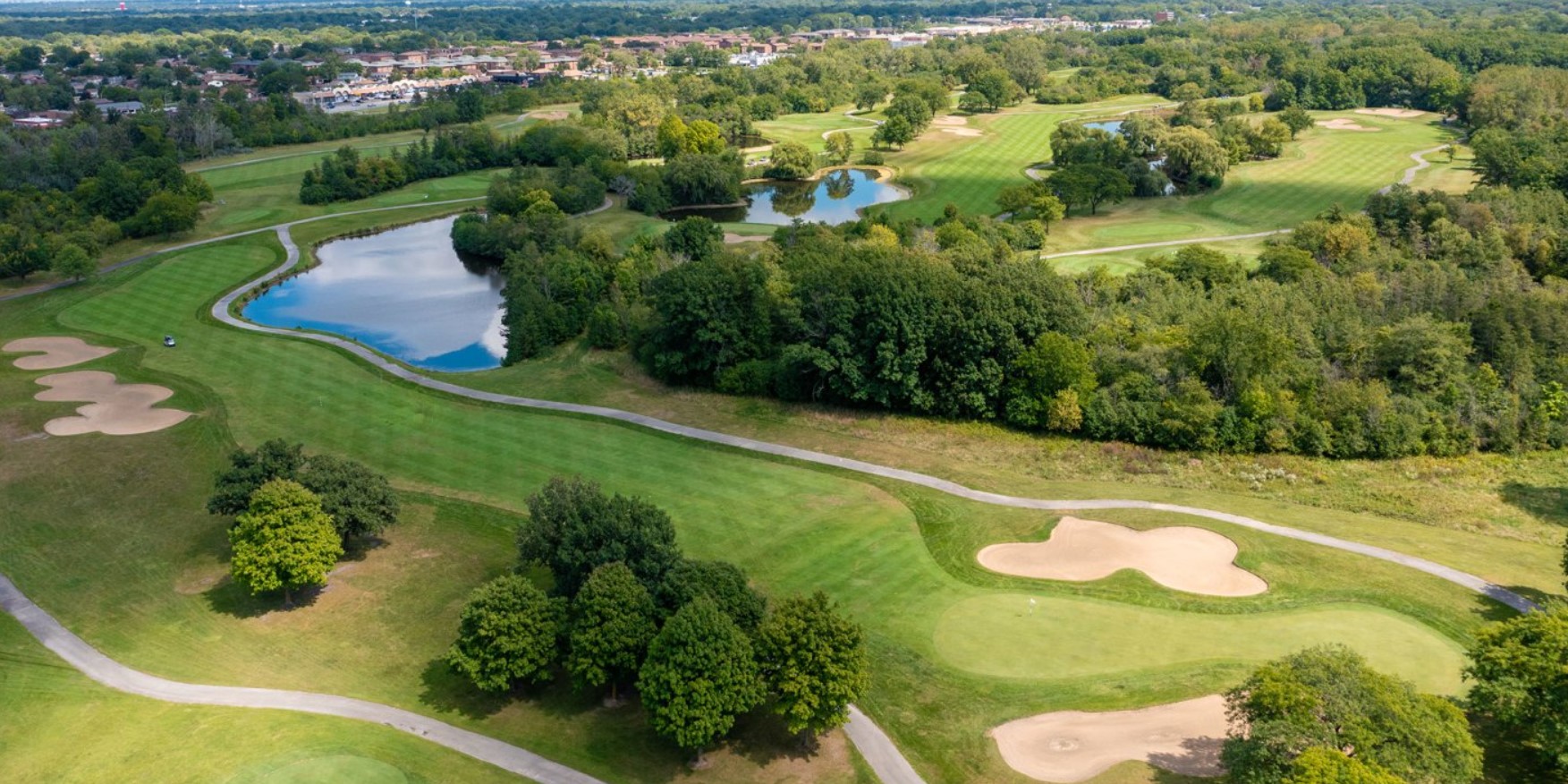
Today’s Jackson Park Golf Course remains largely true to its early design.
- Par 70 layout (35/35)
- Approximately 5,500 yards from the back tees
- Three par-5s, four par-3s, and eleven par-4s
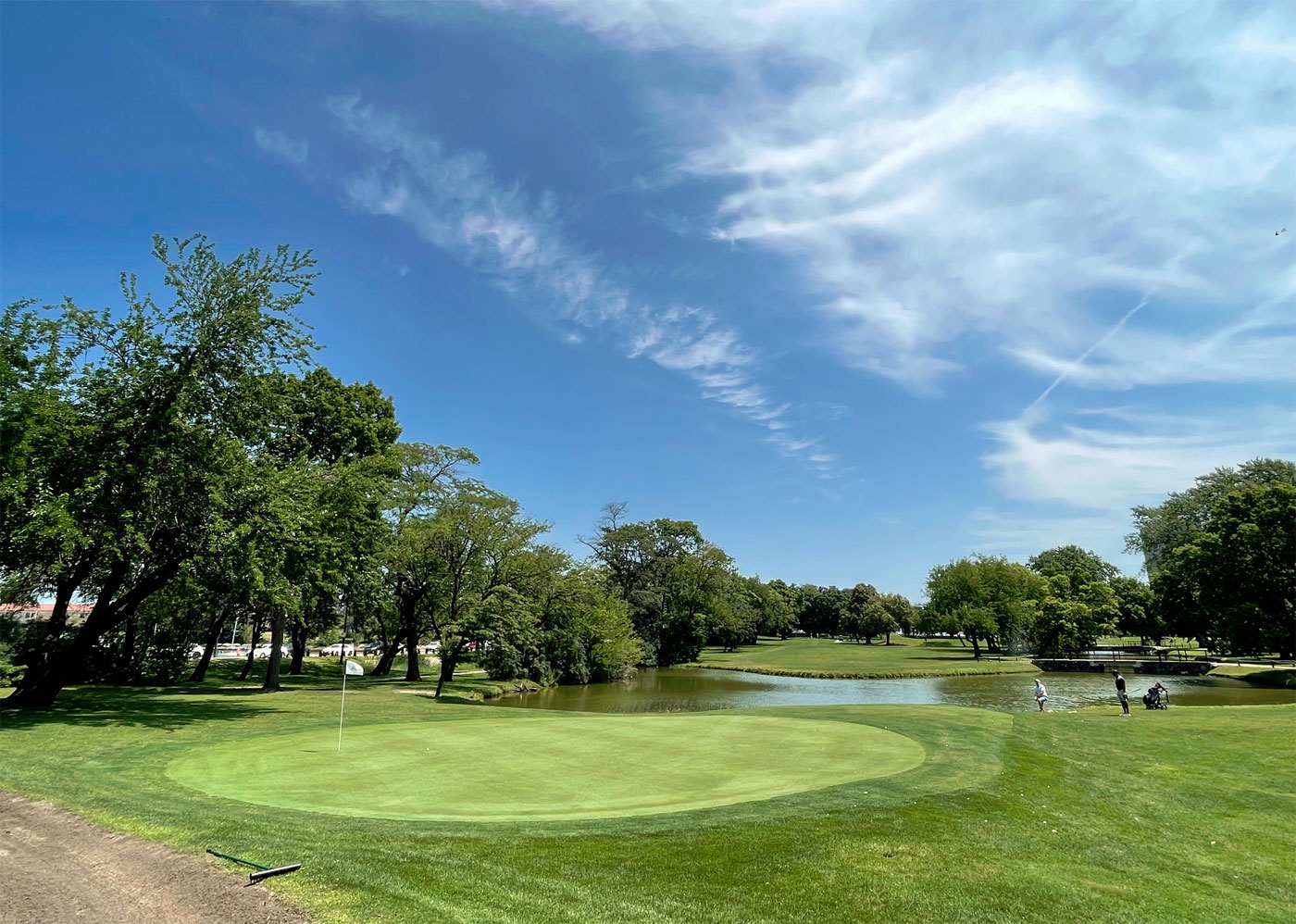
Jackson Park Golf Course
Its defining characteristics include:
Tree-Lined Fairways
Mature oaks frame many holes, requiring accuracy over distance.
Strategic Simplicity
Bendelow’s philosophy remains intact—approachable, but never boring.
Limited Water Hazards
Despite the surrounding lagoons, water comes into play on only a few holes.
Wind as a Defense
Proximity to Lake Michigan introduces a constant and unpredictable challenge.
One of the standout holes is the par-5 5th, which runs alongside Jackson Park Harbor, offering one of the most scenic—and uniquely Chicago—views in municipal golf.
Renovation, Preservation, and the Tiger Woods Proposal
Jackson Park’s future has been the subject of significant discussion over the past decade.
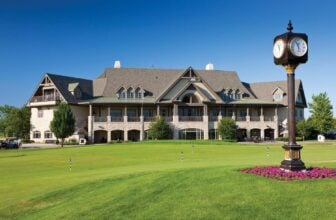
In 1997, the course underwent a key upgrade with the renovation of its historic clubhouse, renamed the Cecil A. Partee Clubhouse in honor of a local civic leader who helped preserve the course.
Then, in 2016, a bold new vision emerged: a proposal to merge Jackson Park with the nearby South Shore course into a Tiger Woods-designed championship layout.
President Obama and Tiger Woods Join Forces
Initially, TGR Design, a design firm led by iconic golfer Tiger Woods, agreed in 2016 to consolidate the existing 18-hole Jackson Park and nine-hole South Shore golf courses into one course meeting PGA Tour standards. The collaboration came about after a call from President Obama to Woods.
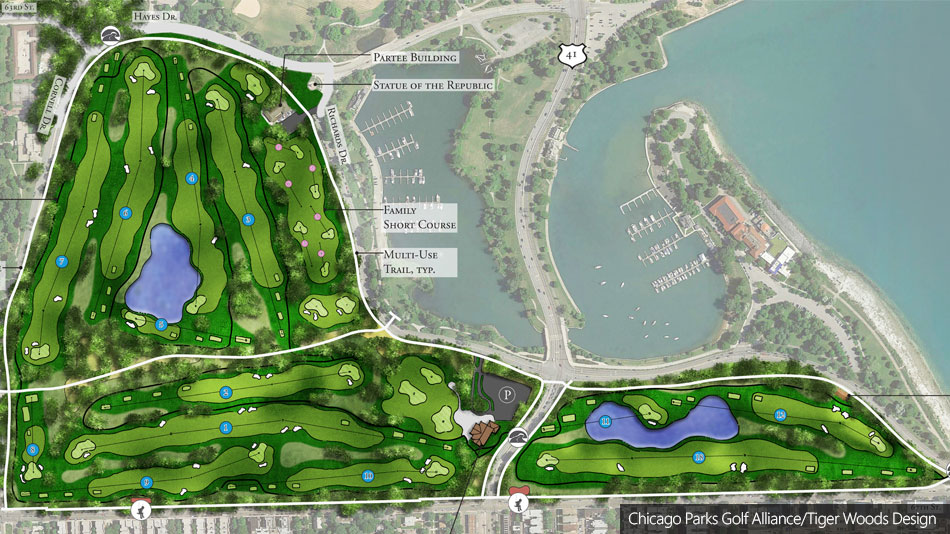
South Shore & Jackson Park Golf Course Restoration project
The team was to be led by NBC Golf Channel Analyst and award winning golf course developer, Mark Rolfing, who was to serve as the President and Founder of the Organization.
The ambitious $70 million project had garnered mixed reactions from local residents. Environmental concerns and worries about making the courses financially inaccessible to long-time, local golfers were voiced.
The plan included:
- A 7,300+ yard championship course
- New practice facilities and short course
- Infrastructure improvements and new routing
While the proposal generated excitement, it also sparked debate around cost, environmental impact, and preservation of Olmsted’s historic landscape. As of today, the project remains on hold, reflecting the complexity of balancing modernization with history.
The 2026 Renovation
More recently, Jackson Park Golf Course has entered a new phase under the management of Troon, which now oversees Chicago’s municipal golf operations. In a recent Chicago Golf Report podcast interview, Troon Senior Vice President Matt McIntee pointed to Jackson Park as part of a broader effort to elevate the condition and experience of the city’s public courses. Rather than pursuing an immediate large-scale redesign, Troon’s approach has focused on incremental but meaningful improvements—enhancing turf conditions, refining maintenance practices, and upgrading key player touchpoints throughout the facility.
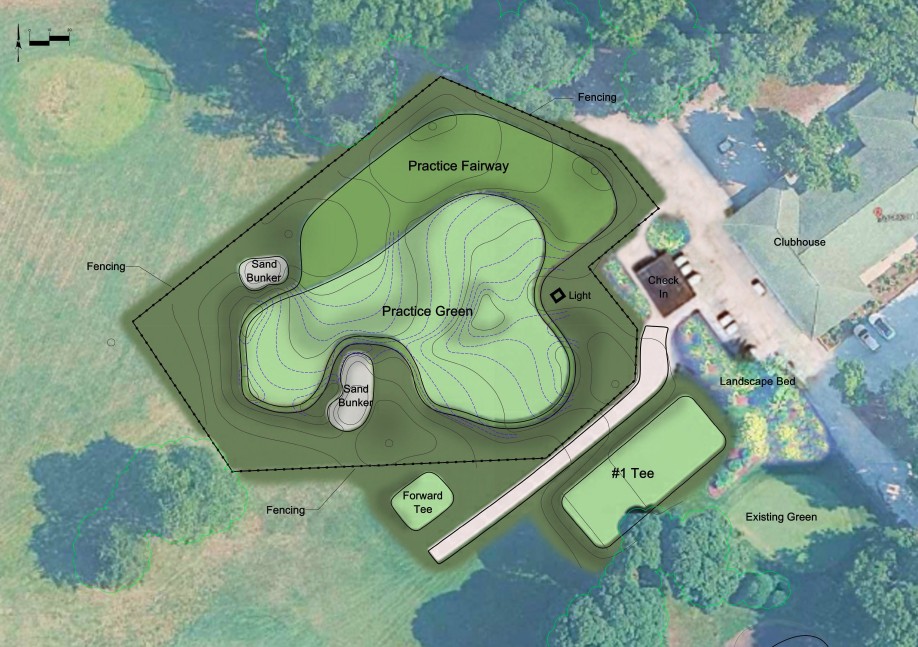
Jackson Park Golf Course – Short Game Area
McIntee also highlighted early-stage enhancements already underway at Jackson Park, including plans for an expanded short-game practice area designed to support junior golf and community engagement. While subtle compared to the long-discussed championship redevelopment proposals, these improvements represent a strategic shift—prioritizing playability, accessibility, and long-term sustainability. In many ways, this quieter evolution may prove just as important, reinforcing Jackson Park’s role as one of Chicago’s most important and accessible public golf courses while laying the groundwork for whatever future vision ultimately takes shape.
Environmental Stewardship and Modern Role
Despite its urban setting, Jackson Park Golf Course has embraced modern environmental practices.
The course is a Certified Audubon Cooperative Sanctuary, reflecting efforts in habitat preservation, water management, and sustainable maintenance. Native grasses, wildlife programs, and lagoon restoration projects all contribute to maintaining the ecological balance envisioned by Olmsted more than a century ago.
Why Jackson Park Still Matters
Jackson Park Golf Course is more than just Chicago’s oldest public course—it is one of the most important municipal golf courses in America.
It represents:
- The birth of public golf in Chicago
- The democratization of the game
- A cultural and community landmark
- A living connection to Olmsted’s park vision
In an era of high-end daily fee courses and private club exclusivity, Jackson Park remains something rare and essential: a place where anyone can play.
Final Thoughts
More than 125 years after it first opened, Jackson Park Golf Course continues to tell one of the most compelling stories in American golf.
From its beginnings as a free nine-hole course in 1899 to its current role as a historic municipal facility—and its uncertain but intriguing future—it stands as a testament to the enduring power of public golf.
For Chicago golfers, playing Jackson Park is more than a round. It’s a walk through history—one that connects the past, present, and future of the game in one of the country’s most iconic urban settings.







 Find a Golf Course
 Find a Driving Range
 Find a Topgolf
 Find a Golf Instructor