
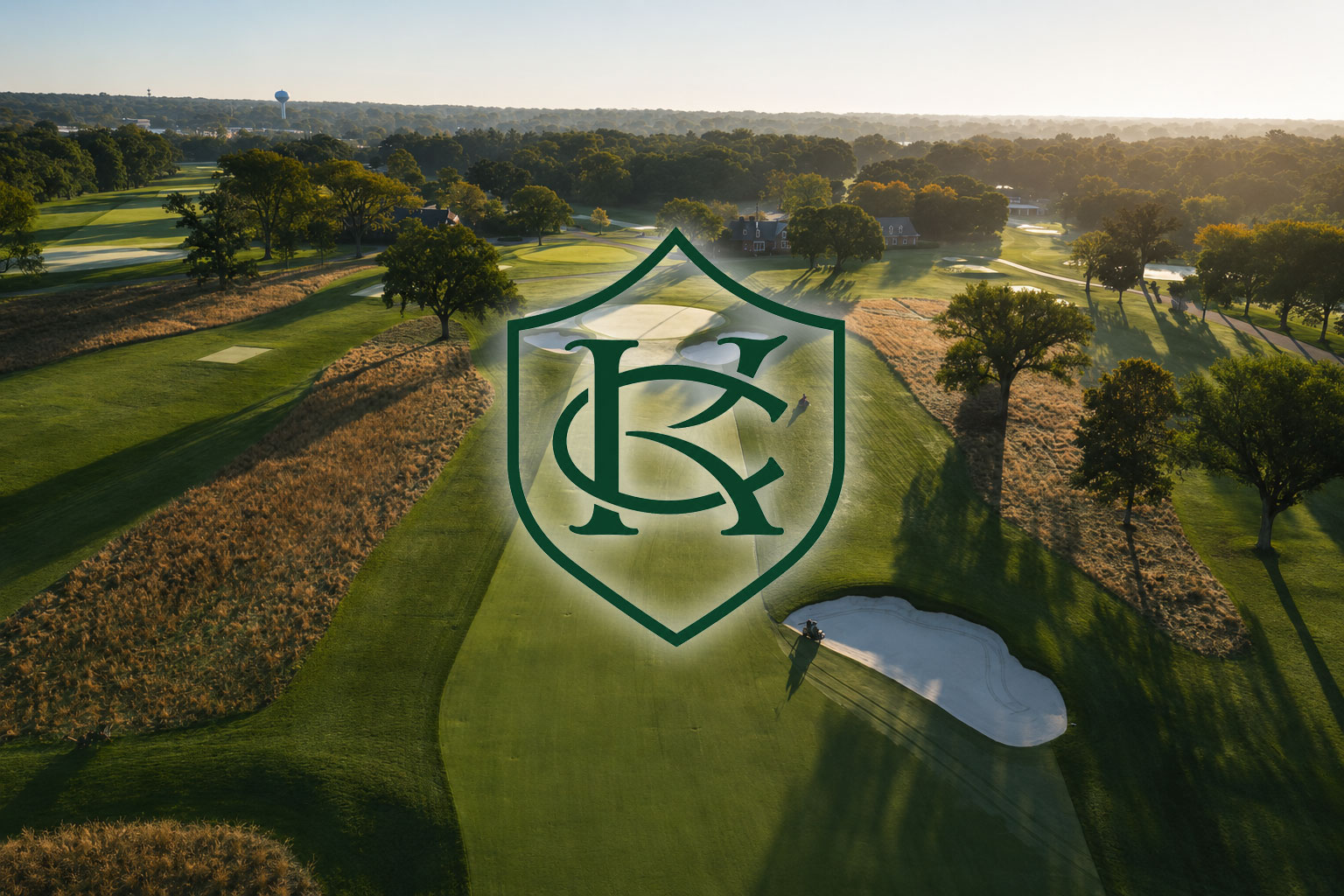
While many North Shore clubs boast rich traditions and impressive pedigrees, Knollwood Club in Lake Forest occupies a unique place in American golf history. Its championship legacy includes hosting the U.S. Amateur, U.S. Mid-Amateur, PGA Cup, and Western Amateur, while its golf course remains one of the finest surviving examples of Golden Age architecture from the famed design firm of Colt & Alison.
For more than a century, Knollwood Club has balanced world-class golf with the family-oriented atmosphere that has defined it since its earliest days. Its story is one of vision, perseverance, architectural evolution, and an unwavering commitment to preserving one of Illinois’ most treasured golfing landscapes.
A Club Born During the North Shore Boom
Knollwood Club emerged during a transformative period for Chicago’s North Shore. The early 1920s witnessed the rapid growth of private country clubs as affluent Chicago families sought recreational retreats away from the city.
The origins of Knollwood date to 1923 when a group of prominent Chicago businessmen began assembling land from the former Knollwood Farm property in Lake Forest. The club was formally incorporated on April 26, 1924.
Among the founding directors were several influential figures in Chicago business and civic life, including Samuel Insull, Robert P. Lamont, John V. Farwell, Thomas E. Wilson, Nathan William MacChesney, Lucius Teter, and F. Edson White. Wilson would serve as the club’s first president, while Teter would later become one of the most important chroniclers of Knollwood’s early history.
Unlike many clubs that focused exclusively on golf, the founders envisioned Knollwood as a complete country retreat. The property encompassed more than 200 acres of rolling farmland, providing ample room not only for a golf course but also for riding trails, tennis courts, swimming facilities, and social gathering spaces.
Construction moved quickly, and by 1925 the club had officially opened for play.
Charles Hugh Alison Creates a Masterpiece
One of the most important decisions in Knollwood’s history was the selection of Charles Hugh Alison to design the golf course.
Today, Knollwood is often credited as a Colt & Alison design, reflecting the partnership between legendary golf architects Harry Colt and Charles Alison. While Colt’s influence can certainly be seen in the routing philosophy and strategic concepts, historical records suggest that Alison played the primary role in the actual design and construction of Knollwood.
The founders reportedly provided Alison with a topographical survey of the property and instructed him to create the finest golf course possible regardless of cost.
It was an ambitious directive.
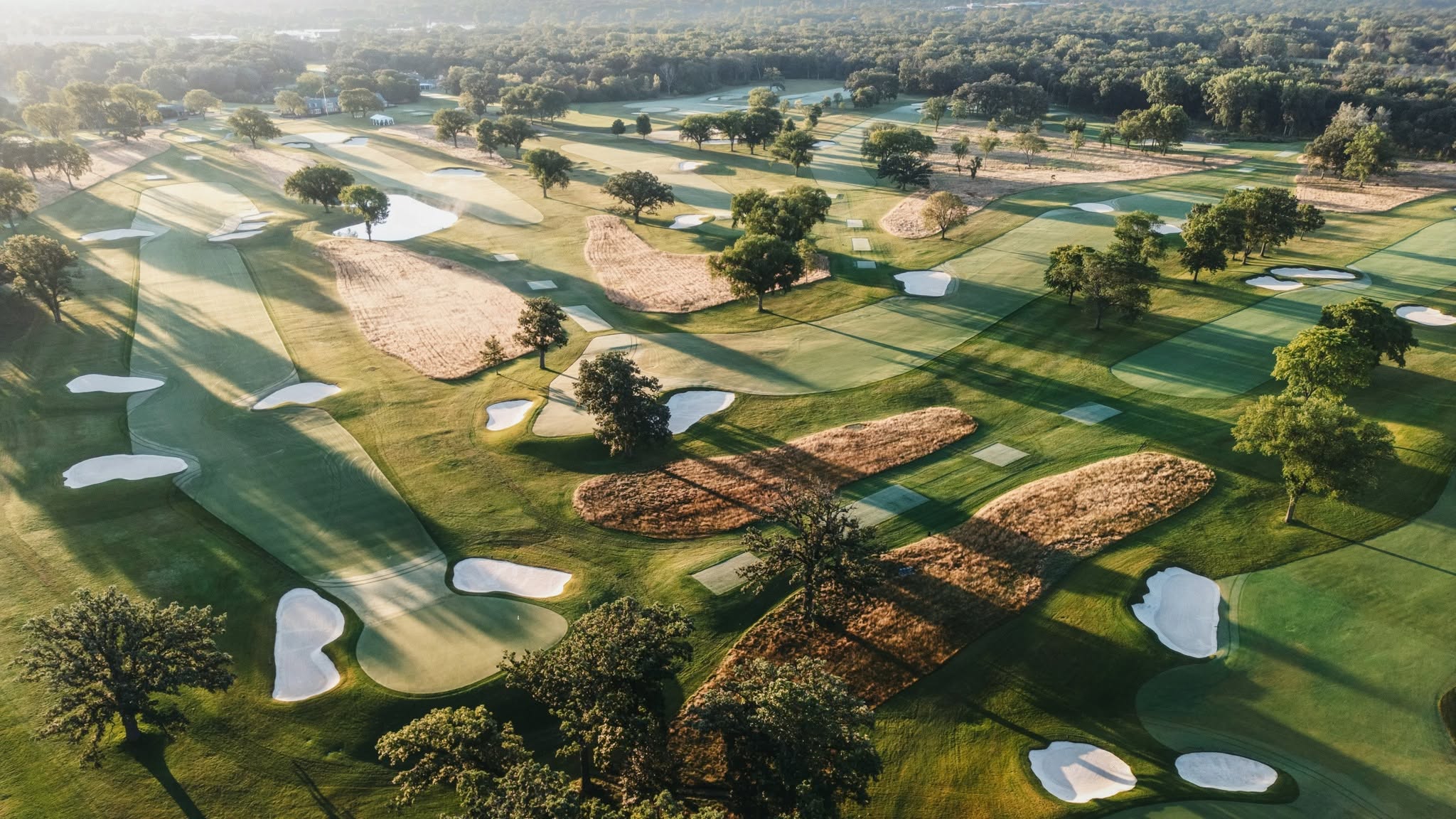
Construction expenses approached $10,000 per hole—an extraordinary sum during the 1920s—and approximately 175 acres were dedicated solely to golf. Unlike many courses built during the era on compressed parcels of land, Knollwood was designed with generous spacing between holes, creating a sense of openness and scale that remains one of the course’s defining characteristics.
Alison was one of the most influential architects of the Golden Age of golf course design. His portfolio included such notable courses as Milwaukee Country Club, Kirtland Country Club, Bob O’Link, and the celebrated Hirono Golf Club in Japan.
At Knollwood, Alison crafted a course that showcased his trademark design principles:
- Strategic bunkering that influences decision-making rather than simply penalizing mistakes.
- Elevated greens that demand precise approach shots.
- Strong and memorable par-3 holes.
- Natural movement across rolling terrain.
- Multiple angles of attack that reward thoughtful course management.
Even today, several holes remain textbook examples of Alison’s design philosophy. The par-3 fourth hole, with its elevated green and strategically positioned bunkers, is often cited as one of the finest short holes in Illinois.
Building a Country Club Community
While golf served as the centerpiece of Knollwood, the club quickly developed into a full-service family destination.
The original clubhouse was created by joining two existing farmhouses on the property. Renowned architect Howard Van Doren Shaw was retained to design additions that included expansive porches and reception areas.
In 1926, Knollwood unveiled what many considered one of the finest men’s locker rooms in America.
The facility featured:
- Timber-beamed ceilings
- 350 steel lockers
- Marble showers
- Spacious aisles
- A large fireplace
The building became one of the club’s signature features and remains an important part of Knollwood’s architectural heritage.
The club also developed riding stables and extensive bridle paths, reflecting the equestrian traditions of Lake Forest. Tennis courts soon followed, and a swimming pool was later added through a member-funded cabana program.
By the end of 1926, Knollwood had approximately 300 members and was firmly established among the premier private clubs on Chicago’s North Shore.
Knollwood Country Club
Surviving Depression and War
Like many private clubs, Knollwood faced significant challenges during the Great Depression.
Membership declined from approximately 327 members in 1929 to 278 by 1938. However, the club weathered the economic downturn better than many of its peers, largely because it served as a recreational retreat for affluent Chicago families who continued to support the club despite financial uncertainty.
World War II proved even more difficult.
Gasoline rationing and wartime restrictions made travel challenging, and membership reportedly fell below 100 members. Maintaining the golf course and club facilities became increasingly difficult as labor shortages affected operations.
Yet Knollwood endured.
When the post-war boom arrived, the club experienced renewed growth and reinvestment, setting the stage for national recognition.
National Championship Recognition
Knollwood’s arrival on the national golf stage came in 1956 when it hosted the United States Amateur Championship.
The event attracted approximately 1,600 entrants and culminated in a victory by Harvie Ward Jr., who defeated Charles Kocsis in the championship match.
Ward’s victory was historic because he became the first player in two decades to successfully defend a U.S. Amateur title.
The championship immediately elevated Knollwood’s reputation among elite amateur golf venues.
More major championships followed.
1982 U.S. Mid-Amateur
Knollwood hosted the second U.S. Mid-Amateur Championship in 1982.
William Hoffer defeated Jeffrey Ellis in the final match, while legendary amateur Jay Sigel earned medalist honors during stroke-play qualifying.
USGA officials were reportedly so impressed with the course conditions and facilities that they described Knollwood as one of the best-prepared championship venues they had encountered.
1986 PGA Cup
Four years later, Knollwood welcomed the PGA Cup, the international competition between club professionals from the United States and Great Britain & Ireland.
The United States team prevailed by a score of 16-9, reclaiming the trophy and further solidifying Knollwood’s championship credentials.
2016 Western Amateur
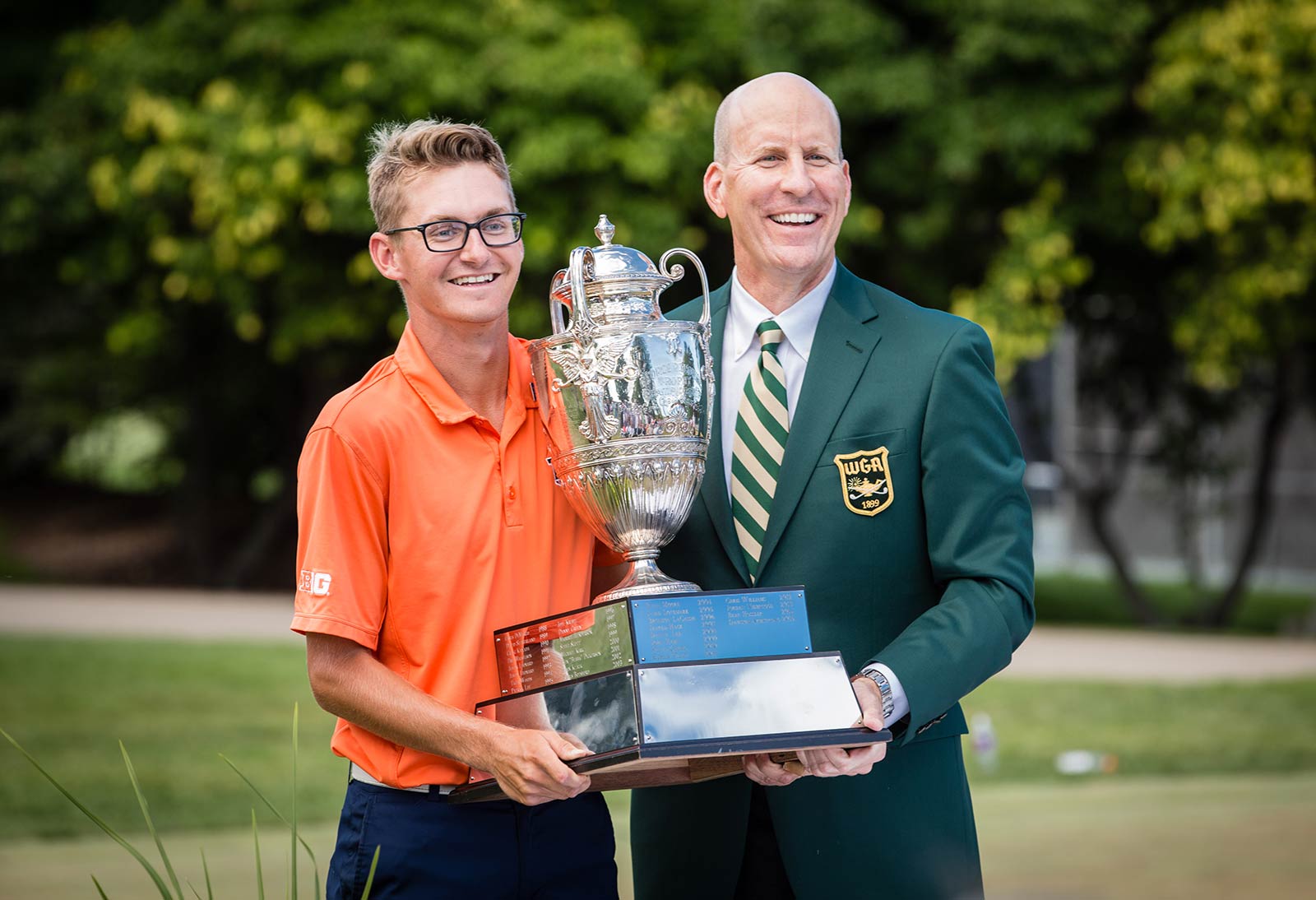
Dylan Meyer wins 2016 Western Amateur at Knollwood
Perhaps the club’s most significant modern championship came in 2016 when it hosted the prestigious Western Amateur.
Widely regarded as one of the strongest amateur events in the world, the Western Amateur has served as a proving ground for future stars including Scottie Scheffler, Jordan Spieth, Justin Thomas, Rickie Fowler, Collin Morikawa, and Xander Schauffele.
At Knollwood, Dylan Meyer defeated Sam Horsfield in the championship match to claim the title.
Hosting the Western Amateur demonstrated that Knollwood remained fully capable of challenging the world’s best amateur golfers nearly a century after its opening.
Modernization and Restoration
Like many Golden Age courses, Knollwood underwent several waves of architectural change throughout its history.
In the 1970s, noted architect Larry Packard was hired to modernize portions of the golf course. New water features, bunkers, greens, and tees were added to several holes.
Additional modifications followed during the 1980s as part of a broader capital improvement program.
While these changes improved playability and conditioning, some felt they moved the course away from Alison’s original architectural vision.
A major turning point occurred in 2017 when architect Drew Rogers was hired to develop a comprehensive master plan.
Rather than simply modernizing the course, Rogers focused on restoring many of the strategic and aesthetic principles that defined Alison’s original design.
The restoration included:
- Extensive tree removal
- Elimination of invasive undergrowth
- Fairway widening
- Native fescue restoration
- New forward tees
- Bunker reconstruction
- Fairway regrassing
- Select green modifications
Completed in phases through 2022, the project dramatically improved sightlines and recaptured the expansive scale that Alison intended nearly 100 years earlier.
Today, many architecture enthusiasts consider the Rogers work among the most successful Golden Age restoration efforts in the Midwest.
Knollwood Today
Modern Knollwood Club remains faithful to the vision established by its founders more than a century ago.
The club continues to provide a broad range of family-focused amenities, including golf, tennis, paddle tennis, swimming, skeet shooting, social events, and winter recreational activities.
At its core, however, Knollwood remains defined by its golf course.
The current layout stretches beyond 7,200 yards from the championship tees, yet it retains the strategic character and elegance that made Alison’s original design so highly regarded.
As one of the few surviving Colt & Alison courses in the United States—and one with a remarkable championship history—Knollwood occupies a special place not only in Illinois golf but in American golf architecture as a whole.
More than 100 years after its founding, the club continues to honor its past while carefully preparing for its future, ensuring that one of Lake Forest’s greatest sporting treasures remains vibrant for generations to come.







 Find a Golf Course
 Find a Driving Range
 Find a Topgolf
 Find a Golf Instructor