
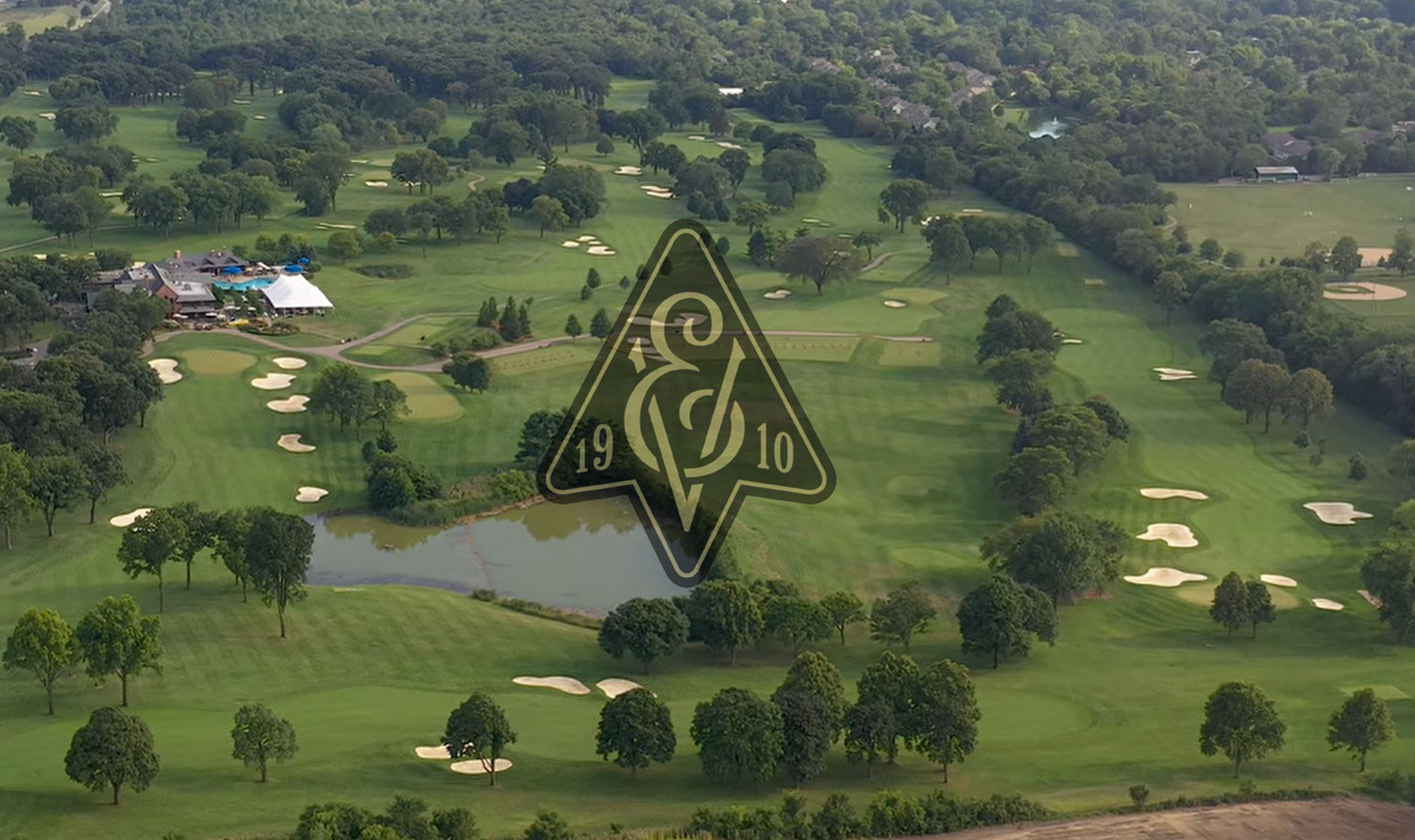
Few Chicago-area golf clubs have a history that reflects the growth of the region quite like Edgewood Valley Country Club.
Founded in 1910, Edgewood began with a makeshift nine-hole golf course built on the remnants of an abandoned residential development in La Grange. Within 15 years, the club had become successful enough—and its property valuable enough—that members sold their original course to developers and started over on a much larger property.
The result was the Edgewood Valley we know today: a William Diddel-designed course that opened in 1926 and has remained the centerpiece of the club for a century.
Along the way, Edgewood has produced accomplished amateur golfers, hosted some of Illinois’ most important championships and undergone renovations designed to preserve Diddel’s Golden Age architecture while keeping the course relevant to the modern game.
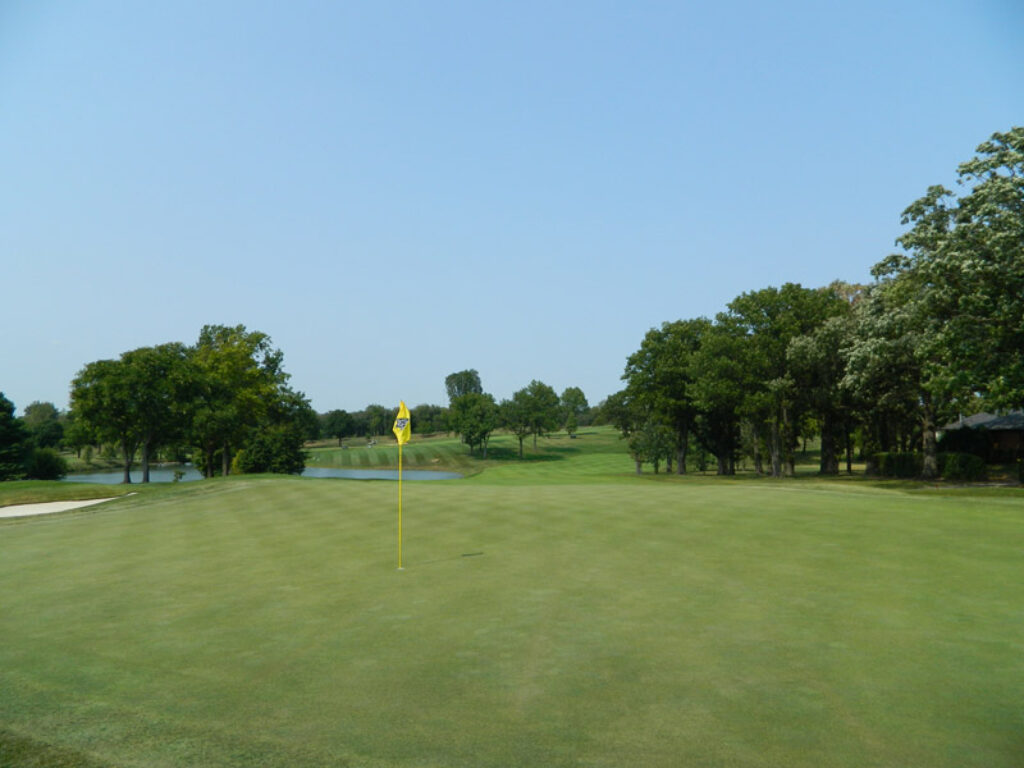
Edgewood Valley Country Club – 18th Hole
From an Abandoned Subdivision to a Golf Course
Edgewood’s story began in April 1910, when a group of local residents formed what was originally called the Edgewood Golf Club of LaGrange.
The new club started with just 70 members, each paying a $25 initiation fee and $25 in annual dues.
Members leased 45 acres north of Ogden Avenue and west of Brainard Avenue in La Grange. The property had previously been intended for residential development, which created an unusual challenge for the people building the golf course: abandoned sidewalks were still scattered across the property and became hazards on several holes.
Teams of horses were used to grade and contour the land.
The clubhouse was similarly improvised. A local roller-skate manufacturer had operated out of a nearby barn. When he left the business, Edgewood purchased the barn and moved it across the road to serve as the club’s first clubhouse.
By late spring 1910, members were playing a nine-hole course.
Golf quickly became the club’s defining activity.
Following World War I, Edgewood expanded its membership and leased another 40 acres. Six new holes were completed in 1919, and by 1920 the club had acquired the entire 83-acre property and completed a full 18-hole course measuring 5,900 yards at par 70.
The club was already developing a reputation for competitive golf. Edgewood member Dewey Weber won the 1920 Chicago District Golf Association Amateur Championship, defeating legendary Chicago amateur Chick Evans by four strokes.
A 1924 article in the LaGrange Citizen praised the depth of talented players at Edgewood and identified a motto that has endured for more than a century:
“Golf for Golfers.”
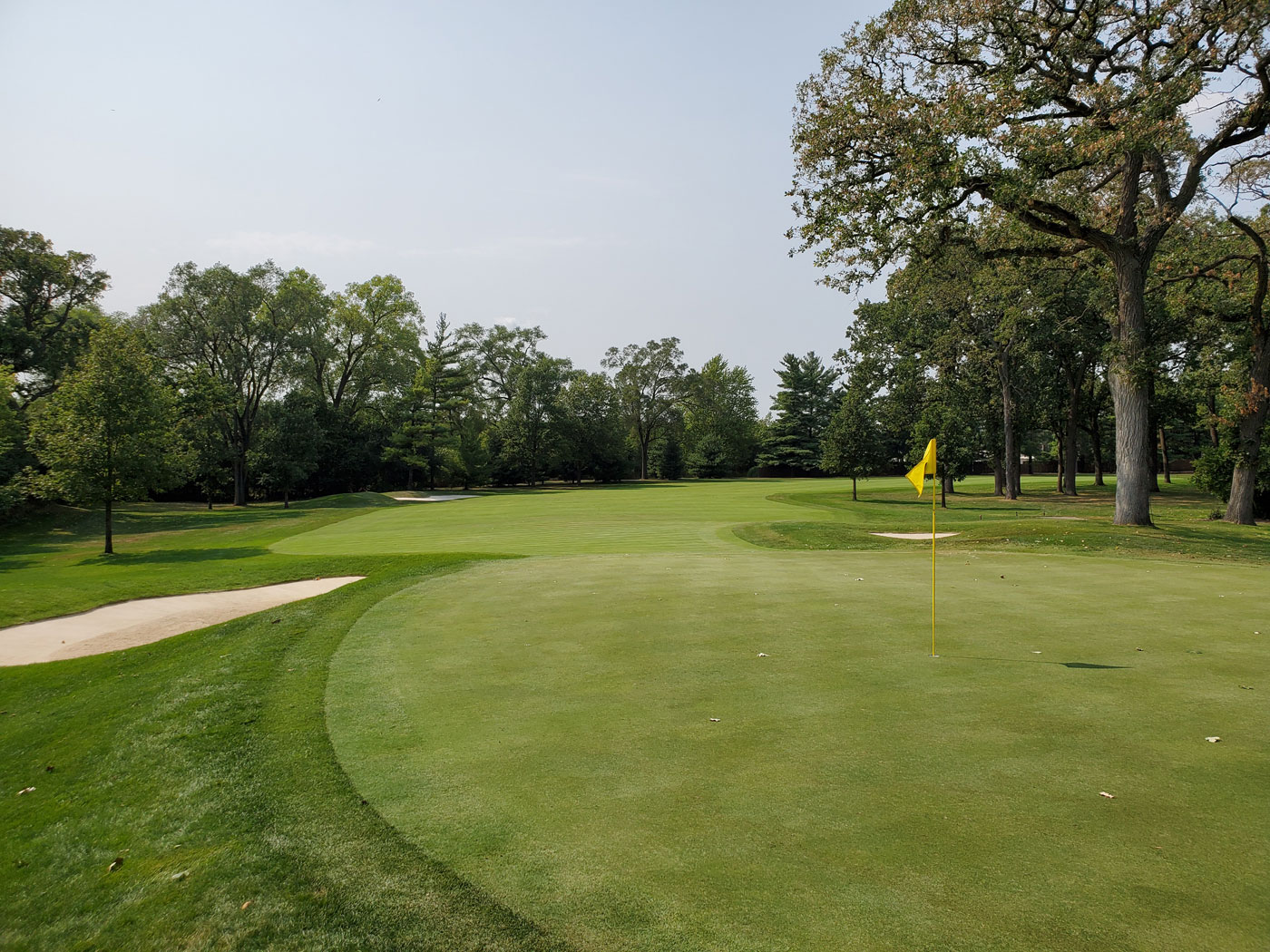
Edgewood Valley Country Club – 3rd Hole
A $500,000 Decision Changes Edgewood Forever
Ironically, Edgewood’s success coincided with the rapid suburban development that would ultimately force the club to move.
By the mid-1920s, Chicago’s population was booming and communities along commuter rail lines were becoming increasingly attractive to residential developers. Edgewood’s 83 acres near Ogden Avenue had become considerably more valuable as housing than as a golf course.
Late in 1924, the William E. Harmon Company offered Edgewood $500,000 for the property.
The members accepted.
Instead of simply closing the club, however, Edgewood used the opportunity to create something considerably more ambitious.
The club acquired the Willis Ward farm along Willow Springs Road, a property of approximately 177 acres stretching between 71st and 79th Streets. The southern portion was heavily wooded, while the northern section featured more open terrain.
Construction began in October 1924.
Edgewood hired prominent Chicago architect Howard Van Doren Shaw to design its new clubhouse and Indianapolis golf course architect William H. Diddel to create its new course.
In 1925, the board also proposed a new name: Edgewood Valley Country Club, incorporating the valley overlooked by the new property.
The new club officially opened on May 1, 1926. That evening, 379 members and guests attended a formal dinner and dance celebrating the opening of the new clubhouse.
William Diddel Creates Edgewood Valley
William Hickman Diddel became one of the Midwest’s most important golf course architects. In addition to Edgewood Valley, he designed Sunset Ridge Country Club in Northfield.
A highly accomplished amateur golfer himself, Diddel won five Indiana State Amateur championships before establishing his architecture career. His formative architectural experience came at Highland Golf & Country Club in Indianapolis, where he was asked to complete a course originally routed by renowned Scottish architect Willie Park Jr.
Diddel eventually became a founding member of the American Society of Golf Course Architects and twice served as its president.
His philosophy emphasized strategic golf rather than simply penal golf. Diddel believed an architect should use existing terrain and natural features whenever possible, creating holes that required golfers to consider angles, positioning and shot selection.

William H. Diddel
Edgewood’s property was ideally suited to that approach.
The club’s history describes the southern portion of the property as heavily wooded, with roughly the first dozen holes routed through that terrain. The more open northern section accommodated the closing holes and practice area.
Today, Edgewood remains a traditional parkland course characterized by mature trees, narrow playing corridors, extensive bunkering and fast greens. The club lists the course at approximately 6,850 yards but notes that its design frequently makes it play considerably longer.
Perhaps more important, the basic Diddel routing appears to have survived remarkably well.
Restoring Diddel’s Strategy
Like virtually every century-old golf course, Edgewood changed over the decades. Trees matured, bunkers changed, equipment improved and alterations gradually affected some of Diddel’s original strategic concepts.
That led to one of the most significant projects in the club’s modern history.
Architect Craig Schreiner developed a master plan for Edgewood that culminated in a major renovation in 2005 and 2006.
Rather than reinventing Edgewood, the goal was to strengthen the original Diddel character.
Work included extensive drainage improvements, bunker reconstruction and repositioning, fairway contouring, new tees and selective tree removal. Wadsworth Golf Construction performed the construction work.
Particularly noteworthy were changes to the first and 18th holes.
Schreiner restored staggered, or en echelon, bunker arrangements that recreated the strategic choices Diddel originally intended. The locations were adjusted for the increased distances produced by modern golf equipment.
In other words, the objective wasn’t necessarily to put every bunker exactly where it had stood in 1926. It was to restore the decisions those bunkers originally forced golfers to make.
The renovation also lengthened the course and reportedly brought Edgewood’s bunker count to 104.
Three years later, Edgewood added an expansive 17-acre practice facility.
A $1.6 Million Bunker Renovation
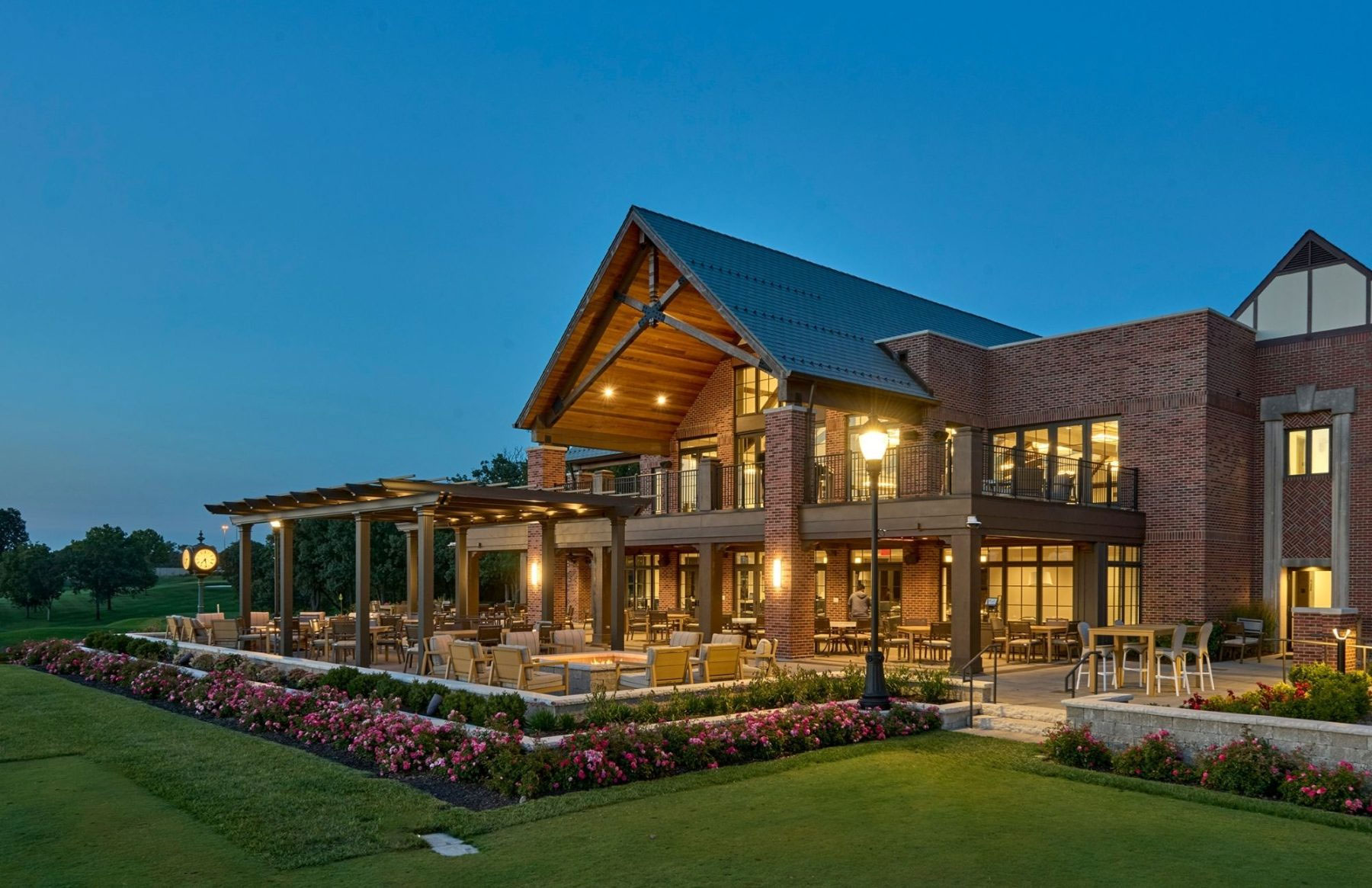
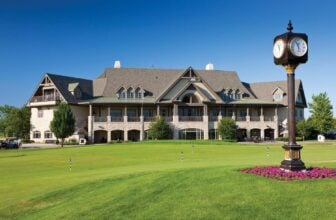
Edgewood Valley Country Club Clubhouse
Nearly two decades after the Schreiner project, Edgewood undertook another significant course improvement.
In 2024, the club completed a $1.6 million golf course renovation, primarily addressing aging bunker infrastructure and drainage.
The project used Better Billy Bunker liner technology and Pro Angle sand while eliminating some smaller, seldom-used bunkers and consolidating others.
According to research compiled on the project, the bunker count dropped from 109 to 88. Some bunkers were also reshaped to improve visibility, drainage and golfer access.
The project represented a somewhat different philosophy from the 2005-06 renovation. Schreiner’s earlier work focused heavily on restoring architectural strategy. The 2024 project emphasized infrastructure, consistency, maintainability and playability.
At roughly the same time, Edgewood completed the much larger $18 million “Elevate Edgewood” clubhouse renovation, which expanded and modernized dining, entertainment and outdoor spaces while respecting the historic character of the nearly century-old clubhouse.
A Championship Golf Venue
Edgewood Valley has also established an impressive competitive golf history.
The club has hosted numerous Chicago District Golf Association and Illinois championships, beginning with the 1958 CDGA Amateur Championship.
The 1969 Illinois Open was also contested at Edgewood, with PGA Tour professional and future Illinois Golf Hall of Famer Dick Hart earning the victory.
Perhaps the best demonstration of Edgewood’s ability to challenge elite players came shortly after the Schreiner renovation.
The club hosted the 2006 Illinois State Amateur Championship, playing at 6,753 yards and par 71.
Hinsdale’s Rob Grube shot rounds of 71, 67, 69 and 67 to finish at 10-under-par 274. He won by 11 strokes.
More remarkable was what happened behind him: Grube was the only player in the field to finish the championship under par.
Edgewood subsequently hosted the 2013 CDGA Amateur Championship, won by Bryce Emory, and the 2020 Illinois State Mid-Amateur, where John Ramsey was one of only two players to finish the 54-hole championship under par.
The club has also hosted qualifying for national USGA events, including the U.S. Amateur and U.S. Mid-Amateur.
And championship golf is returning again. Edgewood Valley is scheduled to host the Illinois State Mid-Amateur on August 17-18, 2026.
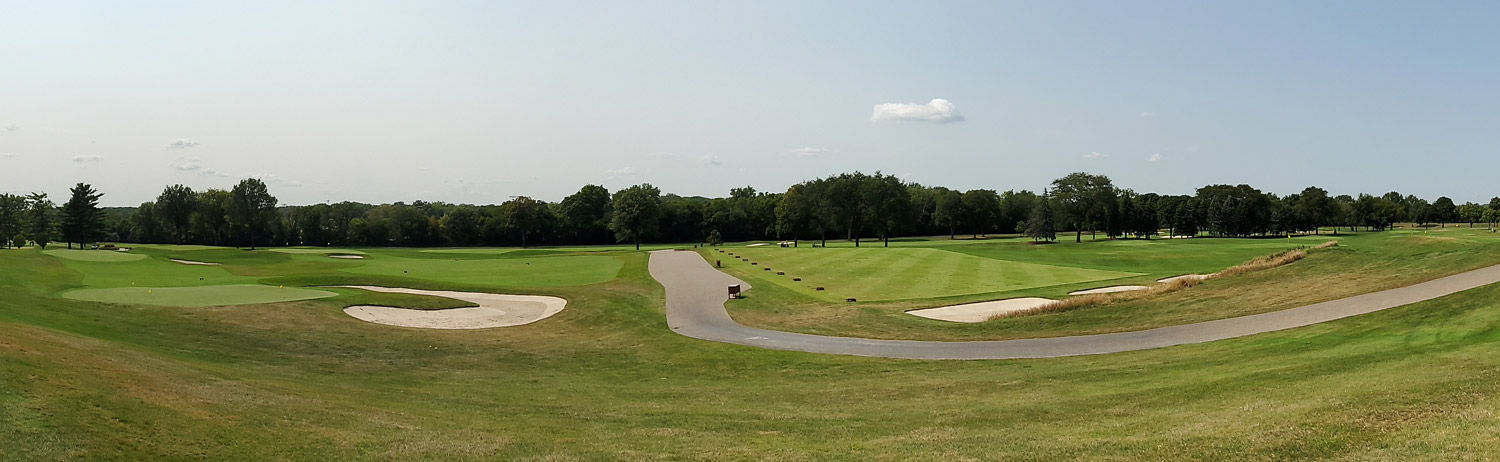
Edgewood Valley Country Club Practice Facility
“Golf for Golfers”
More than a century after that phrase appeared in the LaGrange Citizen, “Golf for Golfers” remains an unusually appropriate description of Edgewood Valley.
The club has certainly changed.
The crude nine-hole layout containing abandoned sidewalks disappeared a century ago. The barn that served as its first clubhouse is long gone. The modern club features an extensive practice facility and a dramatically renovated clubhouse, while the golf course incorporates modern drainage, bunker construction and turf-management technology.
Yet the fundamental idea behind Edgewood has remained remarkably consistent.
When developers offered an enormous sum for the original property in 1924, members didn’t use the opportunity to leave golf behind. They reinvested in a larger property and hired one of the Midwest’s leading architects to build a better course.
When the architecture needed updating 80 years later, the club attempted to recover Diddel’s strategic principles rather than replace them.
And when Edgewood renovated its bunkers again in 2024, it continued investing in a golf course approaching its 100th anniversary.
Today, Edgewood Valley remains a member-owned private club and one of the enduring examples of Golden Age golf architecture in Chicago’s western suburbs.
Its history isn’t simply the story of an old country club.
It’s the story of a golf club that moved once, adapted repeatedly and, for more than a century, continued to organize itself around the same idea:
Golf for golfers.







 Find a Golf Course
 Find a Driving Range
 Find a Topgolf
 Find a Golf Instructor