
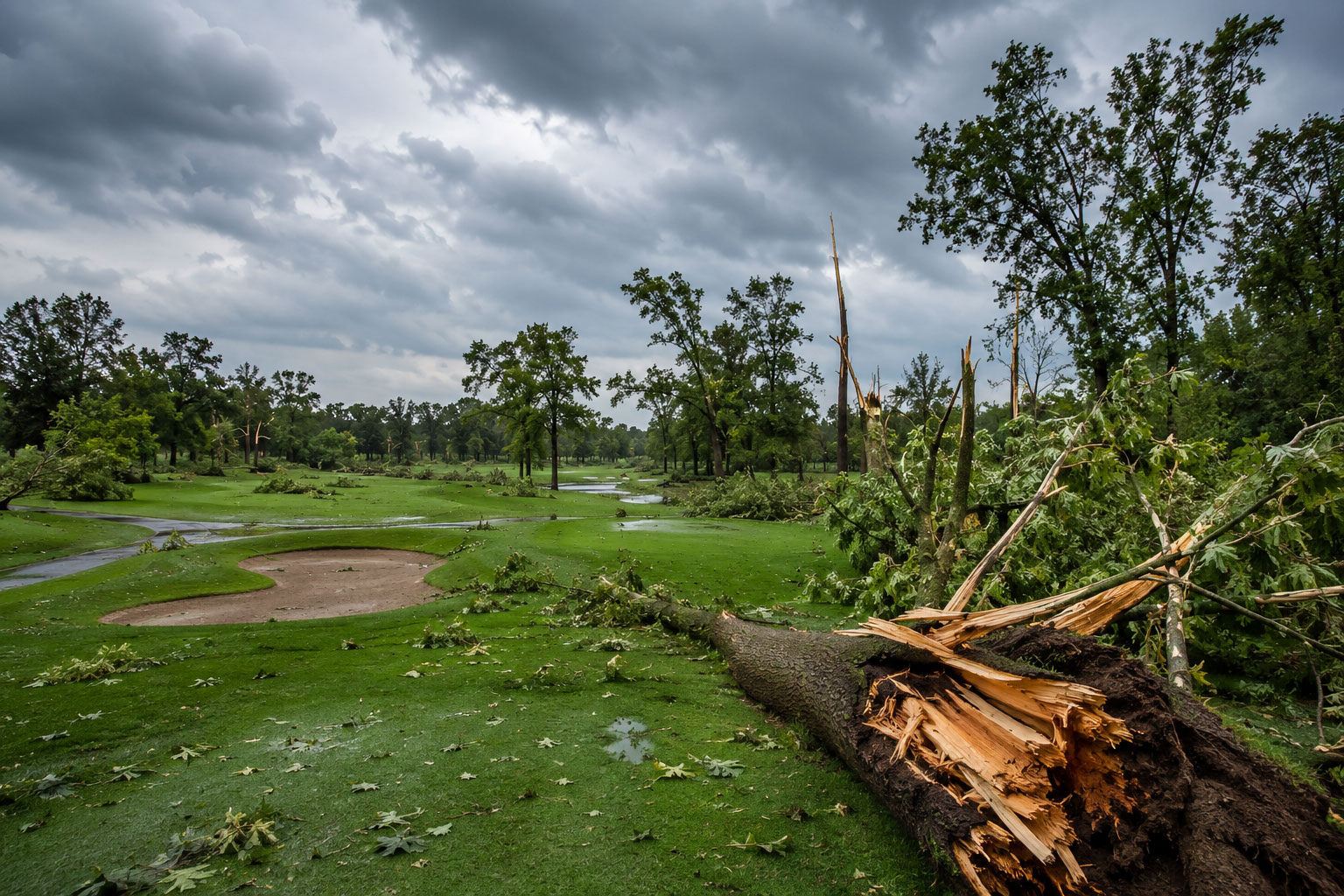
Chicago golf courses are accustomed to dealing with unpredictable weather. Heavy spring rains, summer heat, thunderstorms and the occasional stretch of drought are all part of maintaining a golf course in the Midwest.
But the summer of 2026 has been something different.
A relentless series of severe storms has brought tornadoes, destructive straight-line winds, flooding, excessive rainfall, oppressive heat and humidity, and even periods of smoke from Canadian wildfires. The result has been one of the most demanding summers in recent memory for golf course superintendents, maintenance crews and operators throughout the Chicago area.
“I haven’t personally seen a summer with weather like this since I came to Cog Hill. It’s relentless with storm following storm on a weekly basis.”
That’s how Troy Newport, PGA General Manager at Cog Hill Golf & Country Club in Lemont, described the summer.
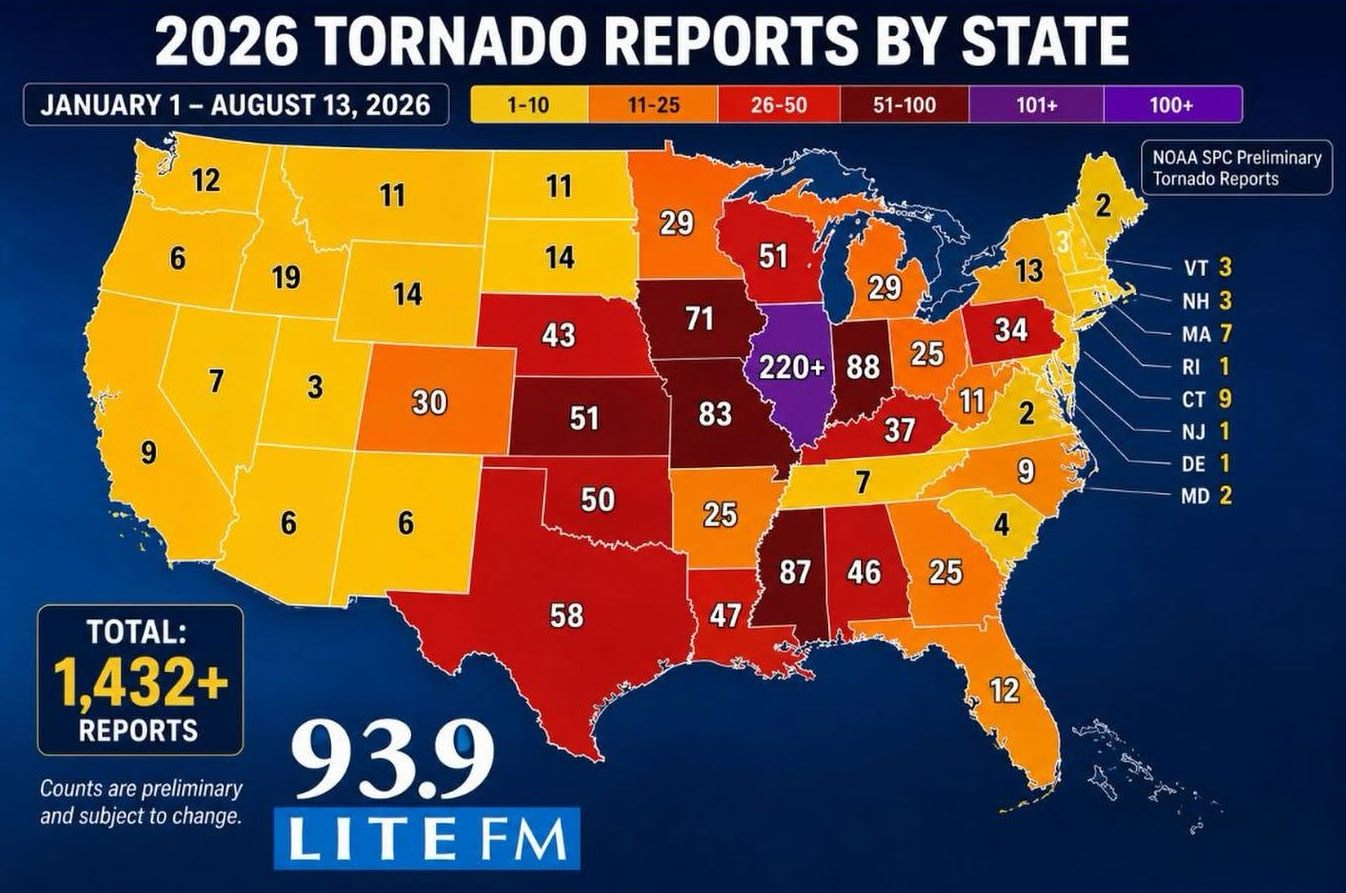
The numbers help explain why.
Through mid-August, at least 18 confirmed tornadoes have touched or crossed the Chicagoland area this summer, based on National Weather Service storm surveys. Across the broader National Weather Service Chicago forecast area, 39 tornadoes had been confirmed through August 11—roughly twice the average of the previous five complete summers.
But tornadoes tell only part of the story.
For golf courses, the larger problem has often been the combination of extreme rainfall, saturated ground, damaging winds, fallen trees, power outages and the cleanup required before golfers can safely return to the course.
A Summer of Severe Weather
The pattern began early in the summer and has rarely let up.
A derecho swept across northern Illinois on June 10, producing widespread winds of 80 to 85 mph and knocking out power to more than 230,000 ComEd customers at one point. Another major outbreak followed on June 11, including three tornado tracks within the Chicago metropolitan area.
Severe storms returned June 24, including a tornado near Huntley and significant wind damage in the northwest suburbs.
Then came July 27.
Seven tornadoes were confirmed within the Chicagoland footprint during an event in which the National Weather Service determined that much of the region’s most significant damage actually came from straight-line winds. A gust of 104 mph was measured at Bult Field in Will County, and more than 530,000 ComEd customers were affected by power outages.
Barely two weeks later, another derecho swept through the region on August 11. Five additional tornadoes had been confirmed in the Chicago area as of August 13, while widespread winds approaching 70 to 100 mph caused additional tree, structural and utility damage.
For golf facilities already dealing with saturated conditions and previous storm damage, each new round of weather has arrived before the effects of the last one have completely disappeared.
“This has been one of the most challenging stretches of summer weather I can remember. Since around the Fourth of July, we’ve dealt with excessive rainfall, extreme heat and humidity, damaging winds, flooding, and even the smoke from the Canadian wildfires.”
That’s according to Matthew McIntee, Senior Vice President of Troon Chicago.
McIntee said July alone brought more than seven inches of rain.
“It’s been one heck of a summer.”
Ravisloe Loses More Than 100 Trees
Few Chicago-area courses illustrate the physical impact of this summer’s storms better than Ravisloe Country Club in Homewood.
Ravisloe became the world’s first golf course to earn designation as an arboretum in 2022, making its collection of trees an especially important part of the property.
The July 27 tornado that struck Homewood knocked down more than 100 trees at Ravisloe, according to the H-F Chronicle. The August 11 storm brought another blow, taking down approximately 10 more. Club owner Claude Gendreau described the damage as “pretty grim” and pledged to restore the lost tree population.
The timing made the damage particularly poignant. Ravisloe had celebrated its 125th anniversary on August 9, just two days before the second storm.
The damage at Ravisloe demonstrates why tree loss on a golf course is different from routine storm cleanup. Trees can define playing corridors, influence strategy and provide much of the visual identity of a mature golf course. Losing dozens at once can alter a property for decades.

Ravisloe Country Club
And Ravisloe wasn’t alone.
McIntee said some of the tree loss at Chicago-area courses this summer has permanently changed playing corridors.
The destruction also illustrates why the severity of this summer can’t be measured solely by tornado counts. Widespread straight-line winds accompanying the storms have been powerful enough to topple mature trees throughout the region, whether a tornado actually crossed a particular golf course or not.
The Work Begins After the Storm
To golfers, a storm may appear to be over when the rain stops and the sun returns.
For golf course operators, that’s often when the real work begins.
“The biggest challenge isn’t necessarily the rain while it’s falling—it’s everything that happens afterward.”
A course can look playable from a clubhouse window while remaining saturated below the surface. Allowing carts onto overly wet turf can create compaction, ruts and turf damage that lasts long after the weather improves.
That leaves maintenance teams making decisions that aren’t always obvious to golfers.
After major storms, McIntee said crews can be pumping water from bunkers, repairing washouts, clearing trees and limbs, inspecting drainage systems and repairing damaged turf—all while determining whether the property is safe enough to reopen.
At Cog Hill, Newport credits the maintenance staff with keeping the facility operating despite the nearly constant weather challenges.
“Our golf course maintenance crew has done a fantastic job keeping our facility open each day, but I’m sure they’d like to see some sunny days soon.”
Even the infrastructure away from the fairways has been tested.
“Our clubhouse generator has definitely gotten a work-out too!”
Golf Courses Face a Financial Impact
Storm damage doesn’t end with cleanup.
Every day a course closes—or operates under restrictions—can carry a financial cost.
Lost rounds mean lost green-fee revenue. Cart restrictions reduce cart revenue. Outings can be interrupted or postponed. Food-and-beverage sales can suffer. Meanwhile, maintenance costs increase as crews spend additional hours removing debris, repairing turf and restoring bunkers and drainage areas.
“There is also a significant financial impact from cleanup costs, lost rounds, lost cart revenue, and additional labor.”
Those effects are particularly important during Chicago’s relatively short peak golf season. A lost Saturday or Sunday in July cannot simply be replaced with another weekend in January.
Across the largest storms in June, July and August, there have been at least 1.13 million customer-interruption instances involving power outages, although that figure does not represent 1.13 million different households or businesses because the same customer could have lost power during multiple storms.
There is not yet a reliable estimate of total property and infrastructure damage from this summer’s Chicago storms. Local damage assessments remain incomplete, making the final economic impact difficult to quantify.
Building a Golf Course That Can Recover
The Preserve at Oak Meadows
This summer also raises a longer-term question: What can golf courses do to become more resilient when extreme storms arrive?
Chicago-area golf course architect Greg Martin, who appeared on the Chicago Golf Report podcast earlier this year, says there are design strategies that can reduce the lasting effects of major rainfall events.
One principle is deceptively simple: give the water somewhere to go.
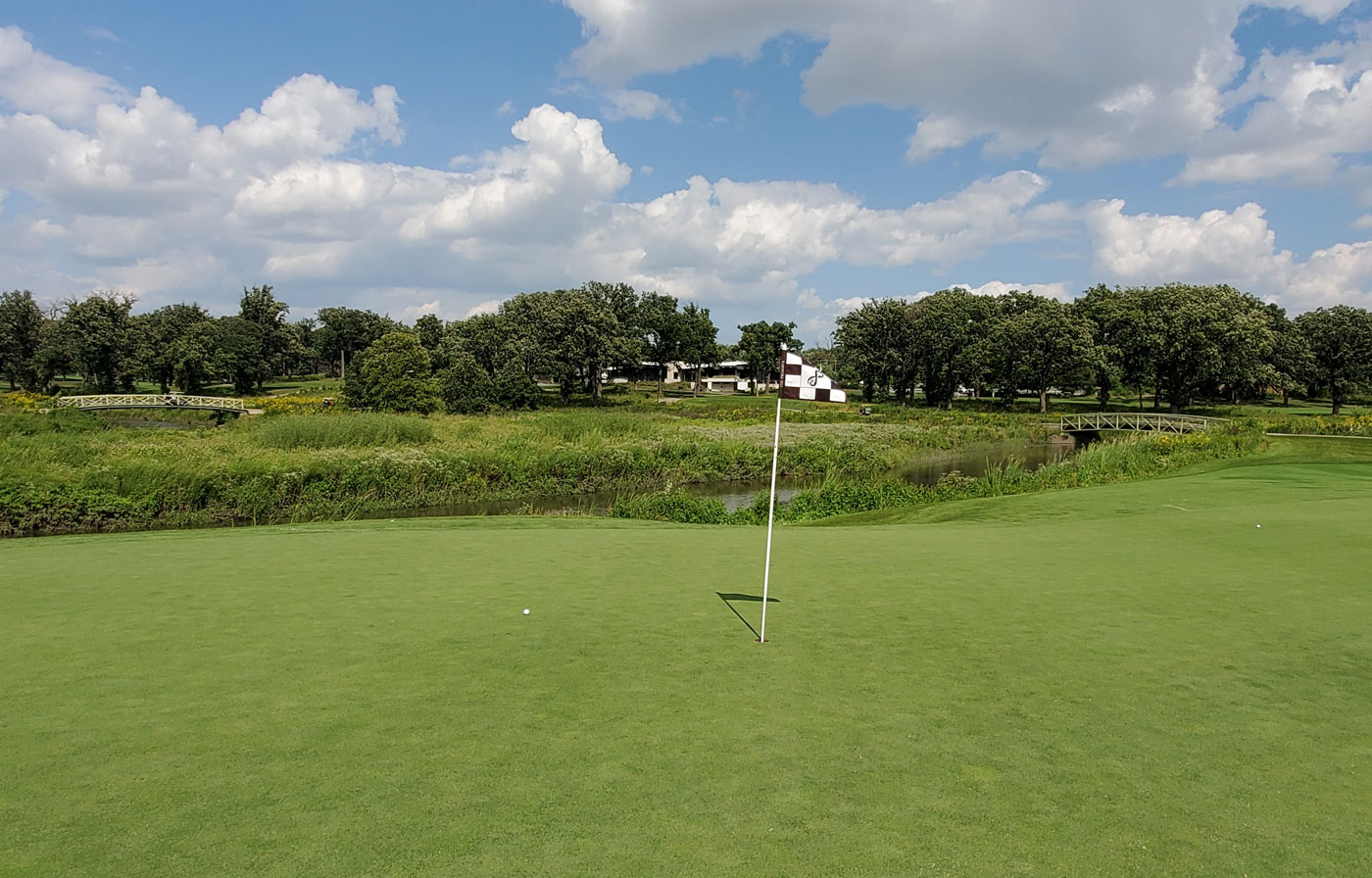
Martin points to The Preserve at Oak Meadows as an example. Rather than attempting to prevent water from entering the property, the design allows water to rise into designated areas during major rain events.
“There will always be rain events that create greater challenges, but the desire is to make sure impacts are short-lived.”
That distinction is important. A golf course cannot eliminate extreme weather. The objective is to create a property capable of absorbing the event and returning to normal conditions as quickly as possible.
Martin also cautions against viewing drainage and stormwater management as entirely new concerns created by recent weather.
Asked whether those issues have become a bigger consideration in renovation and master planning, Martin said they have always been fundamental to his work.
“Every rain event creates a different demand, so the intention is to ensure that the playable areas—greens, tees, bunkers, paths and fairway, specifically landing areas and approaches—are protected.”
The goal, in other words, isn’t necessarily to keep every acre of a golf property dry. It’s to manage where the water goes while protecting the portions of the course most critical to play.
The Infrastructure Golfers Never See
Perhaps the most important investments in weather resiliency are also among the least visible.
Golfers notice new bunkers, renovated greens and attractive landscaping. They rarely see the drainage pipes, irrigation systems, subsurface construction and other infrastructure underneath them.
“The vast majority of golf course investment—subsurface greens and bunker construction, irrigation, drainage—is underground and unseen. These are the things that make the golf course better and easier to maintain.”
Those investments can become especially valuable during a summer like 2026.
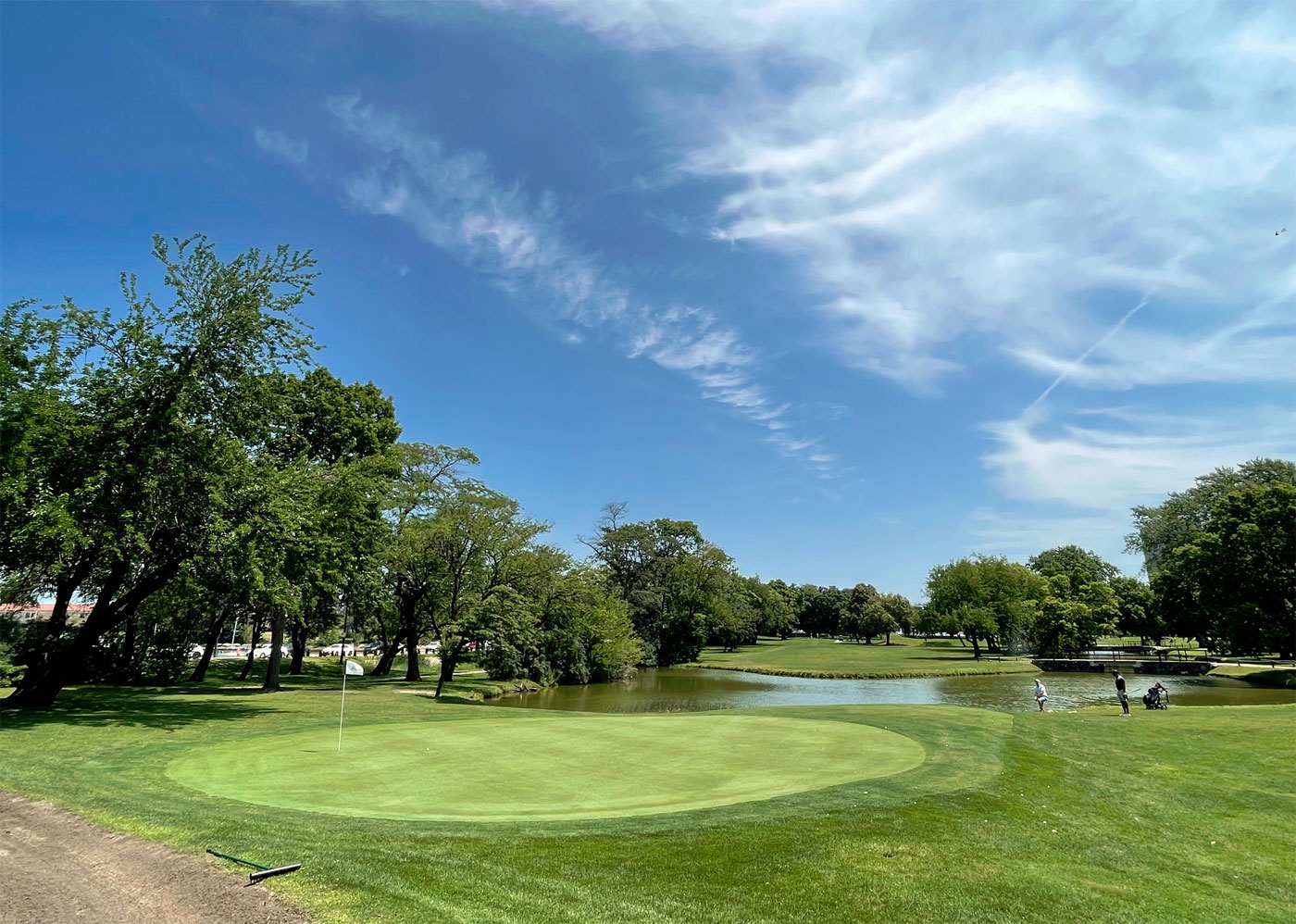
McIntee offered an example from two Chicago Park District facilities managed by Troon. Despite July’s extraordinary rainfall and repeated August storms, recently improved bunkers at Jackson Park Golf Course and South Shore Golf Course had not retained water, he said.
Better drainage doesn’t prevent a storm. It can, however, significantly shorten the time required for a golf course to recover from one.
“The investment in those items will make the golf course more resilient during inclement weather.”
From an agronomic perspective, maintenance teams can also adjust mowing schedules, irrigation, chemical applications and cart traffic according to conditions. If extreme weather becomes more frequent, McIntee believes drainage, tree management, turf selection, infrastructure resiliency and emergency-response planning will become increasingly important.
Jackson Park Golf Course
“Drainage may be the most important—and most unheralded—aspect of golf course playability and maintenance. The ability to manage water is essential to providing quality turf, firm conditions and golfer access. Healthy, well-drained turf is also one of a course’s best defenses against severe weather.”
— Todd Quitno, golf course architect
The Paradox of a Very Green August
There has been at least one unusual visual consequence of all the rain.
Chicago golf courses are remarkably green.
Late summer typically brings heat stress, dry turf and brown areas as superintendents carefully manage water during the traditional “dog days” of August.
Not this year.
“I’m not used to seeing such lush green grass on a golf course this time of the year.”
That greenery, however, can be deceptive. Saturated soil can create its own agronomic problems, particularly when combined with persistent heat and humidity. Wet conditions can increase disease pressure while limiting when maintenance equipment can safely operate.
The challenge for superintendents isn’t simply keeping grass green. It’s maintaining healthy, playable turf while navigating one weather extreme after another.
Golfers Keep Coming Back
Perhaps the most encouraging part of this unusual summer has been what happens when the weather finally improves.
Golfers return.
“The interesting thing is that demand for golf remains extremely strong. When the weather cooperates and the courses are playable, golfers come right back.”
That’s significant considering how many obstacles Chicago golf has faced this summer.
Courses have dealt with excessive rain, flooding, dangerous winds, tornado warnings, fallen trees, power outages, extreme heat and smoke—all during the months when facilities normally generate much of their annual play and revenue.
And yet the appetite for golf remains.
That makes the work being performed behind the scenes even more important.
“We’ve been fortunate to have an outstanding agronomy and operations team. Their ability to react quickly has allowed us to get the courses back open and in excellent condition remarkably quickly after each event.”
The same story is playing out at facilities across Chicagoland: maintenance crews arrive after storms, assess the damage, clear debris, repair what they can and prepare the golf course for another day of play.
This summer has also provided a reminder that much of what makes a golf course resilient isn’t visible on a scorecard or from the first tee. It’s underground in drainage systems, built into stormwater plans and reflected in decisions about trees, turf and infrastructure made years before the storm arrives.
Then there are places like Ravisloe, where even the best preparation can’t prevent 100-year-old trees from being lost when extraordinary winds arrive.
For now, Newport’s wish at Cog Hill is probably shared by golf course operators throughout the Chicago area.
They’d simply like to see a few sunny days.









 Find a Golf Course
 Find a Driving Range
 Find a Topgolf
 Find a Golf Instructor