
The golf industry is evolving faster than at any point in the past 30 years—and much of that transformation is happening behind the scenes.
In this episode of the Chicago Golf Report Podcast, we sit down with Mark Mattingly, Executive Vice President at Landscapes Golf Management, to explore how course operators are adapting to shifting consumer expectations, aging infrastructure, and the growing role of technology in the game.
Landscapes Golf Management (LGM) has quietly become one of the most influential operators in the country, managing 70+ courses across 27 states while maintaining a boutique, family-owned approach. Their philosophy is simple but powerful: focus on making a meaningful impact at each property rather than pursuing rapid, large-scale expansion.
Landscapes currently manages six properties in the Chicagoland area:
- Pinecrest Golf Club
- Crystal Woods Golf Course
- Bull Valley Golf Club (Woodstock)
- Lake Barrington Shores Golf Club
- Hughes Creek Golf Course
- Settler’s Hill Golf Course
A Changing Business Model in Golf
One of the biggest themes from our conversation is the shift from traditional golf-centric operations to a broader, lifestyle-driven model.
Just a few years ago, golfers primarily joined clubs for access to the course. Today, that’s no longer the case. Social interaction, family-friendly programming, and food and beverage experiences now rank ahead of golf itself for many members.
This shift is forcing operators to rethink everything—from clubhouse design to programming—creating more casual, welcoming environments that appeal to a wider audience.
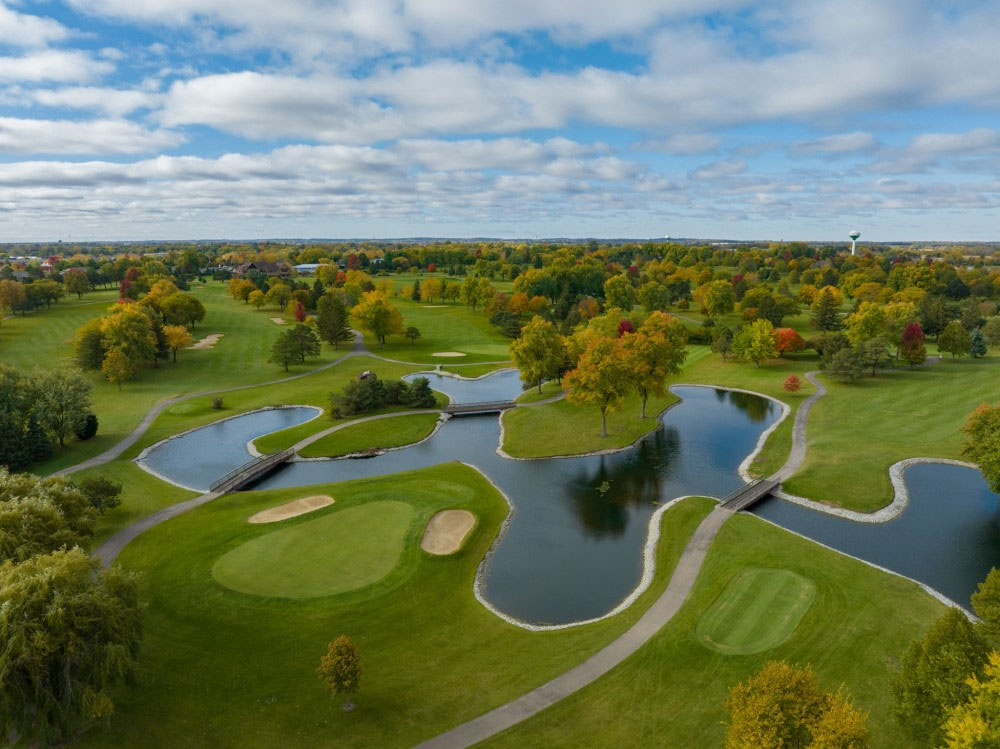
Hughes Creek Golf Course
The Hidden Challenge: Aging Infrastructure
While many golfers focus on course conditions and amenities, one of the most pressing issues in the industry is largely invisible: infrastructure.
A significant number of golf courses built during the boom of the 1990s are now reaching the end of their lifecycle. Irrigation systems, in particular, are failing at scale, often requiring replacement projects costing $3 million or more.
For operators, this creates a difficult balancing act:
- Invest in critical infrastructure that golfers don’t see
- Or allocate capital toward visible upgrades like simulators, patios, and enhanced practice facilities
Mark shares how LGM helps owners strategically phase these investments to maintain both functionality and competitiveness.
Technology Is Reshaping the Golf Experience
Another major takeaway from our discussion is how rapidly technology is changing both operations and the customer experience.
From AI-powered insights to real-time business intelligence dashboards, golf operators are moving away from outdated monthly reporting and toward dynamic, mid-month decision-making.
On the customer side, expectations have shifted just as dramatically.
Today’s golfer expects:
- Seamless mobile tee time booking
- Prepaid, transferable reservations (similar to Ticketmaster)
- Instant communication and updates
In fact, convenience is becoming one of the primary drivers of where golfers choose to play—sometimes even outweighing course quality itself.
The “Topgolf Effect” and Growing the Game
Facilities are also evolving to meet new audiences where they are.
The rise of high-tech driving ranges and entertainment-based golf experiences has created a new entry point for beginners and casual players. These environments—often enhanced with technologies like Toptracer—combine golf with food, beverage, and social interaction.
According to Mark, these experiences aren’t competing with traditional golf—they’re feeding it. They provide a low-pressure way for new players to build confidence before transitioning onto the course.
Strategic Growth Without Losing Identity
Despite managing dozens of properties nationwide, Landscapes Golf Management remains committed to a disciplined growth strategy.
Rather than chasing volume, LGM evaluates new opportunities based on one key question:
Can we make a meaningful difference at this property?
This approach has guided their expansion, including a growing presence in the Chicago market, where they now manage multiple courses and continue to build relationships across the region.
What This Means for Chicago Golfers
For golfers in Chicagoland, these trends are already beginning to take shape.
From upgraded practice facilities and more casual club environments to improved booking systems and enhanced overall experiences, the local golf landscape is being reshaped in real time.
And as operators continue to invest in both infrastructure and innovation, the next decade of golf in Chicago could look very different from the last.
Podcast: Play in new window | Download
Subscribe: RSS








 Find a Golf Course
 Find a Driving Range
 Find a Topgolf
 Find a Golf Instructor