
In this episode of the Chicago Golf Report Podcast, we talk with Matt McIntee, a longtime golf industry leader whose career spans the Crown family’s golf portfolio, Green Golf Partners, and now Troon, the largest golf management company in the world. McIntee shares an insider’s perspective on how the industry has evolved over the past 30 years—and where it’s headed next.
Our conversation explores the major economic and cultural forces shaping golf today, from the construction boom of the 1990s to the difficult contraction following the 2008 financial crisis, and finally the extraordinary resurgence that began during the COVID-19 pandemic. According to McIntee, golf became “essential recreation” during the pandemic years, triggering one of the largest participation surges in the sport’s history.
But while demand for golf remains strong, the industry is also facing important questions about accessibility, affordability, and the future of public golf.
The Cycles of the Golf Industry
Over the past three decades, the golf industry has gone through three distinct phases.
During the 1990s and early 2000s, the game experienced a massive expansion fueled largely by the popularity of Tiger Woods. Golf course construction surged across the United States, with new facilities opening at a pace rarely seen before. In the Chicago region, courses such as ThunderHawk Golf Club and Bolingbrook Golf Club represented the optimism of that era.
However, the years between 2007 and 2019 proved far more difficult. Participation remained relatively flat nationwide while the supply of golf courses remained high, creating intense pressure for operators. McIntee describes this period as one of the most stressful stretches the industry had faced.
Then came the pandemic.
Golf emerged as one of the few recreational activities that could be enjoyed safely outdoors, and participation surged almost overnight. Tee sheets filled, new players discovered the game, and many courses saw record demand.
Today, the industry is still benefiting from that momentum.
The Historic Renovation of Jackson Park
One of the most important projects currently underway in Chicago golf is the renovation of Jackson Park Golf Course.
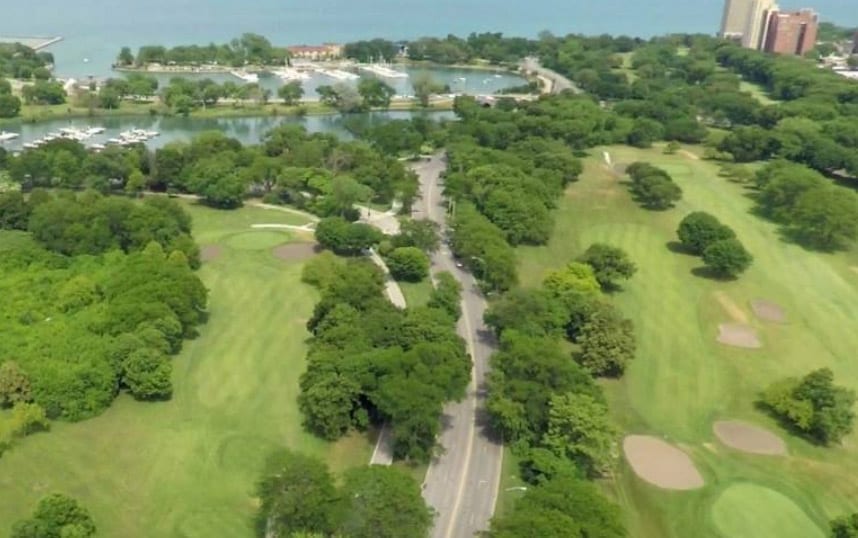
Jackson Park Golf Course
Located on the city’s South Side, Jackson Park holds an extraordinary place in American golf history. It is widely recognized as one of the oldest public 18-hole golf courses west of the Allegheny Mountains and has deep connections to Chicago’s African-American golf community.
The current renovation aims to restore the original design vision of legendary architect Tom Bendelow while modernizing the course with state-of-the-art infrastructure.
The project includes:
- Installing advanced drainage systems using capillary concrete
- Modernizing irrigation systems to improve environmental sustainability
- Creating more flexible yardages to accommodate beginners, juniors, seniors, and competitive players
The renovation also includes a major upgrade to the practice facilities, including a new putting green and practice area designed to encourage learning and community engagement.
For Chicago’s public golf system, Jackson Park represents a flagship project—a model for how historic municipal courses can be modernized while preserving their heritage.
A Cultural Shift in Golf
While infrastructure improvements are important, McIntee believes the most significant transformation in golf may actually be cultural.
For decades, many golf facilities were defined by rigid rules and exclusionary traditions—strict dress codes, limited tee times for women and children, and an overall atmosphere that could feel intimidating to newcomers.
That culture is rapidly changing.
Modern operators are focused on making golf more inclusive, social, and fun. The goal is to create an environment where golfers of all ages, backgrounds, and skill levels feel welcome.
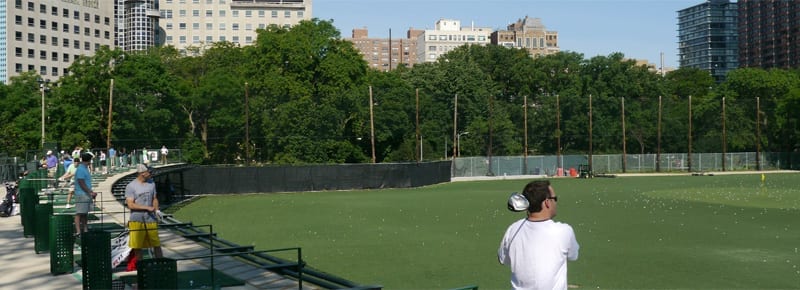
Diversey Driving Range
One example McIntee highlights is Diversey Driving Range, one of the busiest driving ranges in the United States. Located along Chicago’s lakefront, the facility has become a vibrant social destination where golfers, beginners, and even first-time visitors come to experience the game.
It’s a powerful reminder that golf can be both a sport and a social experience.
The New Generation of Golf Professionals
Another key theme of the conversation is the emergence of a new generation of golf professionals.
Today’s leaders are increasingly focused on hospitality, community engagement, and mentorship—skills that extend far beyond traditional course operations.
These leaders view golf not just as a game, but as an experience that can bring communities together.
Chicago’s Diverse Golf Landscape
Chicago remains one of the most interesting golf markets in the United States because of its wide range of public and private facilities.
During our conversation, McIntee highlights several notable properties, including the renovation of George W. Dunne National Golf Course, often described as the “Bethpage Black of Chicago.” The course has long been known for delivering championship-level challenge at a municipal price point.
Other courses discussed include:
- Orchard Valley Golf Course, an Arthur Hills design known for its strong municipal golf experience
- Naperville Country Club, a classic private club with a thriving membership community
- Kemper Lakes Golf Club, one of the region’s most historic venues and host of the 1989 PGA Championship
Together, these courses illustrate the depth and diversity of Chicago’s golf ecosystem.
The Challenge of Rising Green Fees
Despite the industry’s current health, McIntee also notes a growing concern: the rising cost of golf.
In some suburban markets, green fees have climbed into the $100-plus range. While these prices reflect increasing maintenance costs and demand, they also raise important questions about accessibility.
Maintaining high-quality “value courses” is critical to ensuring that new players can continue to discover the game.
Facilities like George Dunne demonstrate that it is still possible to deliver championship-level golf at an affordable price point—an approach that may prove essential for the long-term sustainability of the sport.
A New Era for Chicago Golf
Ultimately, the story of Chicago golf today is one of reinvention.
Historic courses are being restored. New players are discovering the game. A younger generation of professionals is bringing fresh ideas and energy to the industry.
And perhaps most importantly, the culture of the game is shifting toward something more inclusive, social, and community-focused.
As McIntee explains in this conversation, the goal is simple: make golf fun again.
For Chicago golfers, that future may already be underway.
Podcast: Play in new window | Download
Subscribe: RSS








 Find a Golf Course
 Find a Driving Range
 Find a Topgolf
 Find a Golf Instructor