

On Chicago’s North Shore, where golf history is layered as thick as the old-growth trees that line many fairways, Westmoreland Country Club stands out as a club that has earned its reputation the long way — through smart land selection, early ambition, and more than a century of architectural stewardship.
Founded in the early 1910s, Westmoreland wasn’t created as a status symbol first and a golf course second. It was built because a group of golfers needed room to grow — and they were willing to plan boldly, secure land strategically, and hire a real architect to build something lasting. The result is a club that still carries the feel of the early American golf boom: traditional, walkable, and grounded in classic design values.
A club born from growth — and a search for “more land”
Westmoreland Country Club was founded in 1911, sparked by a practical problem. Members of Evanston Golf Club were becoming “dissatisfied with the space limitations” of their course as Evanston expanded. The solution was to create a new club that could support the game’s rising popularity — and do it with enough acreage to last. According to Westmoreland’s own historical account, key figures included David McCurrach Jr. and the club’s first president John N. Welter, with financial support arranged through their friend William S. Mason. They reportedly sold 300 memberships before work even began — a telling signal of both demand and confidence.
The founding group didn’t just buy the first available parcel and hope for the best. They explored a wide swath of farmland and ultimately selected a 128-acre rectangular site because it sat above a 25-foot gravel bed — ideal natural drainage for healthy turf in the Midwest climate.
And then there’s the name — one of those perfectly “of the era” golf-club origin stories that sticks. Scotsman McCurrach was tasked with naming the club and chose Westmoreland because the group had moved “West-for-more-land.”
The clubhouse: 1912 charm that still defines the property
A year after the club was founded, Westmoreland added a landmark that remains part of its identity. In 1912, the club built its Colonial Williamsburg-style clubhouse, and the story of arrival is pure early-20th-century Americana: a drive lined with stately elms, members arriving in chauffeur-driven cars, and shoe bags being handed off before golf.
Over the decades, the clubhouse evolved as member needs changed, but Westmoreland also made a point to protect its architectural character. The club notes significant interior improvement work in the 1980s aimed at restoring elements of the original Williamsburg style, plus later facility investments like the “West End Project” around 1999–2000, which expanded aquatics, dining, tennis, patios, and key support spaces.
The original architect: William Watson’s 1912 design
The original golf course at Westmoreland was designed in 1912 by William Watson (often referred to as “Willie Watson”), with construction supervised by Watson along with the club’s first golf professional and superintendent, Joseph Roseman.
Watson is one of those foundational figures in American golf architecture who doesn’t always get top billing in casual golf conversations — but he mattered, and his fingerprint is all over early American course building.
A detailed biographical study by historian Dean Knuth describes Watson as a Scottish-born pioneer who immigrated to the U.S. in 1898 and went on to design more than 100 courses before retiring around 1930. That’s not a minor résumé — that’s a career that helped shape how golf spread and settled across the country during the sport’s explosive growth period.
Knuth’s research also emphasizes Watson’s design philosophy: fit the course to the land, create interest without excessive earthmoving, and build greens and features that feel natural rather than forced. Those principles line up with what golfers tend to value in classic courses today: walkability, variety, and “honest” land-based strategy.
A rare and fascinating redesign: Langford + Tillinghast
Westmoreland’s story gets even more interesting when you look at how the course evolved in the next decade.
The club records that starting in 1920/1921, the course underwent a redesign executed by William Langford and A.W. Tillinghast.
That pairing is notable. Langford (a major Midwestern figure) and Tillinghast (one of America’s most influential Golden Age architects) are not names you typically see linked together on the same redesign credit. Yet Westmoreland is one of the places where their paths intersect — and the club notes that, even through later updates, it remains “true to the original routing developed by Mr. Watson.”
In other words: Watson established the core skeleton of the course, and later Golden Age minds helped refine and strengthen it — a best-of-both-worlds formula when it’s done with respect.
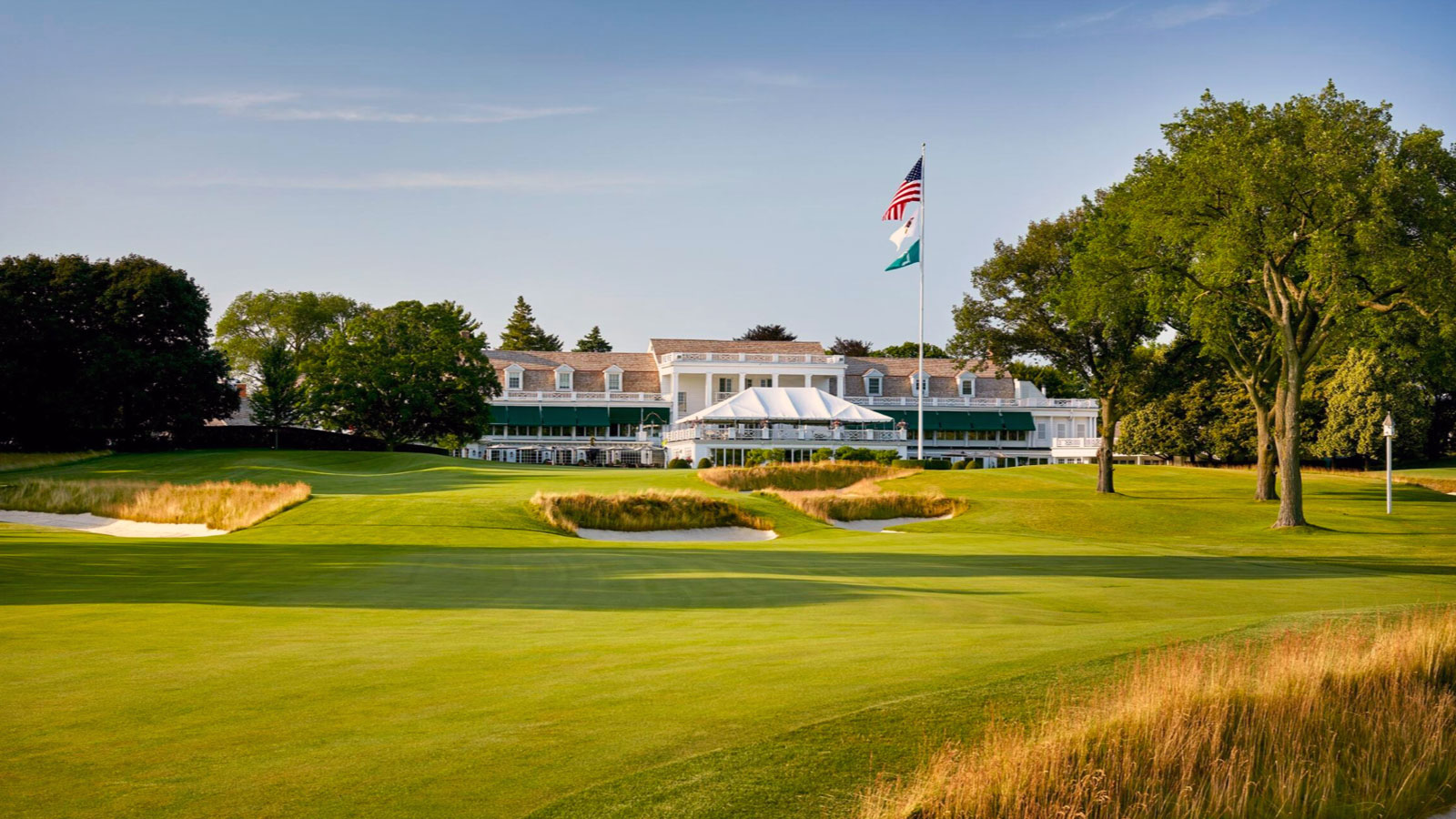
Westmoreland Country Club
A tournament stage for the Midwest’s biggest moments
It’s one thing for a club to have a strong architectural lineage. It’s another for it to have hosted serious championships across multiple eras — and Westmoreland has.
Westmoreland’s own history lists a run of notable events, including:
- 1917 Western Open – Jim Barnes
- 1921 Western Amateur – Chick Evans
- 1924 Western Golf Association Junior Girls Tournament
- 1934 Western Golf Association Junior Girls Tournament
- 1936 Chicago District Golf Association Women’s Championship
- 1938 U.S. Women’s Amateur Championship – Patty Berg
The Patty Berg piece is not just a footnote — it’s a major chapter in American golf history. The USGA recounts that Berg’s breakthrough “crested” at Westmoreland in September 1938. Westmoreland’s own history emphasizes the same significance: it was Berg’s first national title, and she was 20 years old at the time.
When a course has hosted major championships across decades, it’s usually because it offers two things: a layout that can test great players, and an environment that can stage a big event. Westmoreland’s résumé suggests it has long delivered both.
Modern updates with an eye on tradition
Classic clubs don’t stay relevant by freezing in time. They stay relevant by improving infrastructure and playability while keeping the course’s core character intact.
Westmoreland’s club history notes continued evolution, including water features work beginning in 1963 (ponds on #13, #15, and #17), and a major renovation overseen by Arthur Hills in 1993, including the addition of the pond on #8.
In more recent decades, outside reporting has also covered bunker-focused work aimed at aligning the hazards with the club’s classic features (including projects led by Hills & Forrest, emphasizing traditional aesthetics and improved function).
Why Westmoreland still matters in Chicagoland golf
Westmoreland’s significance isn’t about one headline feature or one “signature hole” that gets posted a thousand times online. It’s broader than that.
It’s a club founded at the right moment (1911), built on land chosen with real agronomic intelligence, anchored by a 1912 design from a prolific early architect, refined by Golden Age names, and battle-tested by championship golf — including one of the most meaningful amateur titles in women’s golf history.
In the Chicago area, where golf architecture ranges from public classics to private icons, Westmoreland sits comfortably in that group of clubs that feel authentic — not because they’re trying to look old-school, but because they’ve been doing it for more than a century.
And that’s the real takeaway: Westmoreland didn’t borrow tradition. It built it.







 Find a Golf Course
 Find a Driving Range
 Find a Topgolf
 Find a Golf Instructor