
Ravisloe Country Club will mark a major milestone this summer as the historic Homewood club celebrates its 125th anniversary with a free community celebration on Sunday, Aug. 9, from 4-9 p.m.
Guests of all ages are invited to experience one of Illinois’ most significant golf properties through an evening of live entertainment, family-friendly activities, food and beverages, and a chance to celebrate the generations of members, employees, and community supporters who have shaped Ravisloe’s remarkable legacy.
The festivities will feature a live performance by Blake Alexander, an 18-hole miniature golf course, and activities designed to showcase the club’s rich history while welcoming the surrounding community.
Ravisloe Country Club: A Chicago Golf Classic
Few golf courses in Chicagoland carry the weight of history, architectural significance, and cultural importance quite like Ravisloe Country Club in Homewood, Illinois.
For more than 125 years, Ravisloe has quietly endured—through shifting social dynamics, architectural transformations, economic downturns, and ultimately, a complete reinvention of its business model. Today, it stands not only as a Donald Ross–influenced design, but as one of the most compelling examples of how a historic golf property can adapt and thrive in the modern era.
Ravisloe is not just a golf course. It’s a story layered over generations.
A Name, A Community, and a Beginning (1901)
Ravisloe Country Club was founded in 1901 by members of Standard Club, a prominent Chicago social organization. At the time, many private clubs excluded Jewish members, and Ravisloe quickly became an important cultural and social hub—widely recognized as the first Jewish-membered country club in the Chicago area.
The club’s name itself reflects a fascinating evolution. Early references to “Ravisloot” gradually shifted to “Ravislow,” before eventually becoming “Ravisloe.” Even in its naming, the club was finding its identity.
The original course was built on the Briggs farm in what was then a largely rural part of Cook County. By the fall of 1901, a nine-hole layout was already playable—a remarkable achievement given the era.
The design of that original course remains one of Ravisloe’s most intriguing mysteries. While institutional history credits James Foulis and Theodore J. Moreau, historical timelines make Moreau’s involvement highly unlikely. Foulis, a U.S. Open champion and influential early golf professional at Chicago Golf Club, is the most credible figure tied to the original layout.
Even in those early years, Ravisloe showed signs of forward thinking. By 1902, the club was already investing in drainage systems and experimenting with improved green construction—an early sign of its commitment to quality.
Ravisloe was one of the first golf clubs in the south suburbs to be located near a railroad line, providing easy access for Chicago residents. Idlewild Country Club in Flossmoor would follow suit seven years later and Olympia Fields Country Club joined the group when it was founded in 1915.
Growth and Reinvention: The Early 20th Century
As golf’s popularity surged in the early 1900s, Ravisloe expanded along with it.
In 1910, the club acquired an additional 55 acres of land, allowing for a significant redesign and expansion of the course. This work is most often attributed to William Watson, a Scottish-born architect known for practical, strategic designs and strong engineering sensibilities.
Around 1910, the Illinois Central Railroad operated 253 weekday trains on its south suburban lines. The railroad also offered “Golf Specials” departing downtown Chicago at 12:23, 1:25 and 1:40. These trains brought golfers to Ravisloe and Idlewild as well as Homewood Country Club, Calumet Country Club and the defunct Windsor Country Club.
But the most important transformation was still to come.
The Donald Ross Era (1917–1924)
In 1917, Ravisloe made a defining decision: it brought in Donald Ross to redesign the course.
Ross, one of the most influential golf architects in history, was responsible for more than 400 courses across North America. His portfolio includes Pinehurst No. 2, Oakland Hills, and Seminole—courses that have hosted major championships and shaped the game at the highest level.
At Ravisloe, Ross didn’t simply tweak the layout. He undertook a multi-year renovation, visiting annually between 1917 and 1919, with continued refinements through 1924.
His work introduced many of the strategic elements that still define the course today:
- Thoughtfully placed bunkering that challenges decision-making
- Subtle green contours that reward precise approach shots
- A routing that balances playability with strategic complexity
Ravisloe became, in many ways, a classic Ross “thinking course”—one where angles, positioning, and discipline matter more than brute force.
While earlier architectural layers remain part of the property’s DNA, Ross’s influence is so significant that Ravisloe is widely regarded today as a Donald Ross course.
A Clubhouse That Anchors the Experience
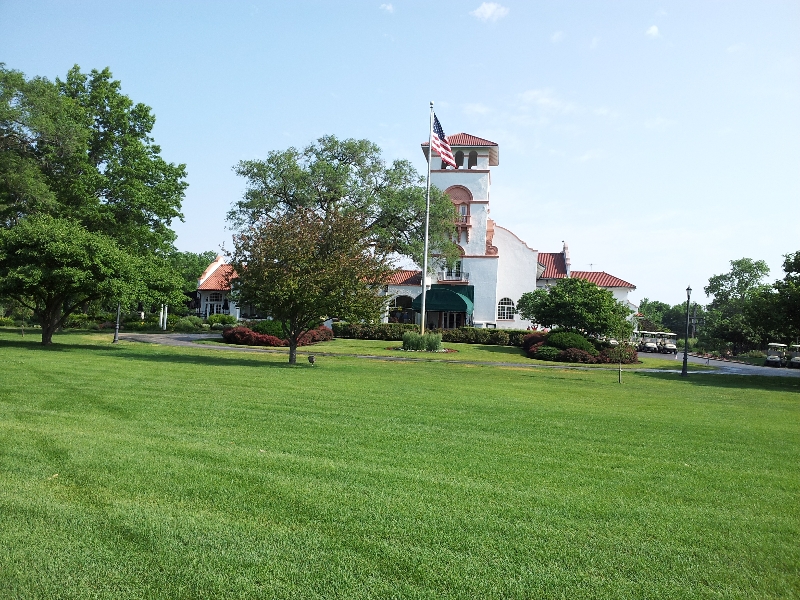
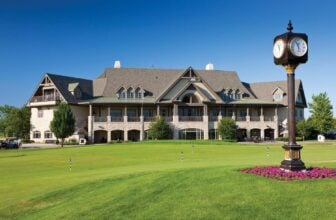
According to The Chicago Tribune, Ravisloe added their signature clubhouse designed by George Nimmons in 1917. The structure was built on the highest spot on the grounds and the eighty-foot tower provided a comprehensive view of the entire facility.
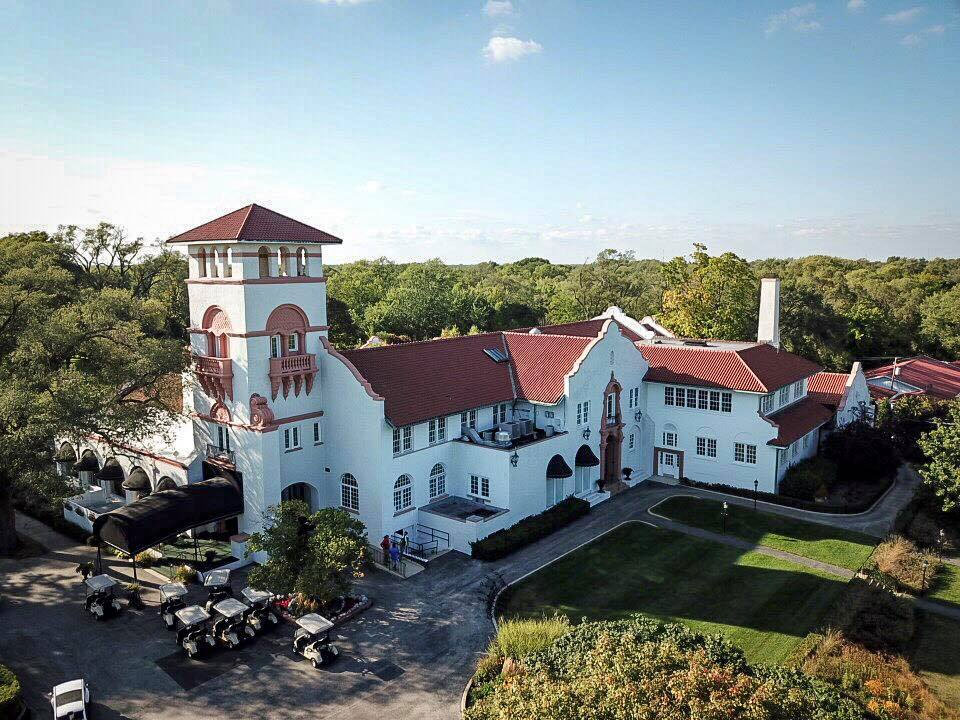
Ravisloe Country Club Clubhouse
Built in a Spanish Mission / Spanish Revival style, the clubhouse became a defining feature of the property—both architecturally and socially. It gave Ravisloe a distinct visual identity and reinforced its position as a premier club in the Chicago area.
Even today, the clubhouse remains one of the most memorable aspects of a visit to Ravisloe. It serves as a tangible connection to the club’s early 20th-century roots.
Trees, Landscape, and the Evolution of Character
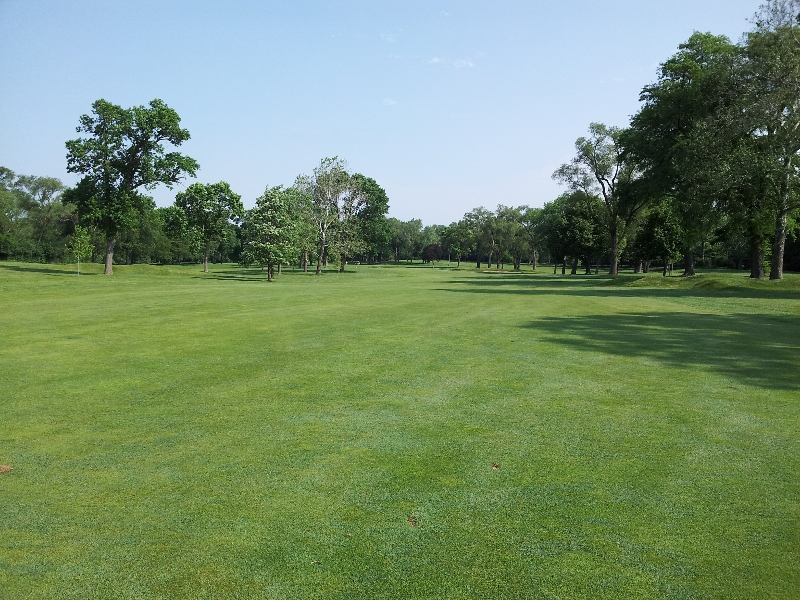
One of the most noticeable characteristics of Ravisloe today is its tree-lined corridors.
That identity didn’t happen overnight.
Beginning in the early 1930s, the club undertook large-scale tree planting initiatives that would reshape the course’s visual and strategic character. Over time, these plantings transformed Ravisloe into a more enclosed, parkland-style course.
In 1995, the club conducted a comprehensive tree study, cataloging more than 2,200 trees and establishing a long-term management plan.
These decisions—made decades apart—continue to influence how the course plays and feels today. They also highlight a recurring theme in Ravisloe’s history: every generation leaves its mark.
Hosting The Greats
The club has hosted some of the legendary figures in the game, especially in its early days. Harry Vardon and Edward Ray won a match 3 and 2 against Chick Evans and Warren Wood in an epic battle at Ravisloe in 1913. Vardon was a five-time winner of the Open Championship at the time and Edward Ray was the defending Open Champion.
Chicago’s golf legend Chick Evans won the US Open and the US Amateur in 1916 and would later win the US Amateur again in 1920. Evans and Wood joined forces again to face Jerome Travers and John Anderson in a four ball match for the Red Cross at Ravisloe Country Club on June 8, 1918. Travers was a national amateur champion in 1907, 1908, 1912 and 1913.
Restoration and the Pursuit of Ross’s Vision (2001–2002)
At the turn of the 21st century, Ravisloe joined a broader movement in golf architecture: restoring classic courses to their original design intent.
In 2001–2002, architect David Esler led a major restoration effort focused on recapturing Donald Ross’s design principles. The project, reportedly around $1 million, emphasized bunker restoration and strategic clarity.
This wasn’t a complete overhaul. Instead, it was a thoughtful attempt to reconnect the course with its architectural roots—bringing back the features that made Ross’s design so compelling in the first place.
It was a sign that Ravisloe understood its value—not just as a golf course, but as a piece of golf history.
The Breaking Point: Closure in 2008
Like many private clubs across the country, Ravisloe faced mounting challenges in the early 2000s.
Declining membership, rising maintenance costs, and the economic shock of the Great Recession created a perfect storm. On October 31, 2008, Ravisloe Country Club closed its doors.
For a property with more than a century of history, it was a pivotal—and uncertain—moment.
The question was simple: what happens next?
A New Vision: Public Golf and Preservation (2009–Present)
In February 2009, Ravisloe was purchased by Dr. Claude Gendreau, a local veterinarian who saw something more than just a struggling golf course.
He saw an opportunity to preserve something rare.
Rather than allowing the land to be redeveloped—a fate that has claimed many historic golf properties—Gendreau reopened Ravisloe as a public daily-fee course in April 2009.
This decision fundamentally changed the club’s identity.
It also saved it.
The transition to public golf accomplished several critical things:
- Preserved over 100 acres of open green space
- Made a historic course accessible to a broader audience
- Created a more sustainable business model
Just as importantly, it aligned Ravisloe with the future of golf—where accessibility and flexibility are increasingly important.
A “Country Club Experience” for the Public Golfer
Since reopening, Ravisloe has positioned itself as something unique:
A public course that still feels like a private club.
Significant investment has gone into restoring the clubhouse, enhancing the dining experience, and maintaining the overall atmosphere of the property.
For many golfers, that combination is what makes Ravisloe special:
- Historic architecture
- Classic design
- Welcoming accessibility
It’s not just about playing golf—it’s about experiencing something that feels different.
National Recognition and Historic Status
In 2021, Ravisloe received one of the most important recognitions in its history: it was listed on the National Register of Historic Places.
This designation validates what many in the Chicago golf community have long understood—Ravisloe is not just locally important, but nationally significant.
The listing also supports future preservation efforts by opening the door to potential historic tax credits and funding opportunities.
A Golf Course That’s Also an Arboretum
In 2022, Ravisloe added another unique distinction: it became a Level I accredited arboretum through ArbNet.
This recognition is rare for a golf course—and speaks to the depth of Ravisloe’s environmental stewardship.
The property now includes:
- Nearly 3,000 cataloged trees
- More than 100 species
- Decades of documented tree management
This transforms Ravisloe into something more than a golf destination. It becomes:
- A living botanical collection
- An educational resource
- A preserved natural space within a suburban environment
At the same time, it introduces an interesting balance. Tree growth and planting can enhance beauty and ecology—but can also impact original architectural intent. Managing that balance is part of Ravisloe’s ongoing story.
The Course Today: Strategy Over Power
Ravisloe today plays between roughly 4,700 and 6,300 yards, depending on the tees, with a par of 70 or 71.
But yardage isn’t what defines the experience.
What defines Ravisloe is strategy.
This is a course where:
- Position matters more than distance
- Angles into greens are critical
- Bunkers are not just hazards—they are decisions
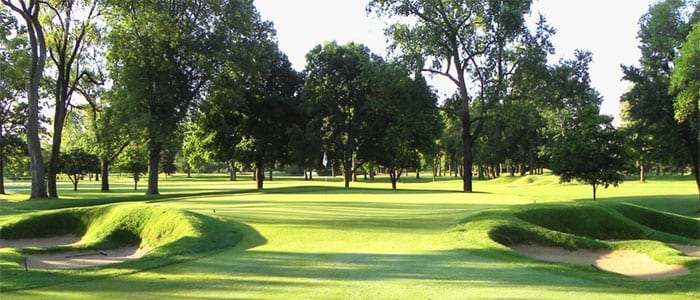
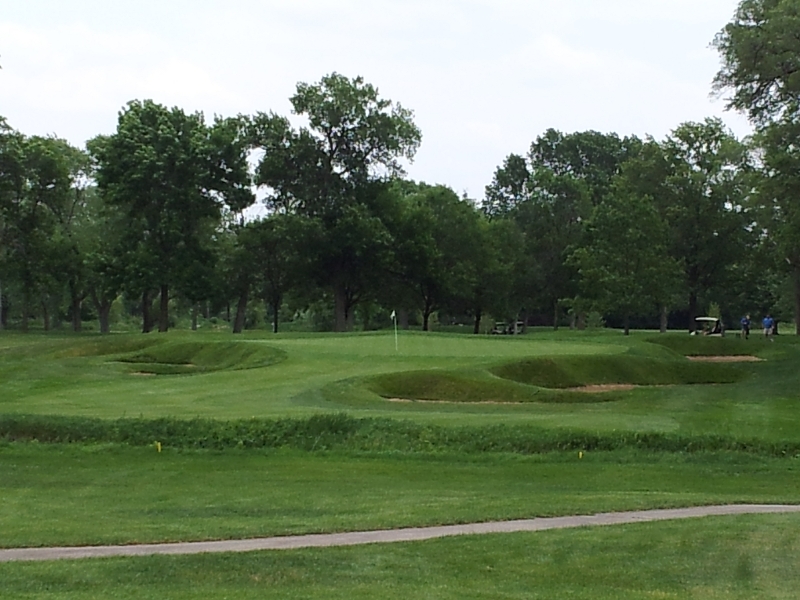
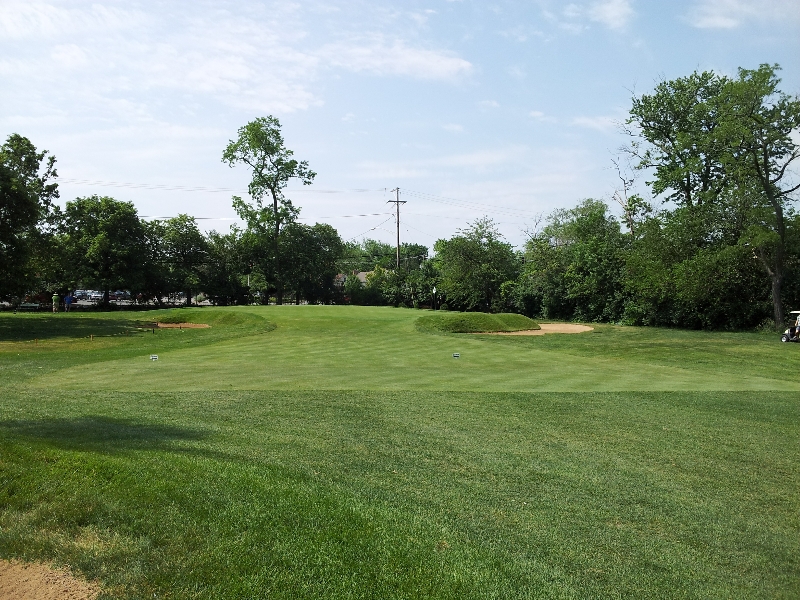
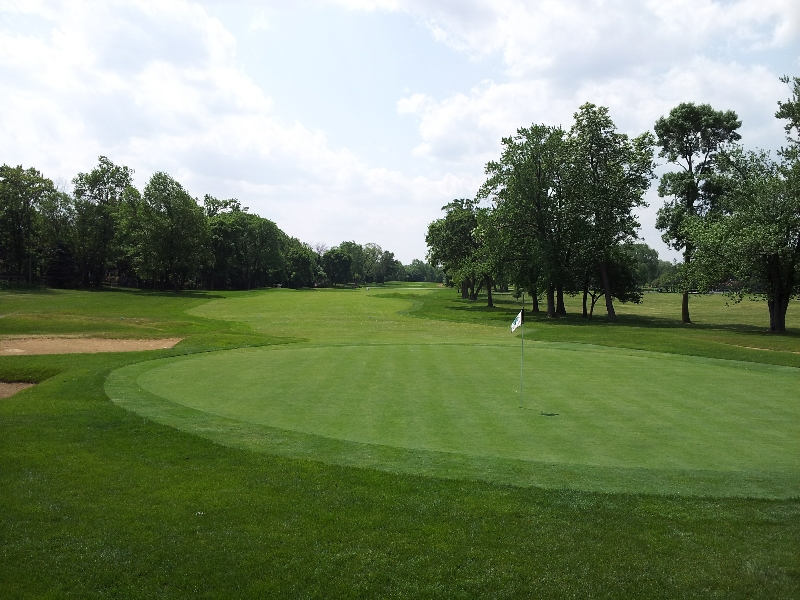
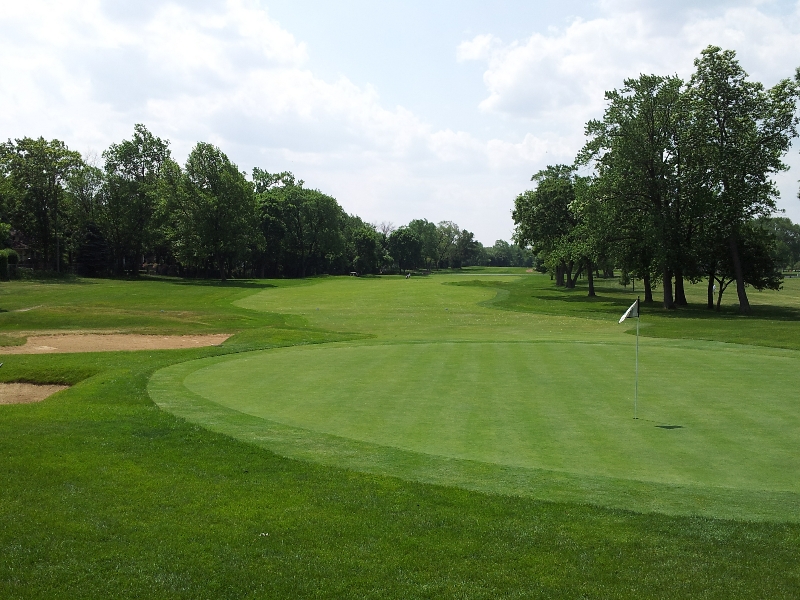
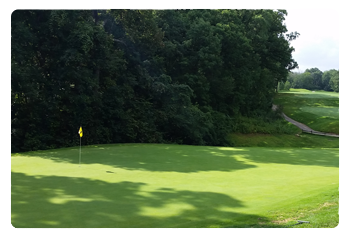
Donald Ross was famous for his intricate green complexes, and of the best examples is the par three 15th hole at Ravisloe. Playing just 154 yards from the rear tees, this uphill hole is protected by six bunkers. Find the back right bunker and you’re in trouble as the green slopes dramatically from back to front. A trip in any of these sand traps is no picnic as they require exact positioning and a Jordan Spieth-like touch to stay on the putting surface.
Ravisloe – 15th Hole
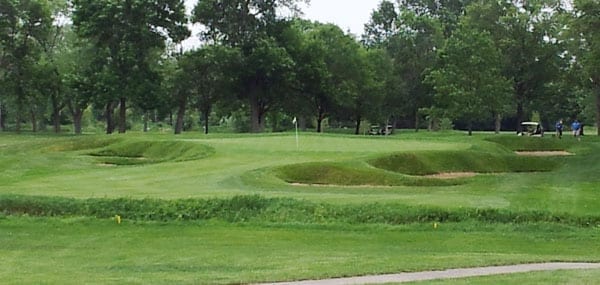
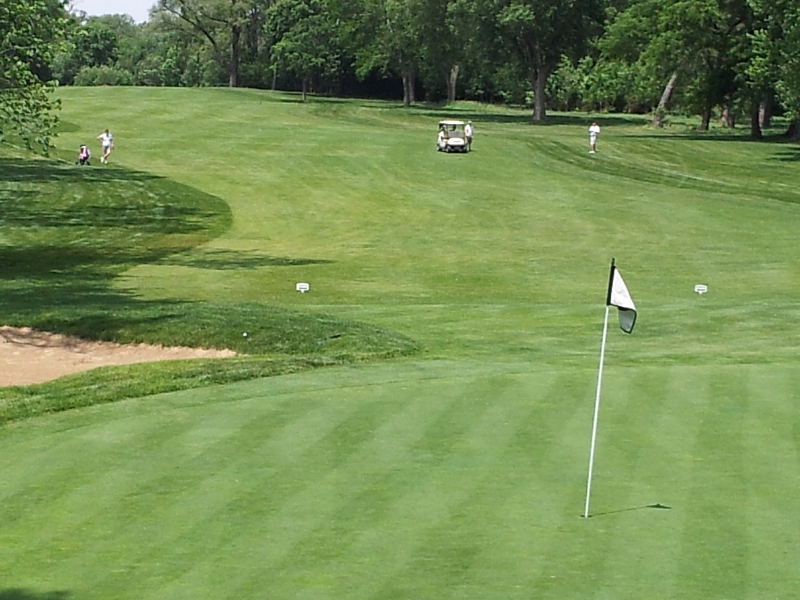
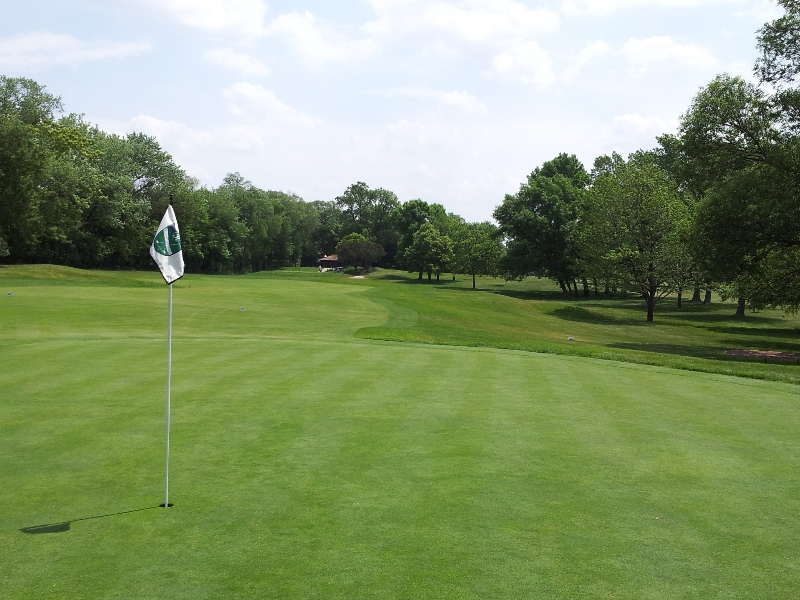
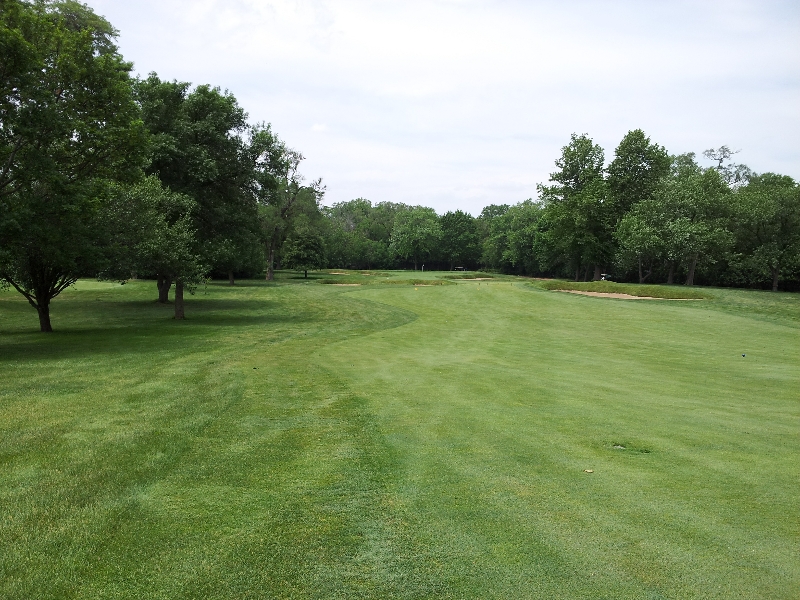
The 5th hole at Ravisloe made our exclusive list of the Fantastic Par Fours of Chicago golf. A short, dogleg right par four that plays 315 yards from the tips, features three bunkers in the middle of the fairway. It’s a tough layup, especially if you haven’t played the hole often.
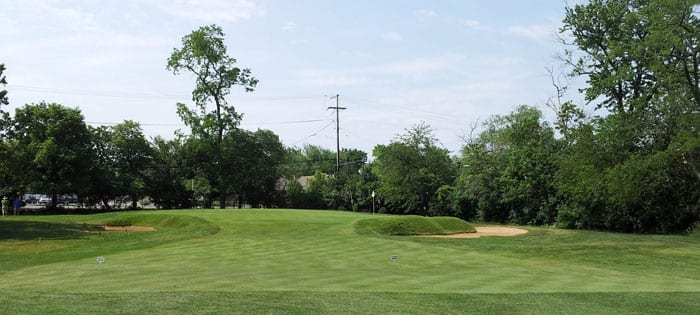
Ravisloe – 5th Hole
Both sides of the fairway are protected by thick rows of trees, so accuracy is essential or you’ll be blocked from your approach. Take an aggressive a line with a driver and there’s a good chance you’ll find a large bunker at the end of the fairway about 250 yards from the tee.
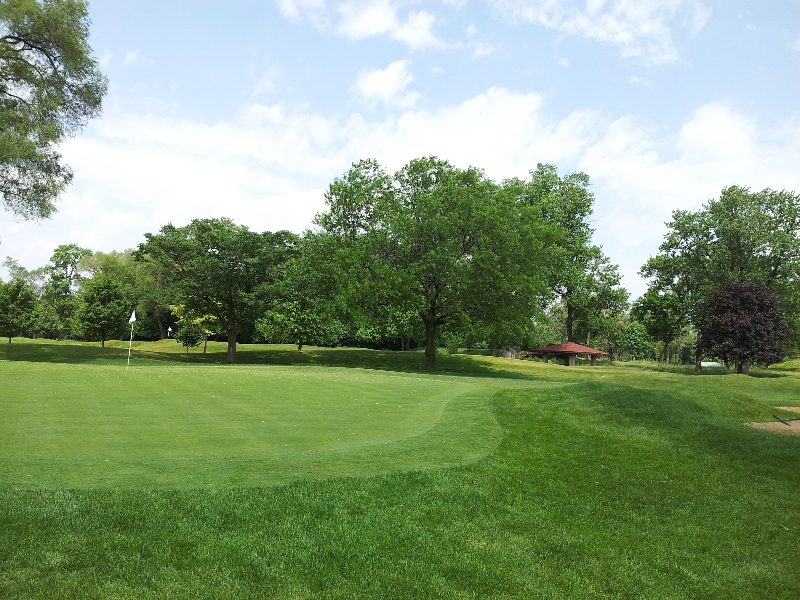
If you are able to find the fairway with your tee ball, you’ll be looking at a larger green that is guarded by four bunkers, one on each side. The green offers three different levels, so finding the right level is essential, or you could be faced with a treacherous lag putt.
Why Ravisloe Still Matters
In a region filled with great golf courses, Ravisloe stands apart.
Not because it’s the longest.
Not because it hosts major championships.
But because of what it represents.
Ravisloe is:
- A link to Chicago’s social and cultural history
- A layered architectural story spanning multiple eras
- A successful example of preservation through reinvention
- A model for how public golf can thrive on historic ground
In many ways, Ravisloe answers an important question:
What should happen to historic golf courses in the modern era?
Its answer is clear:
Preserve them. Open them. Evolve them.
Final Thoughts
Ravisloe Country Club is one of the most important—and most underappreciated—golf courses in Chicagoland.
It has survived more than a century not by staying the same, but by adapting:
- From private to public
- From exclusive to accessible
- From traditional club to community asset
And through it all, it has retained something essential—its character.
For Chicago golfers, Ravisloe offers something increasingly rare:
A chance to play a course where every hole carries history, every design choice has intention, and every round connects you to something larger than the game itself.
It’s not just a place to play.
It’s a place to understand what golf—at its best—can be.
Ravisloe Country Club
18231 Park Avenue
Homewood, IL 60430






 Find a Golf Course
 Find a Driving Range
 Find a Topgolf
 Find a Golf Instructor