
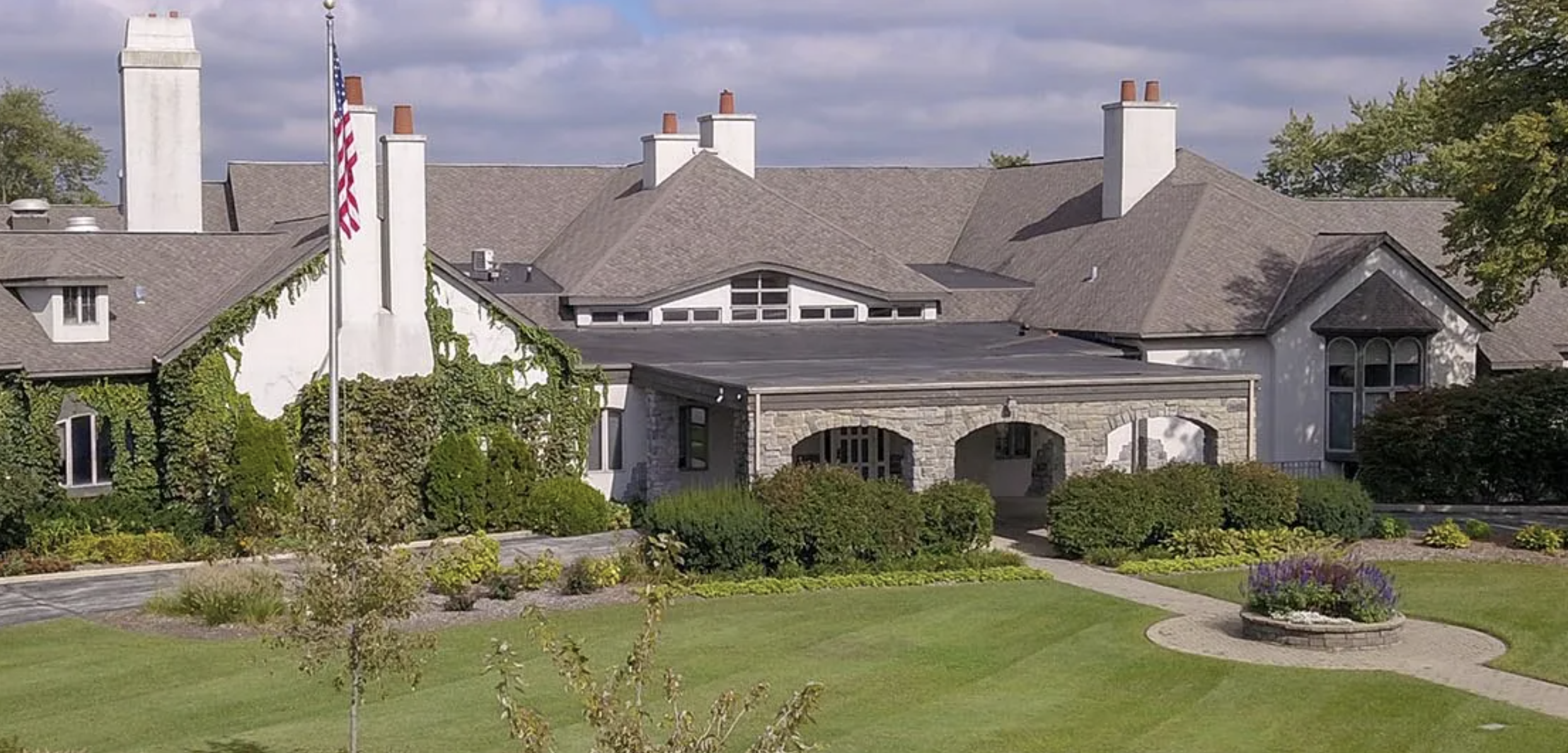
In Chicago’s South Suburbs — where steel, rail, and resilience have long defined the landscape — a different kind of battle is taking shape. A century-old golf course, woven into the city’s sporting and social history, now sits at the crossroads of preservation and progress.
The fight over Calumet Country Club isn’t just about zoning or development. It’s about identity — how we value open space, history, and the places where generations of Chicagoans have learned, competed, and connected.
Calumet has been part of the region’s golf DNA for over a hundred years. But as proposals emerge to replace its fairways with warehouses and truck bays, the conversation has grown larger than golf.
Update December 2025: New Coalition Forms to Save Calumet Country Club
A new coalition has emerged recently with the goal of preserving Calumet Country Club as permanent green space—and ideally as a functioning golf course—amid renewed efforts to redevelop the property for industrial use.
The group, known as the Calumet Collaborative, formed in response to the decision by current owner W&E Ventures to permanently close the course and seek rezoning approval from the Village of Hazel Crest to allow a sale to Ryan Industries. The proposed redevelopment would convert the historic property into an industrial park, a move that has drawn opposition from residents in Hazel Crest, Homewood, and East Hazel Crest due to concerns about increased truck traffic and the loss of open space.
The Calumet Collaborative brings together a diverse group of stakeholders, including the Chicago District Golf Association, South Suburbs for Greenspace, the Donald Ross Society, and several prominent individuals. Among them is Michael Grandinetti, a former president of both the CDGA and Calumet Country Club, as well as a course architect, real estate advisor, and open-space advocate.
The group has formally notified the Village of Hazel Crest of its intent to preserve the property as green space and submitted a proposal to deliver a feasibility study aimed at demonstrating the long-term value—environmental, historical, and economic—of keeping Calumet Country Club intact.
Update – November 2025
In early November 2025, course owner W&E Ventures announced that Calumet Country Club has been permanently closed, ending more than a century of golf history at the site. According to the announcement, all remaining golf infrastructure — including holes, turf, buildings, irrigation and landscaping — is scheduled to be removed, clearing the way for future redevelopment.
This marks the end of a years-long saga involving annexation disputes, legal challenges, and multiple redevelopment proposals, including industrial and logistics concepts that sparked strong community pushback. While previous plans had stalled or shifted between developers, this latest move signifies that the course will not reopen and that the land will be prepared for non-golf uses.
For golfers and local residents, Calumet’s closure represents not only the loss of a historic course dating back more than 120 years, but also a larger warning about the redevelopment pressures facing Chicago-area golf properties. As more landowners explore alternative uses, the region’s golf landscape continues to change — and in Calumet’s case, one of Chicagoland’s oldest courses has now disappeared for good.
A Living Piece of Chicago Golf History
Few courses in Illinois can match Calumet’s pedigree. Founded in 1901, the club moved to its current Homewood/Hazel Crest site with the ambition to become one of the Midwest’s finest. The original design was intended for 27 holes by William Langford before the job shifted to Donald Ross, whose routing gave Calumet its distinctive balance of strategy and flow.

Calumet Country Club
Over the decades, some of the game’s greats walked these fairways. In 1945, Byron Nelson captured the Chicago Victory Open here — his seventh consecutive win in what became his record 11-tournament streak, one of the most untouchable records in golf history. Two decades earlier, Calumet hosted the 1924 Western Open, cementing its place among Chicago’s classic championship venues.
This isn’t just turf and trees. It’s the connective tissue between Chicago’s golden age of golf and today’s public-course renaissance. To lose Calumet would be to erase a chapter of golf history that helped define the city’s south side identity.
The Course Has Already Been Rebuilt Once
While the spirit of Donald Ross remains, much of the original layout was reshaped decades ago. In the 1950s, construction of a new highway sliced through the property, forcing the club to reconfigure several holes. Architects Larry Packard and Brent Wadsworth were brought in to preserve an 18-hole layout within new boundaries — a massive undertaking that saw entire holes shortened, rerouted, or eliminated.
Only about half of Ross’s original holes remain intact. Yet that evolution makes Calumet even more fascinating: it’s not a frozen relic, but a living record of Chicago’s changing landscape. Just as Cog Hill adapted Dubsdread for the modern era and Harborside International transformed landfill into world-class fairways, Calumet has proven it can evolve. The question is — will it get the chance again?
Déjà Vu: The Community Has Fought This Battle Before
If the headlines feel familiar, that’s because they are. This is the second major attempt to industrialize the site in just five years.
In 2021, developer Walt Brown proposed converting the property into a warehouse complex. When the Village of Homewood refused, the land was controversially disconnected and annexed into neighboring Hazel Crest — a move that left residents feeling betrayed and sidelined.
The citizen group South Suburbs for Greenspace (SSG) formed to fight back. They won that round, but the victory was temporary. Now, new developer Ryan Companies is back with a similar proposal. Different name. Same plan. Same fight for the future of green space in the Southland.
Born From Industry — and Now Threatened by It
There’s irony in Calumet’s story. The club was born from the same industrial wealth that now threatens to pave it over.
At the turn of the 20th century, Chicago’s industrial titans — steel magnates, railroad executives, and manufacturers — poured their prosperity into golf. They built havens like Calumet where executives could escape the grind of the mills and stockyards.
Fast-forward to today, and the economic forces have flipped. The new industrialists see logistics, not leisure, as the future of the land. Ryan Companies has argued that “the apparent best use for the site” is a distribution hub. What began as a green retreat for industry could end as a concrete monument to it — a perfect, if tragic, full circle.
The Ghosts of Greatness Still Linger
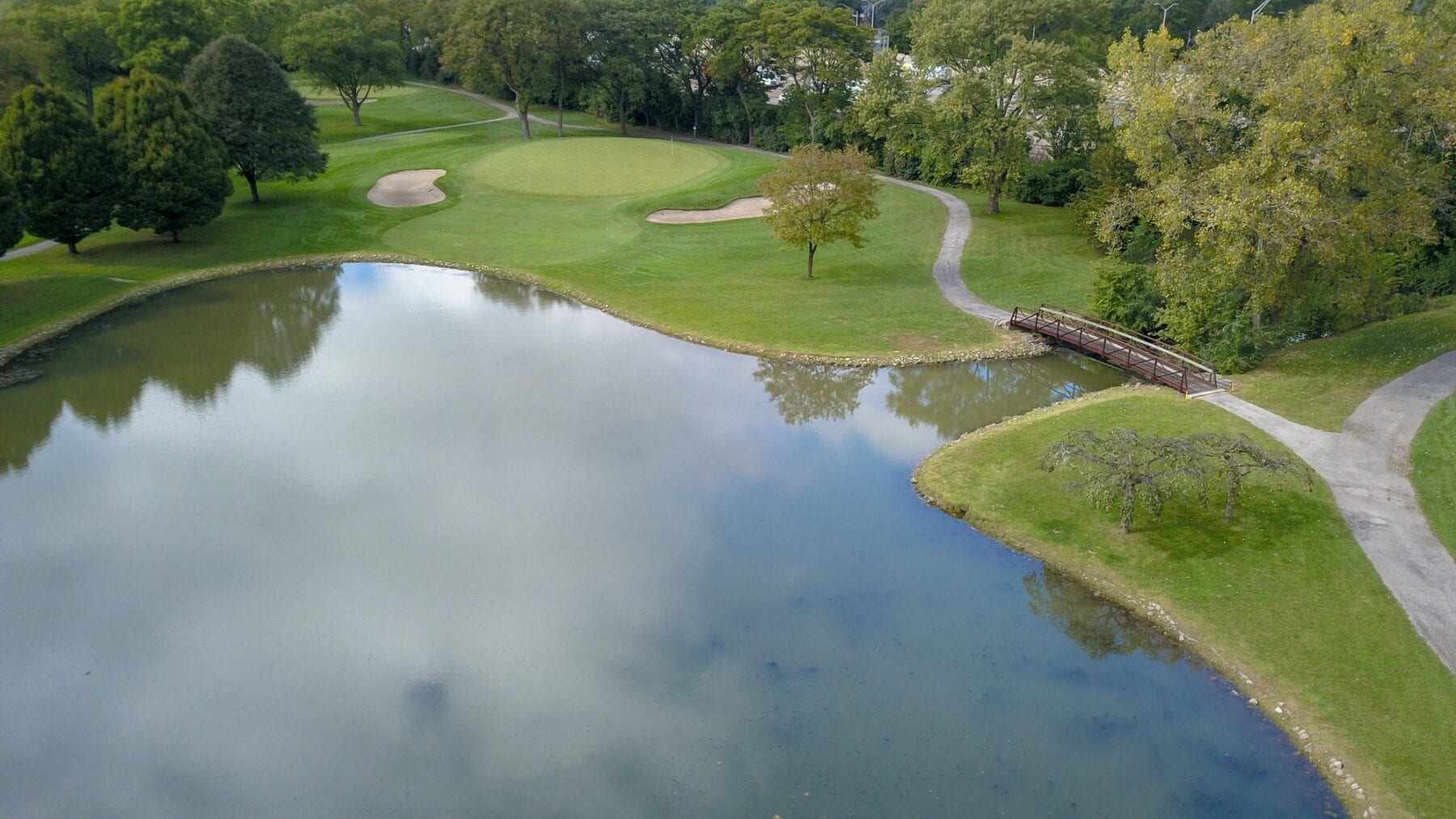
Years of uncertainty have taken their toll. Once-pristine bunkers have been reclaimed by grass. The fabled “pots bunker” on the 9th hole — a Ross signature — now sits overgrown. The 18th green has shrunk from neglect. The old pool and clubhouse structures have fallen silent.
And yet, the bones are still there. The contouring, the routing, the shot values — all whispering of an era when craftsmanship and creativity defined course design. Play Calumet today, and you can still sense Ross’s genius beneath the weeds.
It’s bittersweet — a glimpse of greatness fading before our eyes.
A Chicago Classic Worth Saving
The fate of Calumet Country Club isn’t just a local issue; it’s a referendum on how Chicago values its green spaces and golf heritage. The region has proven again and again that golf can coexist with growth — when vision and community align.
Calumet has been part of Chicago golf’s foundation for more than a century. Whether it survives may depend on whether we see its fairways as expendable acreage or as a living link to our shared history.
Because when a course like Calumet disappears, it’s not just land that’s lost — it’s a story, a legacy, and a little piece of who we are as Chicago golfers.









 Find a Golf Course
 Find a Driving Range
 Find a Topgolf
 Find a Golf Instructor