
Established in 1897, Skokie Country Club was the fifth private golf club to appear in the Chicago region, following Chicago Golf Club (1893), Onwentsia (1894), Exmoor (1896), and Glen View (1897). Much of this early growth was inspired by golf pioneer Charles Blair (C.B.) Macdonald, whose influence shaped not only the founding of these clubs but also the design of their courses.
To prepare for this milestone, Skokie launched a historical initiative in 2023 and formed a Heritage Committee charged with uncovering and preserving forgotten pieces of its past. The group sifted through file drawers, old board ledgers, and even closets locked for decades.
Among their discoveries were vintage photographs, century-old magazine clippings, and rare equipment—hickory-shafted clubs, leather-gripped putters, and custom irons once belonging to Skokie’s head professional, Walter Fovarque. Today, these treasures are catalogued and displayed throughout the Club for all to enjoy.
Origins and Early Leaders
Skokie Country Club officially came into being on October 27, 1897, when its incorporation papers were approved by the State of Illinois. Many credit the World’s Columbian Exposition of 1893 with sparking Chicago’s—and America’s—fascination with golf. The fair drew over 28 million visitors, including many from Britain and Scotland. Some stayed behind and became Chicago’s first golf professionals, greenskeepers, club makers, and caddies.
Reflecting on this, C.B. Macdonald remarked: “Extraordinary as it may seem, the birth of golf in the States, and the conception of the World’s Fair in Chicago, were simultaneous.”
The Club’s ten founders were drawn from the ranks of late 19th-century Chicago business, industry, and politics. They set out to create not only a sporting venue but also a social and family community built on good humor and strong character. That spirit remains central to the Club’s identity and is captured in the Skokie Creed, first adopted in 1979 and updated in 2018.
Prominent early members included Carter Harrison IV, then mayor of Chicago, whose daughter Catherine married founding member Heaton Owsley. Progressive in outlook, Catherine organized Skokie’s very first tournament—not for men, but for women. The winner, Bessie Anthony of Glen View Club, was among the top female golfers of her day.
Another founder, Walter Fisher, was a reform-minded Republican who fought Chicago’s entrenched political corruption. His activism was so disruptive that both major parties lobbied President William Howard Taft to remove him from local politics. In 1911, Taft appointed him U.S. Secretary of the Interior.
Skokie Country Club
A Sistine Chapel of Golf
The Sistine Chapel in Rome houses some of the greatest art in history. Michelangelo’s ceiling frescoes—masterpieces of storytelling and human form—cemented his place among history’s greatest artists. Yet he was not the only contributor. Botticelli, Ghirlandaio, Perugino, and Raphael each added their artistry, creating a collective work that endures centuries later.
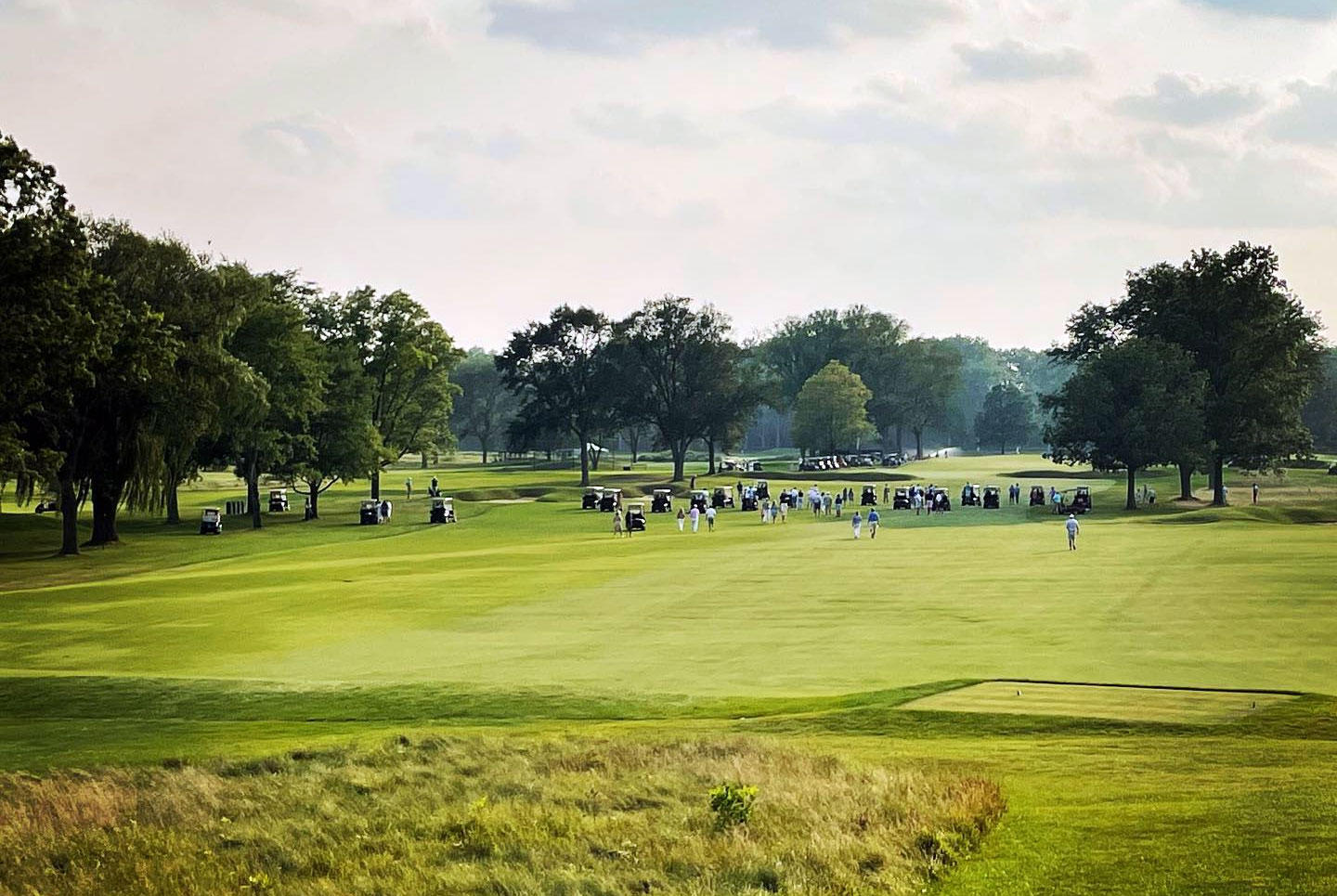
Skokie’s golf course can be seen in the same light. Since its third routing in 1914, the Club has been closely associated with Donald Ross, one of golf’s legendary Golden Age architects. It was Ross’s layout that hosted the 1922 U.S. Open, where 21-year-old Gene Sarazen edged out Bobby Jones and John Black by a single stroke.
For many, Ross is Skokie’s Michelangelo—the master whose vision defines the course—even as others also left their mark.
A Collaboration of Four Architects
The club’s Heritage Committee identified that four Golden Age architects contributed to the Skokie course: Tom Bendelow, Donald Ross, William Langford, and H.J. Tweedie.
Tweedie, a protégé and partner of C.B. Macdonald, worked with founding member George Leslie to shape Skokie’s original nine-hole design. Until 2023, his name had never been associated with the Club. Careful research in the archives of the Chicago District Golf Association uncovered his role, much like a restoration project that brings hidden details back into the light.
With Ross as Skokie’s “Michelangelo,” the supporting roles of Bendelow, Langford, and Tweedie become clear—Skokie’s Botticelli, Ghirlandaio, and Perugino.
The artistry of each remains evident today. The 8th hole reflects the work of Bendelow and Tweedie. Ross’s touch is felt on holes 1, 2, 10, and 18. Langford’s influence dominates 3, 4, 11, 12, and 13. Like brushstrokes in a great painting, each architect contributed to a masterpiece greater than the sum of its parts.
Skokie Country Club
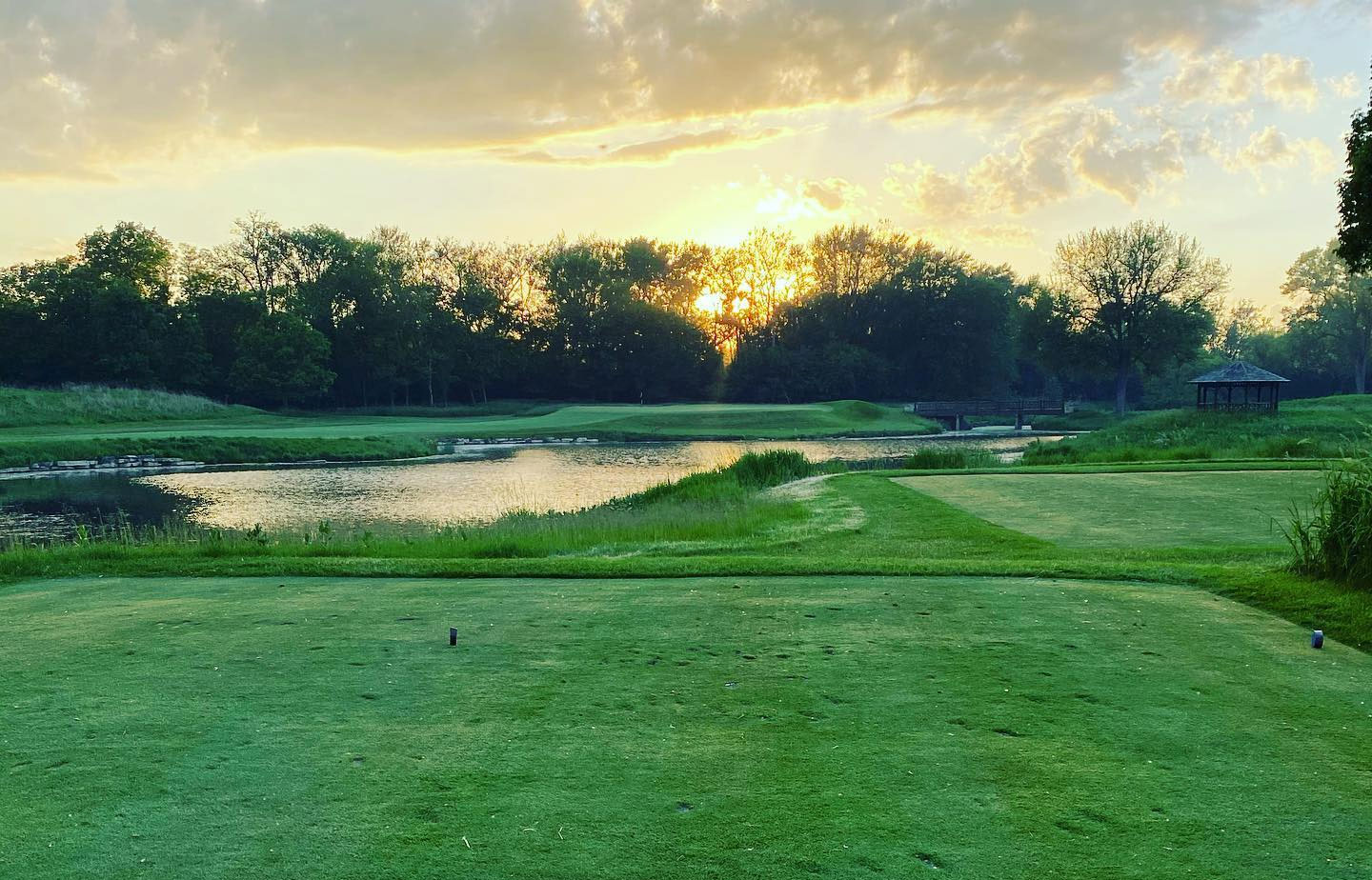
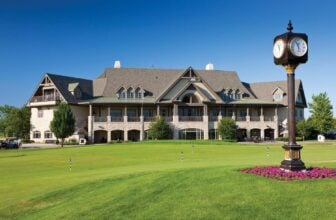
Visitors frequently praise Skokie’s character: its prairie-style vistas from the clubhouse terrace, the dramatic twin fairways of holes 1 and 10, the routing over connected lagoons, and the new championship tees at 13 and 17. Its generous fairways, subtle contours, and finely conditioned greens make it both demanding and fair.
Just as the Sistine Chapel is not defined by Michelangelo alone, Skokie’s greatness lies in the combined vision of four architects. Together, they produced a Golden Age treasure that remains both historically significant and a joy to play.
Championship Events Hosted at Skokie Country Club
Throughout its storied past, Skokie Country Club has played host to an impressive array of major golf tournaments. The first came in 1909, when Willie Anderson captured the Western Open. A year later, Mrs. Thurston Harris claimed victory in the Women’s Western Amateur. The club staged the “Skokie Open” in 1921, which was won by Eddie Loos, but its most significant moment arrived in 1922 with the U.S. Open. That championship, remembered for Gene Sarazen’s bold driver-driver finish to secure a birdie and the title, drew a field stacked with legends, including Bobby Jones, Walter Hagen, Jim Barnes, Abe Mitchell, George Duncan, Johnny Farrell, and Jock Hutchison.
In later decades, Skokie continued to shine on the competitive stage. The 1952 Women’s Western Open brought a win for Hall of Famer Betsy Rawls. In 1998, the USGA returned with the U.S. Senior Amateur, where Bill Shean, Jr. earned the trophy. The Western Amateur followed in 2010, showcasing the talents of future PGA Tour stars Jordan Spieth, Patrick Cantlay, and Patrick Reed, with Stanford standout David Chung emerging as champion.
Exhibition matches have added another layer of prestige to the club’s history. In 1920, British icons Harry Vardon and Ted Ray squared off against Phil Gaudin and Chick Evans, with the American duo taking the match 6&5. During World War II, a memorable exhibition featured Jim Feree, Tommy Armour, and Patty Berg.
The 1960s brought the Newsweek Magazine event, highlighted by Arnold Palmer, who frequented Skokie many times. On one famous occasion, Palmer was seven under par through ten holes before ending the round, citing a sore back—though some suggested he was protecting the course record held by head pro Bill Erfuth.
Over the years, Skokie has also welcomed a host of celebrities, from sports icons like Michael Jordan, Mike Ditka, Stan Mikita, Ernie Banks, Dick Butkus, and Gale Sayers to entertainers including John Barrymore, Bob Hope, and Bing Crosby.
The club’s bond with Chick Evans was especially enduring. Named an Honorary Member in 1918, Evans regularly played in Skokie’s Kiltie Day festivities, joining Gene Sarazen in 1923, and championed the caddie tradition through his work with the Western Golf Association Evans Scholars Foundation.
Skokie has also been defined by its professional leadership. The lineage began with James Wilkie Watson (1897–1908), followed by Walter Fovarque (1909–1916) and John Hackbarth (1917–1918). Phil Gaudin, who once placed in the top 10 at the U.S. Open, guided the club from 1918 to 1930. Robert Stupple carried the torch from 1931 to 1945, succeeded by Jock Hutchison, Jr. from 1946 to 1965. In modern times, Bill Erfuth, Robert Powers, and Paul Bombaco further strengthened Skokie’s reputation as one of the Midwest’s premier golf institutions.
A Living Legacy
Skokie’s story is one of vision, collaboration, and preservation. Born out of the excitement of the 1893 World’s Fair, guided by community leaders, and shaped by four of golf’s most important architects, the Club stands as a living monument to the game’s heritage.
When Skokie hosted the 2025 Western Amateur Championship, it continued to showcase its enduring relevance. Competitors and guests alike will walk fairways that echo with history—experiencing firsthand the creativity of Ross, Bendelow, Langford, and Tweedie.
More than just a golf course, Skokie is a masterpiece—built on artistry, sustained by community, and destined to inspire future generations.







 Find a Golf Course
 Find a Driving Range
 Find a Topgolf
 Find a Golf Instructor