
As Glenwoodie Golf Club celebrates its centennial in 2026, the historic course in Glenwood, Illinois, remains one of the south suburbs’ most enduring public-golf landmarks.
Opened in 1926 and designed by noted Chicago-area architect and Illinois Golf Hall of Famer Harry Collis, Glenwoodie has survived changes in ownership, decades of architectural evolution, severe storm damage and a major municipal renovation. Along the way, it has hosted generations of junior and amateur golfers—and even welcomed a teenage Tiger Woods.
Unlike some historic courses remembered primarily for a famous championship, Glenwoodie’s legacy is rooted in something broader: the preservation of a Golden Age golf course that has remained accessible to the public for most of its 100-year history.
From Private Club to Public Course
The development of Glenwoodie appears to have begun in 1925, when a new south-side golf organization assembled approximately 159 acres of rolling and wooded property. The land reportedly cost $159,000 and included a creek and natural ravine that would become important parts of the course’s design.
The Village of Glenwood and Glenwoodie Golf Club recognize 1926 as the course’s official opening year. Some historical accounts indicate that only a small portion of the course was initially available, followed by nine holes in 1927 and the complete 18-hole layout sometime afterward.
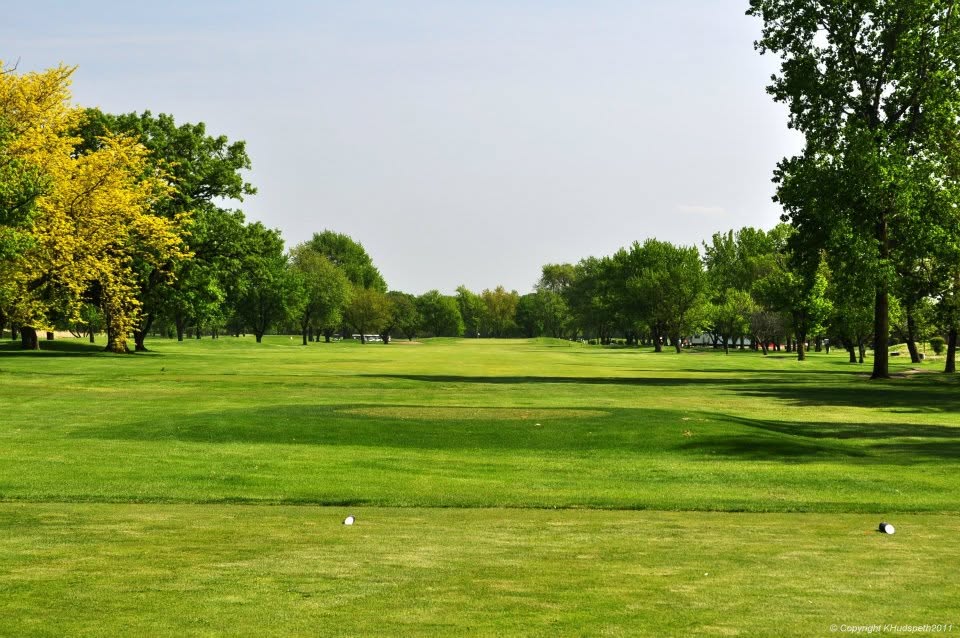
Glenwoodie Golf Club
Originally known as Glenwood Country Club, the facility began as a private club. Golf historian and longtime SouthtownStar writer Tim Cronin described it as one of several Chicago-area clubs established for Jewish golfers during a period when discriminatory membership policies restricted access to many existing country clubs.
Glenwood reportedly transitioned to public golf relatively early in its history. Financial problems later affected the property, which was reportedly sold at auction in December 1946. It subsequently passed through several owners before being acquired by the Roman Catholic Archdiocese of Chicago.
The Architecture of Harry Collis
Official records credit Harry Collis as Glenwoodie’s original architect. Collis was a significant but sometimes overlooked figure in the development of Chicago golf.
His career extended well beyond course design. Collis worked as a golf professional and superintendent, competed as a player and became an important turfgrass innovator. At Flossmoor Country Club, he developed the Flossmoor strain of creeping bentgrass, which became widely used on Midwestern courses.
Collis also traveled to Scotland to study its classic courses. That experience influenced a design philosophy built around natural landforms, strategic angles and interesting green complexes rather than excessive earthmoving.
At Glenwoodie, Collis routed holes through rolling terrain and incorporated the property’s creek and ravine into the challenge. That natural feature is especially prominent on the back nine, where holes 11, 12, 16 and 17 move through some of the most distinctive land on the property.
The greens may be the course’s most important surviving connection to Collis. They are generally large, strongly pitched and capable of placing a premium on both approach-shot position and putting. Although other aspects of the course have changed considerably, architectural observers have noted that many of the original green contours remain intact.
A secondary historical attribution occasionally names Jack Daray as Collis’ co-designer. Cronin explained that the attribution came from information supplied during the period in which the Jemsek family operated the course. However, the Village of Glenwood, the Chicago District Golf Association and specialist records devoted to Collis all identify Collis as the architect. Without an original plan or construction document naming Daray, Collis remains the best-supported design credit.
How Glenwoodie Changed
Glenwoodie looks different today than it did during the 1920s. Like many Golden Age courses, it gradually lost bunkers while gaining trees.
Comparisons with older aerial photographs indicate that the original course was considerably more open and heavily bunkered. The 12th hole, for example, reportedly once had approximately five bunkers, while the 17th may have had as many as nine. Only a fraction of those hazards remained by the early 2000s.
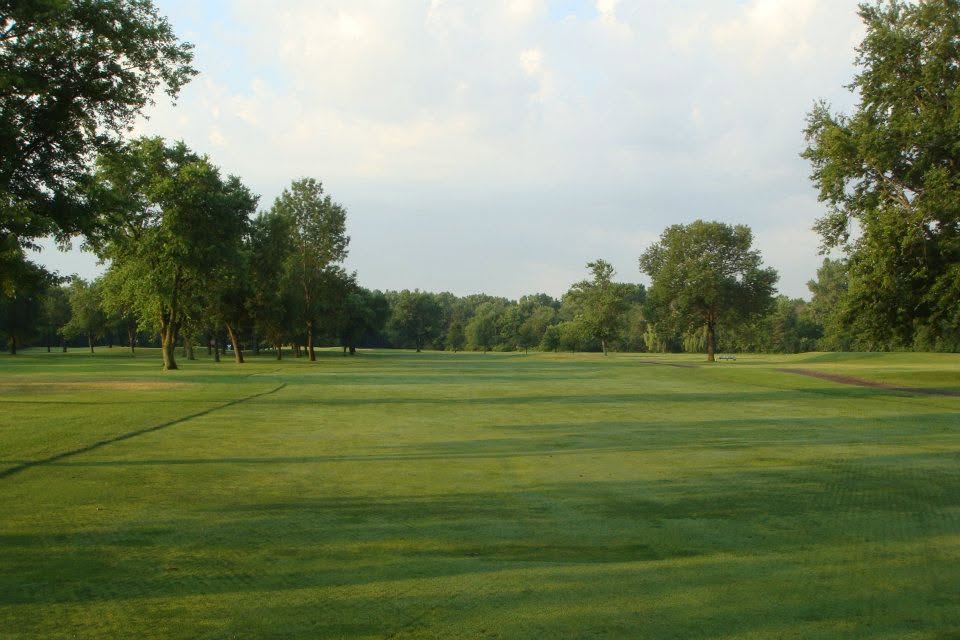
Glenwoodie Golf Club
As trees matured and spread, they increasingly defined the playing corridors. The original strategy likely depended more heavily on bunkers, contours and optional lines of play than on narrow, tree-lined fairways.
Despite those changes, the essential Collis routing and many of the greens survived. That gives Glenwoodie historical value even though it has not undergone a comprehensive restoration to its original appearance.
Additional alterations arrived during the second half of the 20th century. Architects Joe Lee and Rocky Roquemore have been credited with adding the pond near the eighth hole and creating an alternate tee at No. 11. The exact dates of that work are unclear.
The Joe Jemsek Era
A new period began in 1958 when Chicago public-golf pioneer Joe Jemsek leased Glenwoodie from the Archdiocese.
Jemsek was instrumental in expanding public access to quality golf throughout the Chicago area. In addition to Glenwoodie, he was associated with Cog Hill Golf & Country Club, St. Andrews Golf & Country Club and Fresh Meadow Golf Club.
Under Jemsek’s operation, Glenwoodie became part of an influential network of Chicago public courses. Nick Mokelke, who later spent decades as general manager at Cog Hill, ran Glenwoodie before moving to Cog Hill in 1979.
The Jemsek era also helped establish Glenwoodie as a tournament venue for young golfers. Beginning around 1989, the course became the longtime home of the SouthtownStar Challenge Junior Golf Championship. In 2009, Cronin described the event as the Chicago area’s largest independent junior tournament and noted that it had always been played at Glenwoodie.
That recurring event may be one of the most meaningful pieces of Glenwoodie’s competitive legacy. Rather than hosting professionals for a single week, the course introduced generations of local juniors to tournament golf.
Village Ownership and a Major Transformation
The Village of Glenwood acquired Glenwoodie from the Archdiocese in 1995. Municipal records show that the Village issued a $6.125 million bond connected to the acquisition, although secondary reports place the actual purchase price between approximately $4.2 million and $5 million.
The Village began operating the course internally in 1999.
A much larger physical transformation started in 2010. The Village replaced Glenwoodie’s aging clubhouse, installed continuous cart paths, added electric golf carts and introduced new forward and senior tees. Parking and supporting infrastructure were also improved.
The centerpiece was a new clubhouse of approximately 14,000 square feet. Opened in 2011, the facility included banquet and event space along with an approximately 1,800-square-foot outdoor deck. Final construction and supporting work continued into approximately 2013.
Village financial statements recorded about $2.8 million in spending on the clubhouse and other Glenwoodie improvements during fiscal 2011. Later accounts described the overall initiative as a roughly $3 million transformation.
The project was designed primarily to modernize the facility, improve accessibility and strengthen Glenwoodie’s ability to host outings, banquets and community events. It was not a historical restoration, but it helped position the course for its second century.
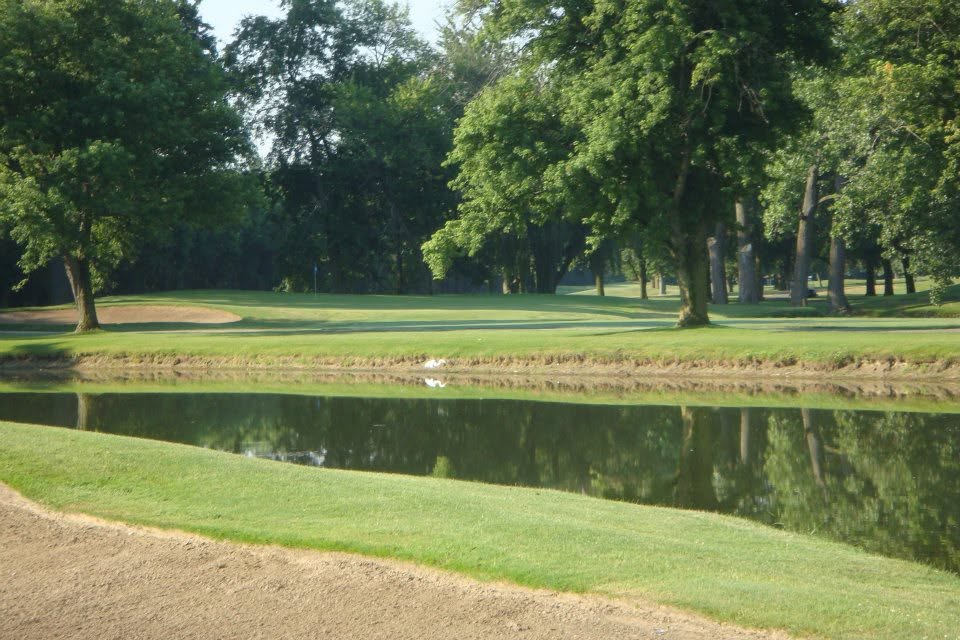
Glenwoodie Golf Club
A Course for Competitive Golf
Glenwoodie has hosted numerous high-school events and qualifiers conducted by the Chicago District Golf Association.
In 2013, it served as a qualifying site for the Illinois State Amateur Championship. Playing at 6,715 yards and a par of 72, T.J. Blakemore earned medalist honors with an eight-under-par 64.
The course subsequently hosted Illinois State Mid-Amateur and Senior Amateur qualifiers. At the 2022 Senior Amateur qualifier, David Serafin and Mark Spielmann shared medalist honors with rounds of 73. As part of its centennial season, Glenwoodie hosted a CDGA Amateur Four-Ball qualifier in July 2026.
Its most famous round, however, was not part of a tournament.
After missing the cut in his first Western Open appearance in 1994, an 18-year-old Tiger Woods reportedly visited Glenwoodie with his father, Earl. Woods is believed to have shot approximately 71 during the recreational round—a memorable connection between the municipal course and a player who would soon transform professional golf.
Severe Storms Interrupt Glenwoodie’s Centennial Season
Glenwoodie’s centennial season was interrupted in August 2026 when severe storms caused extensive damage across Glenwood. After the community had already endured an EF1 tornado, an EF2 tornado brought down trees, blocked streets, damaged homes and caused widespread power outages.
The golf course was left with fallen trees, branches and potentially dangerous hanging limbs. Glenwoodie staff prioritized clearing the greens, tees and fairways to protect the turf from additional damage. Crews then began chipping and removing piles of debris staged along the cart paths and rough.
Although the primary playing surfaces were cleared, the course remained closed while damaged and hanging limbs were assessed and removed. Saturated ground conditions caused by continued rainfall also left the property unplayable.
The storm damage added an unexpected chapter to Glenwoodie’s 100-year history while also demonstrating the resilience of the municipal course, its staff and the surrounding community.
Glenwoodie at 100
Glenwoodie’s importance does not depend on a PGA Tour event or national championship. Its story is about continuity.
For a century, golfers have encountered Collis’ sloping greens, the ravine holes on the back nine and a course that remains challenging without being inaccessible. It has evolved from a private club into a Jemsek-operated public course and eventually a community-owned municipal facility.
At 100 years old, Glenwoodie represents a valuable piece of Chicago golf history: a surviving Harry Collis design, a longtime training ground for junior and amateur competitors and an affordable public course whose original architectural character can still be found beneath a century of change.








 Find a Golf Course
 Find a Driving Range
 Find a Topgolf
 Find a Golf Instructor